Examining how philosophy can contribute to contemporary artistic practices
Since my two-year residency with the Bluecoat was, to the best of our knowledge, the first offered by an arts centre to a philosopher in the UK, my aim was to explore what philosophy’s contribution could be to art within a contemporary cultural environment.
Artistic practices and products have been changing so rapidly in the past few decades that the paradigms we have available for understanding them are comparatively limping along.
On the one hand, this calls for the introduction of new conceptual frameworks to capture the transformations taking place in art due to the use of technology and social media.
Devising this framework is, perhaps, the most fundamental way in which philosophy may contribute, through reflective and critical analysis.
On the other hand, different communities of artists, curators and theorists employ various kinds of discourse to articulate and communicate the outcomes of their practices.
To facilitate a dialogue and co-creation between these diverse communities, more general and inclusive forms of articulation are needed, which philosophy can help identify.
The objective of the residency was not to just describe these changes theoretically, leaving philosophy and any other theoretical forms of discourse to stand in opposition to practice, or to simply add another layer of mediation between art and its audience.
It was, rather, to explore ways to better understand collaboratively the new possibilities for art, arts institutions and new audiences.
As well as participating in conversations with artists and community discussion groups, I have organised 24 philosophy-related events at the Bluecoat, with almost all sold out – the philosophy day alone attracted more than 1,500 people.
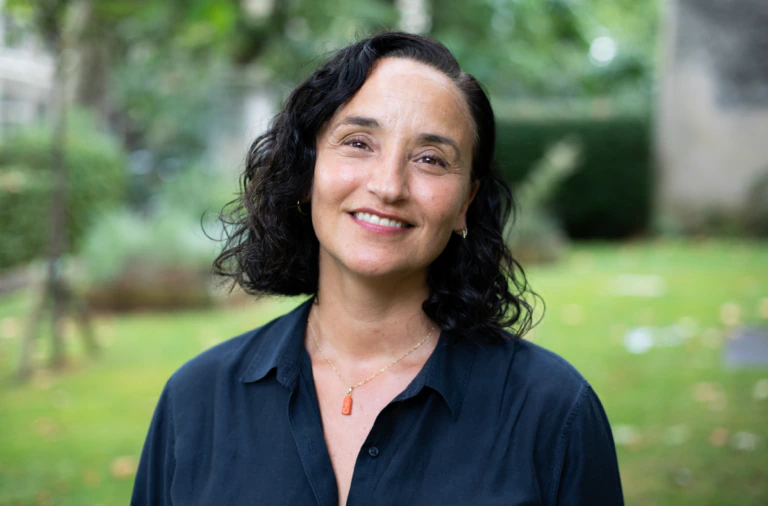
Panayiota Vassilopoulou is a lecturer at the University of Liverpool and philosopher-in-residence at the Bluecoat contemporary arts centre
Since my two-year residency with the Bluecoat was, to the best of our knowledge, the first offered by an arts centre to a philosopher in the UK, my aim was to explore what philosophy’s contribution could be to art within a contemporary cultural environment.
Artistic practices and products have been changing so rapidly in the past few decades that the paradigms we have available for understanding them are comparatively limping along.
On the one hand, this calls for the introduction of new conceptual frameworks to capture the transformations taking place in art due to the use of technology and social media.
Devising this framework is, perhaps, the most fundamental way in which philosophy may contribute, through reflective and critical analysis.
On the other hand, different communities of artists, curators and theorists employ various kinds of discourse to articulate and communicate the outcomes of their practices.
To facilitate a dialogue and co-creation between these diverse communities, more general and inclusive forms of articulation are needed, which philosophy can help identify.
The objective of the residency was not to just describe these changes theoretically, leaving philosophy and any other theoretical forms of discourse to stand in opposition to practice, or to simply add another layer of mediation between art and its audience.
It was, rather, to explore ways to better understand collaboratively the new possibilities for art, arts institutions and new audiences.
As well as participating in conversations with artists and community discussion groups, I have organised 24 philosophy-related events at the Bluecoat, with almost all sold out – the philosophy day alone attracted more than 1,500 people.
Panayiota Vassilopoulou is a lecturer at the University of Liverpool and philosopher-in-residence at the Bluecoat contemporary arts centre