The foyer or lobby is the over-looked yet significant space in which visitors have their first physical engagement with the museum.
But they are often confusing places for people who need help to prepare for the next stage of their visit.
The aim of the Transforming Thresholds Research Network, an AHRC-funded project led by the University of Leicester, is to find out more about museum threshold spaces and how visitors experience them.
Using ideas from retail, gaming, the performing arts and education, we designed three experiments that were tested in the entrances of our partner museums.
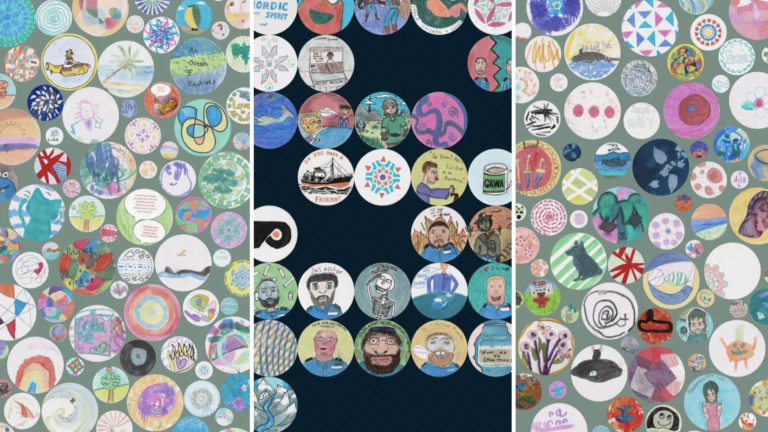
A soundscape and exhibition of images were installed in the stairwell to the Petrie Museum of Egyptian Archaeology in London.
A performance of invisible theatre was used to create visitor engagement in New Walk Museum and Art Gallery, Leicester, and lenticular signs, inspired by gaming icons, were designed for Chatsworth House in Derbyshire.
The case studies indicated that simple, non-verbal interventions could have a powerful effect. The soundscape and images at the Petrie Museum created an ambience that helped visitors transition to the world evoked by the exhibits in the galleries. At New Walk, we found that the presence of actors created more opportunities for visitors to explore spaces in the museum that were underused.
The key lesson from our project is that there is no one-size-fits-all answer to the challenge of the threshold. Just as our museums are unique and diverse, so, too, are the ways we can combine inspiration from other disciplines like retail, performance and gaming.
It’s more important to think carefully about how the foyer design and content might fit with each museum’s identity and then create solutions in line with that.
Ruth Page is a lecturer in the school of English at the University of Leicester
But they are often confusing places for people who need help to prepare for the next stage of their visit.
The aim of the Transforming Thresholds Research Network, an AHRC-funded project led by the University of Leicester, is to find out more about museum threshold spaces and how visitors experience them.
Using ideas from retail, gaming, the performing arts and education, we designed three experiments that were tested in the entrances of our partner museums.
A soundscape and exhibition of images were installed in the stairwell to the Petrie Museum of Egyptian Archaeology in London.
A performance of invisible theatre was used to create visitor engagement in New Walk Museum and Art Gallery, Leicester, and lenticular signs, inspired by gaming icons, were designed for Chatsworth House in Derbyshire.
The case studies indicated that simple, non-verbal interventions could have a powerful effect. The soundscape and images at the Petrie Museum created an ambience that helped visitors transition to the world evoked by the exhibits in the galleries. At New Walk, we found that the presence of actors created more opportunities for visitors to explore spaces in the museum that were underused.
The key lesson from our project is that there is no one-size-fits-all answer to the challenge of the threshold. Just as our museums are unique and diverse, so, too, are the ways we can combine inspiration from other disciplines like retail, performance and gaming.
It’s more important to think carefully about how the foyer design and content might fit with each museum’s identity and then create solutions in line with that.
Ruth Page is a lecturer in the school of English at the University of Leicester