
The Maze of Paintings was a public education activity held at West Bund Museum in Shanghai, China, in 2024, in association with the Central Academy of Fine Arts’ Sino-French School of Art and Design Management.
Visitors followed a route across three levels, using clues linked to displayed portraits to solve the puzzle. Four costumed members of the project team – a priest, a merchant, a painter and a student – where in-situ to take their questions but could only answer “yes” or “no”.
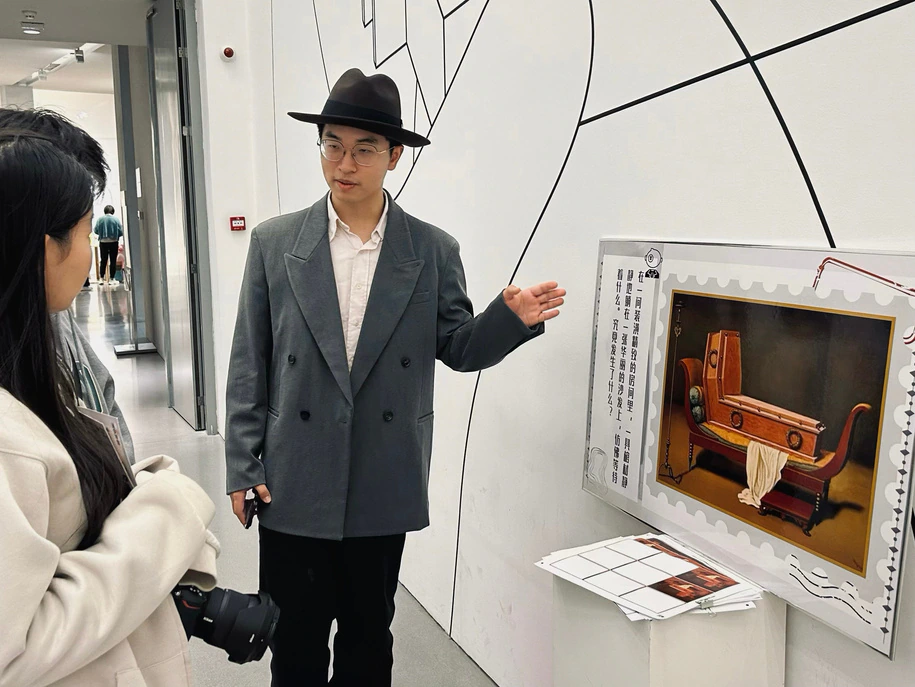
Watching the activity, I was struck by a problem that museums often overlook: visible participation does not, by itself, show what anyone learned. Education teams should decide what evidence they need before judging whether a programme has worked or not.
Museums routinely collect information about visitors' age, education, place of residence and attendance. These data can show reach, representation and demand, and they may also inform access and accountability.
For educational programme decisions, however, they cannot tell us what a learning goal should be, where participants need support or whether understanding changed. Visitors who share a demographic profile can still arrive with different prior knowledge, motivations and social contexts.
Advertisement
Reaching the intended group is an achievement, but it does not tell us whether the programme met its educational aim. The first question should therefore be practical: what decision is this information meant to support?
I contributed to the programme narrative, on-site process, learning materials and promotional copy for the Maze of Paintings, and supported communication between the museum and university. On the day of the event, I helped with visitor flow and delivery.
This was content translation and implementation support within a team; overall planning, visual design and organisational decisions were shared. The project summary recorded more than 80 participants across the event and noted that all 80 prepared material sets were used.
Those figures showed demand and helped describe pressure on staffing and supplies. A reliable count still answers an operational question rather than an educational one: it cannot show what visitors understood.
The same summary noted that some solo participants found it difficult to reach a conclusion without prompts. That observation could lead the team to test an extra hint on the task card or adjust when a character offered help. It could not demonstrate deeper understanding of the paintings.
Different evidence supports different decisions. Participation counts help with capacity and resourcing. Informal observation can show where a route is confusing, a prompt arrives too late or a stage creates difficulty. Such observations should lead to a change to test, rather than a claim about learning.
Advertisement
A learning claim needs a stated goal and a recorded response linked to it. If the goal is for visitors to connect a portrait with its story, for example, they might be asked at the end to explain one connection or describe how their answer changed. Without such a response, it may be reasonable to say that people took part enthusiastically, but not that the activity improved their understanding.
In a programme meeting, the process can remain simple: name the decision before discussing the data; ask what the existing information can establish, what remains unknown and what one response could be observed or recorded; then agree in advance what change that evidence would justify.
The same questions can be used during planning and after delivery. This does not turn every activity into a research project. It prevents teams from collecting the easiest figures first and assigning them a meaning they cannot carry.
The next time a programme is reviewed, attendance should be treated as one form of evidence, not the verdict on success. Start with the decision, choose information that can support it and be explicit about what the evidence cannot show. Knowing who came is the beginning of evaluation, not the end.
Junyi Lin is undertaking an MA in Cultural Management at the Chinese University of Hong Kong