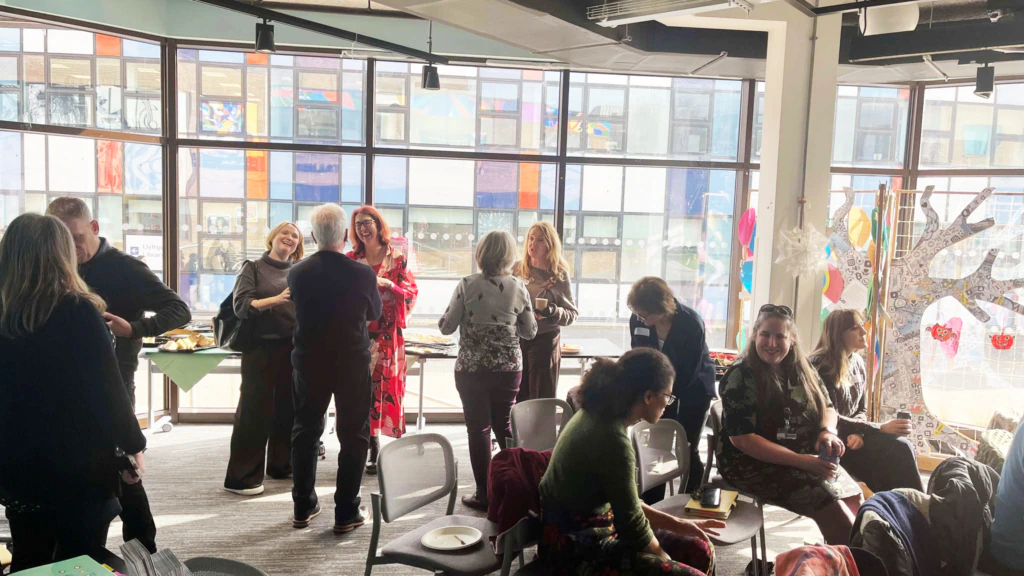
This year’s Welsh Museums Federation Conference took place on 6 March at Taliesin Arts Centre, within the Swansea University campus. It was our first in-person conference since 2020 at Storiel, Gwynedd, and it was noted by attendees how special it felt to gather and discuss together.
The theme of the conference was Museums After 25 Years of Devolved Government, and throughout the day five speakers gave compelling presentations highlighting the progress, successes and challenges faced in the Welsh museums sector since the Government of Wales Act 1998.
The conference was compered by Ken Griffin, Egypt Centre curator and president of the Welsh Museums Federation. Jack Sargeant, the Welsh minister for culture, skills and social partnership, introduced the event.
He highlighted the developments made and resilience shown by the Welsh museum sector since devolution and mentioned Wales as the first nation to approve a strategy for museums (2010-2015) based on sector guidance and consultation.
Following this, the creation of the Future Generations and Wellbeing Wales Act 2015, which has given structure and further opportunity for Welsh museums to contribute to community and culture.
Advertisement
The Welsh Government and Culture Division have continued to do brilliant work for and with the sector, such as:
- The Anti-Racism Wales Action Plan – ensuring more people’s stories are understood and represented.
- Museums Spotlight surveys – collecting important data from museums across Wales – last years resulted in £400,000 funding to improve collection storerooms.
- Welsh government contributions to the sector through administering funding via the Welsh Museums Federation’s Small Grants Scheme – showing how small pots of money make a big impact.
- Recent wellbeing studies in the sector – highlighting how museums / heritage allows people to feel less lonely, isolated and achieve self-fulfilment.
The minister’s speech concluded with enthusiasm for the future; for what we can and will achieve for each other and the sector.
Next up was Rachael Rogers, the vice president of the Museums Association (MA). Rachael began with some insightful statistics regarding pressures to the sector, including one third of local authority and civic museums experiencing decreased funding, affecting important aspects such as public programming and collections care.
It is clear that now more than ever the sector must show the strongest cases of value of our museums to culture.
Rachael highlighted the significant work being done at the MA, and how it can support museums across Wales.
Advertisement
She said the MA is aware that many institutions dealing with small teams and limited resources. The association provides funding opportunities through schemes such as Esmée Fairbairn Communities and Collections Fund, Beecroft Bequest and the Members Support Fund.
It also produces research and advice on social issues affecting the sector such as diversity, anti-racism and climate justice.
The MA's Ethics Committee works hard to promote ethical practice in the sector, and also give confidential advice on specific issues. The committee is currently reviewing the reviewing the Code of Ethics to ensure its fit for purpose and meets sector needs.
The MA celebrates the importance and value of museums through the Museums Change Lives Awards. The awards promote best practice from museums and individuals that support communities and engage with contemporary issues.
In 2024, the Radical Changemaker Award was won by Welsh heritage consultant, Marian Gwyn, who led a transformative initiative to diversify and decolonise local museums in Wales.
This year the Museums Association Conference will be held in Wales at St Fagans National Museum of History; a great opportunity to network and showcase our heritage and the developments in the sector.
Advertisement
The third speaker of the day was Andrew White from the National Lottery Heritage Fund, which is celebrating 30 years of providing support.
The Heritage Fund has invested nearly £500m to more than 3,400 projects in Wales that are important our national story.
The Heritage Fund works upon the Additionality Principle, in which funding is used to supplement and not backfill. Projects in Wales draw on a UK wide budget and are managed with a devolved budget and decision-making committee.
Some examples of projects across Wales include:
- "The Museum of Two Halves" in Wrexham; a fully refurbished and enhanced Wrexham Museum in the current building, alongside a brand-new National Football Museum for Wales.
- The National Slate Museum; a project to conserve and improve the condition of the site’s built heritage, transforming it into an interpretation hub for the Wales Slate Landscape.
Andrew gave an interesting quote to highlight the innovative and important work being done in the Welsh heritage sector: "When Wales sneezes, the world catches a cold."
Next, Robin Johnson from the Group for Education in Museums Wales (GEM Cymru) discussed the developments in the Welsh museum sector to improve education provision.
GEM Cymru works with the Welsh Government, administering funding on its behalf. This allows GEM to continue supporting the museum learning sector in Wales in responding to the Curriculum for Wales.
Some of the Welsh Government funded projects include:
- Working with Dr Marian Gwyn to produce a comprehensive toolkit for museums in Wales to help them navigate the new Curriculum for Wales.
- GEM micro grants to help develop museums learning services as the curriculum was first rolled out in autumn/winter 2022/23. One example is the Egypt Centre, Swansea: The Mindfulness in the Museum. The project aimed to develop a new school session focusing on mindfulness in response to the new Health and Wellbeing Area of Learning and Experience in the new Curriculum for Wales.
- The GEM Learning Mentor project, in which educational practitioners worked with selected museums in Wales to help them design, develop and test out new resources and services that relate to the new curriculum. Alongside the mentoring process, a small budget was available to help the museums with the cost of the design and production of materials and resources.
Robin ended with statistics showing museums improved understanding of the Welsh curriculum since it was rolled out in 2022/2023. It significantly showed how museums are feeling more equipped and comfortable to deliver the national curriculum.
This would not be possible without organisations such as GEM Cymru and support from the Welsh Government. Once again, this talk highlighted the resilience, determination and innovation enacted across Welsh museums.
The fourth speaker, Steve Burrow from Amgueddfa Cymru - Museum Wales, discussed the Treasure Act and its importance for museums across Wales.
Since 1997, around 850 Treasure finds have been made in Wales, mostly by metal detectorists.
The Treasure Act 1996 is the same within England and Wales, however, Coroners in Wales are responsible for taking decisions on whether finds made in Wales legally qualify as Treasure or not.
Steve provided an interesting oversight into the definition of treasure items, and the current process in place; from treasure discovery to acquisition into museum collections.
Steve explained how Treasure discoveries in Wales are increasing (between 60 to 80 cases a year), and are significant for telling local, regional and national stories within our museums.
Thus, it is important to understand the process and engage with the finds liaison officers at Amgueddfa Cymru.
The final talk of the day was given by heritage consultant, Marian Gwyn, discussing the anti-racism project, Museums, Collections and Cynefin – Delivering a Lasting Legacy.
Marian explained how Wales is leading the way with its Anti-Racism Wales Action Plan, developed by the Welsh Government in 2022. Welsh museums have responded to the action plan and taken steps to understand and address racism in the sector.
This has been supported by projects such as Museums, Collections and Cynefin, funded by the Welsh Museums Federation and Welsh Government, and led by Marian. The project built upon the successful Welsh Government-funded pilot Diversity in Museums project 2023.
Over 40 Welsh museums took part in the project, which delivered:
- A review of the museum collections focusing on colonialism, slavery, and diversity, culminating in a written report for each museum.
- A one-day onsite workshop for museum staff on the findings of the review - comprise an overview of the collection review, examples of successful engagement projects elsewhere, and suggestions for working with new audiences.
- Access to a small pot of funding to create long-term resources resulting from the review and training session
The project was successful on many levels. It gave museums the opportunity to engage with their collections at a greater depth, highlighting ways to explain and interpret objects that may not have considered before.
For example, telling the wider story of social history objects related to tea, coffee, sugar and chocolate, and materials such as cotton and silk, particularly the links to trade and colonialism.
It also allowed museums to consider new audiences to engage with, and ideas for co-collaboration projects to understand and share different stories from their collections.
Once again, this presentation proved how Wales and its museums are pushing the boundaries by listening, understanding and moving forward with its communities in mind.
This concluded the conference; an extensive round of applause was given to all five speakers, who had showcased how museums and the heritage sector in Wales continues to inspire with its forward thinking, creativity and ability to set new standards 25 years after devolution.
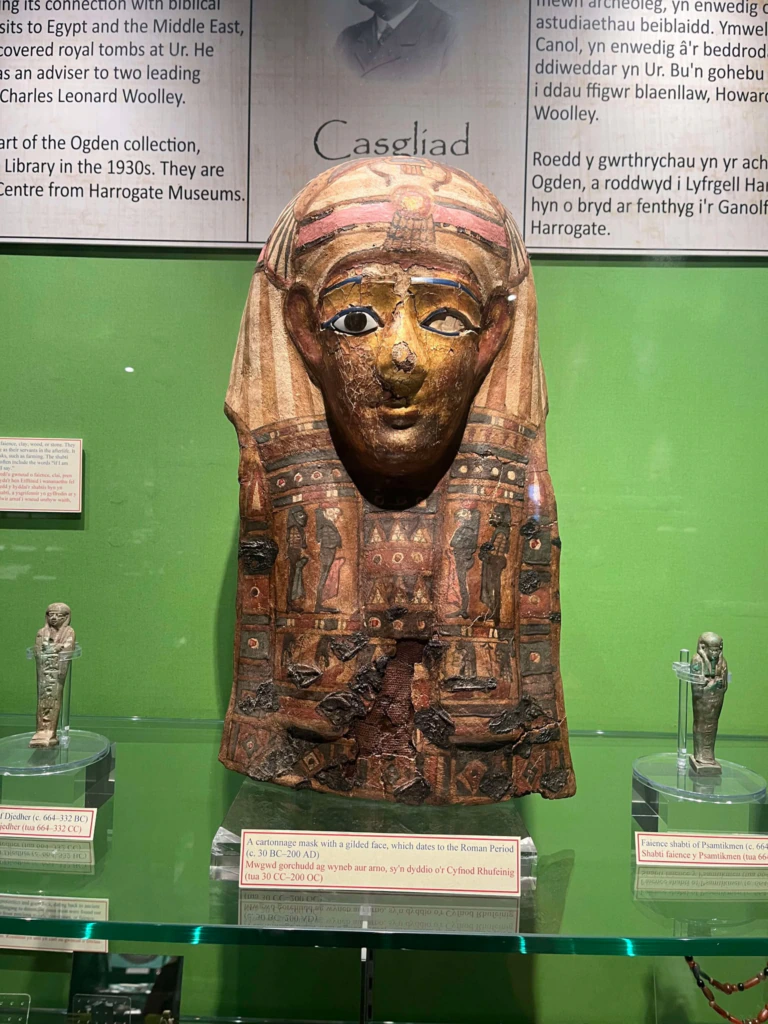
Throughout the day attendees had the chance to explore the Egypt Centre, which displays a collection of national and global significance, and the largest Egyptian collection in Wales. The perfect venue for the conference, and another reminder of the significant work and heritage that is happening in Wales.
The conference was kindly part funded by the Welsh Government Culture Division.
Rhian Hall is the heritage collections manager at Gwasanaeth Treftadaeth Rhondda Cynon Taf | Rhondda Cynon Taf Heritage Service