
The European museum community has been rocked by two more thefts of high-value artefacts in Spain and Vienna – a week after a report warned of an upswing in aggressive and coordinated raids against cultural heritage collections.
Both heists took place on Thursday 27 August and targeted artefacts comprising precious metals or gemstones.
In Spain, the Museum of Villena in the Alicante province was broken into in the early hours of the morning, when a gang arrived in multiple vehicles and broke a window to gain entry. The thieves targeted the Treasures of Villena horde, a bronze-age trove comprising nearly 10kg of gold, which is regarded as one of the most important of its kind in Europe.
The “super-fast” raid took less than four minutes and saw the thieves drop several pieces on their way out, including a crown, earring, bracelet and three silver vessels.
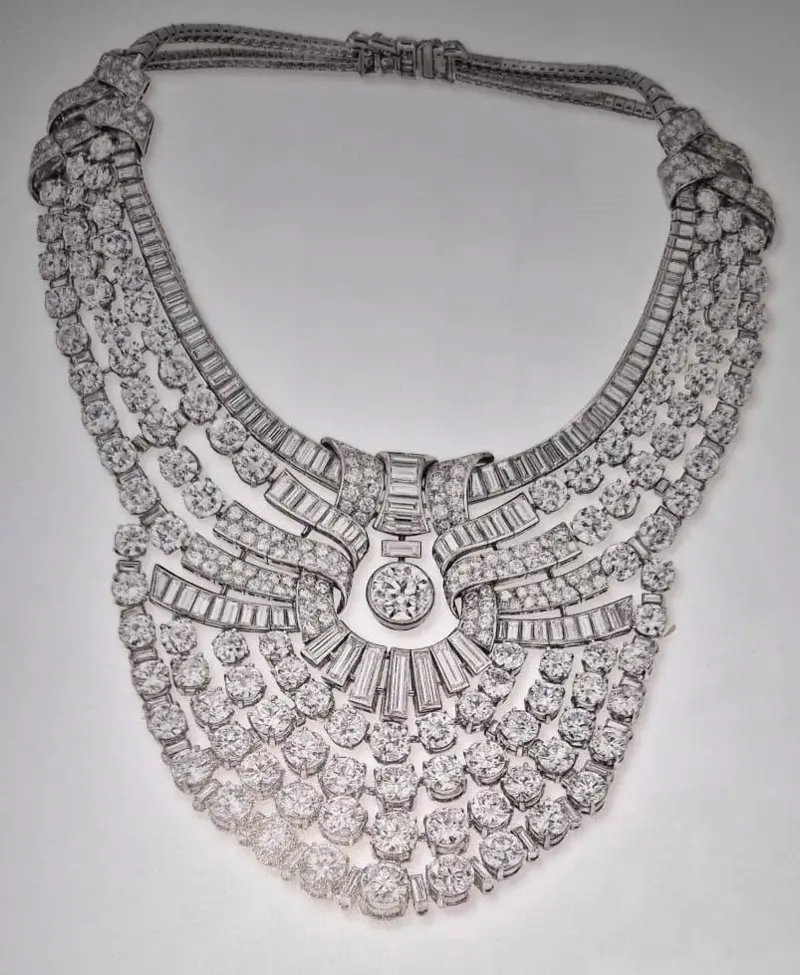
A few hours later, at around 2pm local time, two unmasked men purchased tickets to enter the Vienna Museum of Applied Arts, smashed open a glass display case and grabbed a 200-carat platinum and diamond necklace featuring 673 precious stones.
Designed by Van Cleef & Arpels, the 1939 necklace was once worn by Queen Nazli of Egypt at her daughter's wedding to the future Shah of Iran and is valued at over £3m.
Advertisement
Investigators believe at least one of the men was carrying a concealed firearm.
According to the report from the European crime agency Europol, criminal networks are increasingly targeting high-purity gold and gemstones due to their liquidity on global black markets and the “perception that museum security measures are less robust than those in jewellery stores”.
Europol said criminals are shifting tactics away from stealthy, night-time raids on museums and towards increasingly confrontational, lightning-fast daylight heists that often involve the use of brute force and weapons.
The report said that unlike traditional cultural goods traffickers, these new crime gangs involve opportunistic thieves drawn from other illicit sectors, who are recruited ad hoc via social media platforms or encrypted messaging apps and often have no prior connection to each other.
In response to the changing environment, Europol said it would continue to “offer an EU-wide perspective on the threats posed by these criminals by continuously monitoring operational developments, emerging trends and threats”.
The traditional trafficker
ORGANISED CORE
Operates via tightly structured criminal networks built around a central leader.
NON-VIOLENT SPECIALIST
Relies on stealth, calculated planning, and avoiding physical violence.
NICHE EXPERTISE
Specialises exclusively in organised property crime and cultural goods trafficking.
The emerging aggressor
AD-HOC & DECENTRALISED
Recruited on a “crime-as-a-service” basis via social media with no prior connections.
HIGH-RISK VIOLENCE
Ready to deploy violence, heavily deviating from traditional museum theft profiles.
CROSS-MARKET OPPORTUNISTS
Active in other criminal markets, capitalising on museum heists purely for profit potential.
Source: Changing tactics, changing targets: the evolving nature of museum heists, Europol, August 2026