A record nine museums, libraries and archives have been awarded Designated status for their collections – which span film memorabilia, the archive of a medieval monastery and documents detailing the design, construction and operation of the world’s first underwater tunnel.
The Designation scheme was first launched in 1997 to recognise and celebrate collections of national and international importance, and was relaunched by Arts Council England (ACE) in 2024 with a new focus on the place-based significance of collections.
Applicants must now demonstrate how their collection engages audiences or helps to create a sense of identity for local people and communities.
What does it take to achieve Designation status?
The Designation panel meet twice a year to consider four main areas:
A collection’s national significance
- What stories, histories or ideas the collection communicates effectively.
- Its relevance to particular historic events or periods, geographical areas or economic and social developments.
- How it demonstrates the development of particular ideas, schools of thought, artistic movements or scientific advancements.
- Relevance to individuals, communities or groups of people.
A collection’s local / place-based significance
- How the collection is grounded in its local community.
- The local significance of the collection and what it means to the local people engaging with it.
A collection’s quality
- The effectiveness of the collection’s objects in demonstrating its subject focus’ development, diversity and depth.
- The quality of objects available in the collection – for example, items of particular historic or aesthetic importance.
- The curation and coherence of the collection as displayed in communicating its subject matter.
- How gaps in the collection’s coverage are managed creatively (e.g. with loans, digital documentation).
Research value
- How/if this collection supports research activity and academia.
- Any research activity taking place currently.
- The reputation of the collection as a credible academic source.
- The development of research partnerships with individual researchers and other organisations, including universities.
Before the latest award, there were 164 Designated collections in England, with just two achieving the status in 2025.
Following the most recent meeting of the Designation panel, nine more collections have now been added to the list.
Advertisement
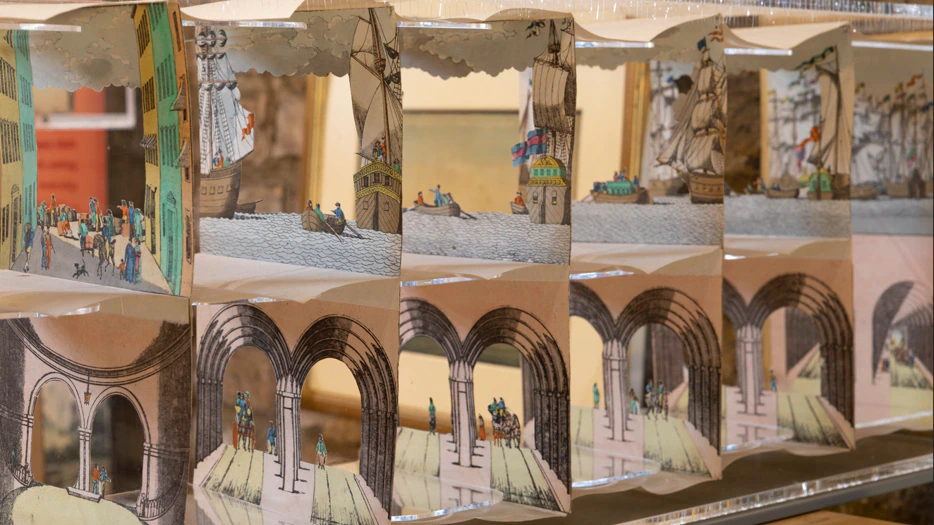
These include Europe’s largest catalogued collection of science fiction books, comics and fan culture objects, which is held by the University of Liverpool, and the University of Exeter’s Bill Douglas Cinema Museum collection, which covers 400 years starting with shadow puppets up to contemporary blockbusters.
The latter museum was founded from the collection put together by the renowned filmmaker Bill Douglas and his friend Peter Jewell, which was donated to the university in the 1990s.
Phil Wickham, curator at the Bill Douglas Museum, said: “[Designation] reflects both the significance of the artefacts we hold in the museum but also the importance of cinema and the optical media that preceded it on people’s lives over the last three centuries. Bill Douglas and Peter Jewell’s vision was that the wonder of moving images could be shared with everyone, and Designation will help us to take this ambition forward into the future.”
Two institutions in Durham were also successful; Durham University Oriental Museum for its 8,300-strong Japanese Collection spanning 16th-century pottery to 21st-century street fashion, and Durham Cathedral, which holds three issues of the Magna Carta as well as extensive records on society, culture and the local economy in medieval England in its archive and library.
In London, the Brunel Museum achieved Designation for its Thames Tunnel Collection documenting the design, construction and operation of the world’s first underwater tunnel.
“The Thames Tunnel was an extraordinary feat of engineering that changed what was thought possible and its influence can still be seen in the tunnels and underground networks used around the world today,” said Katherine McAlpine, the director of the Brunel Museum.
Advertisement
“This award recognises not only the importance of the collection itself, but the enduring legacy of the people, ideas and innovation behind the Thames Tunnel.”
The Designation panel recognises a diverse range of collections, with the latest round of awards covering archaeology, sport and literature.
A prehistoric collection of rare bronze-age log boats and ceremonial monuments held by Peterborough Museum & Art Gallery, and the world’s most extensive collection of rugby memorabilia held by the World Rugby Museum, were also Designated under the scheme.
Sarah Wilson, the heritage manager at Peterborough Museum & Art Gallery, said: “For Peterborough, this award is a source of immense civic pride and strengthens our ability to share this remarkable heritage with residents, schools, researchers and visitors.”
Charleston, the Sussex home of the Bloomsbury Group artists Vanessa Bell and Duncan Grant, was also recognised. The site holds more than 20,000 artworks and is run by the Charleston Trust.
“Designation confirms what generations of visitors have long felt -- that our collection matters, not just to us, but far beyond Charleston too,” said a statement from the trust.
“This recognition marks the start of an ambitious new chapter in how our collection is cared for, understood and shared, including a major audit of the collection currently underway.”
The final institution to be awarded Designated status was Dorset Museum and Art Gallery’s Thomas Hardy Memorial Collection.