
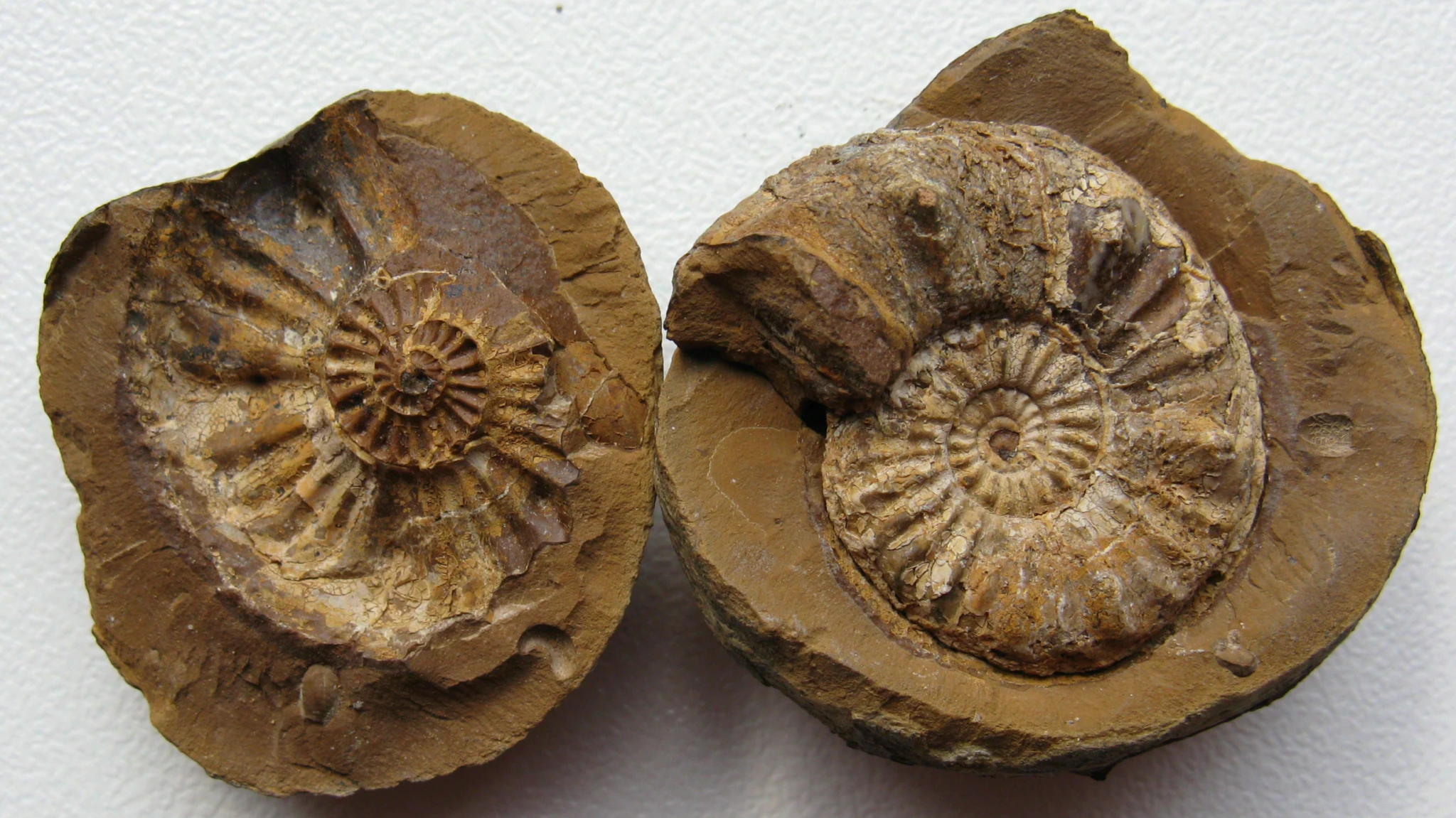
The UK Government has been urged to do more to protect outstanding natural science specimens from being sold abroad and give UK museums a chance to acquire them.
Earlier this month, Bridget Houseago, the director of Lyme Regis Museum, wrote to Edward Morello, the Liberal Democrat MP for West Dorset, highlighting a loophole in the law that means items of natural origin fall outside existing export controls on the sale of cultural goods.
Houseago said this meant that "some important and rare fossils can be sold without an export licence".
The letter was prompted by the private sale of the world-class Chris Moore fossil collection to the Natural History Museum Abu Dhabi. Comprising 318 fossils found on the Jurassic coast, the collection is considered one of the best private holdings of Dorset fossils and contains several unique specimens.
According to The Guardian, it was first offered to the Natural History Museum in London and Amgueddfa Cymru – Museum Wales. Neither institution had sufficient funds to acquire the collection, which was then sold to the Emirati museum for an eight-figure sum.
Both UK institutions were required to sign a non-disclosure agreement and the wider museum sector was not informed that the collection sale was underway.
Advertisement
There is no suggestion that the sale broke any rules, but it has focused attention on the government’s existing Waverley criteria, the benchmarks by which it decides if an object is a "national treasure".
Waverley criteria
The Reviewing Committee will designate an object as a national treasure if it considers that its departure from the UK would be unfortunate on one or more of the following three grounds, collectively known as the Waverley criteria:
- History: Is it closely connected with our history and national life?
- Aesthetics: Is it of outstanding aesthetic importance?
- Scholarship: Is it of outstanding significance for the study of some particular branch of art, learning or history?
Overseen by Arts Council England, the Waverley criteria Reviewing Committee can recommend a temporary export bar on items that meet at least one of the three benchmarks, giving “a final opportunity for institutions and individuals in the UK the chance to raise the money, purchase the item and retain it in the UK for the public to enjoy”.
At present, the criteria only apply to human-made objects, leaving items of natural origin unprotected.
Houseago said legislation should be strengthened to ensure Accredited UK museums are informed when significant natural science collections are proposed for sale and given the opportunity to purchase them.
“In the same way as with treasure trove, painting and other artefacts, an export ban can be put in place and museums are notified,” Houseago said in her letter. “Something similar should be done for fossils and there are existing mechanisms that could be used.”
Advertisement
She also called for a national register to be established to record important fossil finds.
Houseago's views were supported by Lyme Regis Museum's chair of trustees, Jonathan Evans. The museum, which is on the site of 19th-century palaeontologist Mary Anning's former home, has an extensive collection of fossils from the Jurassic coast. Houseago and Evans say the museum could have worked with other regional institutions to fundraise for the Chris Moore collection.
In response to Houseago’s letter, Morello said he had written to the Department for Digital, Culture, Media and Sport to raise the issue.
He said: “Our natural history is as important as our cultural history and we should take every step possibly to preserve it for the nation.”


Geological assets (fossils, data, core samples) should also be protected during construction projects in the same way archaeology is through recording and samples. You can only dig that hole once!