Historic Royal Palaces has announced a major investment in its historic Tower of London site, which will see two the development of new learning centres, a dedicated community space for local residents, a “green classroom” in the moat, and an archive study centre.
Tomorrow’s Tower, the long-term strategy for the Unesco World Heritage Site, will increase learning capacity by 250%, enabling the site to increase annual school visits from 125,000 to 200,000 children, as well as extending access to pupils and communities across the UK through new digital programmes.
The various aspects of the programme are expected to complete by 2030.
Historic Royal Palaces has already raised £20m towards the £70m projected costs of the programme, with support from the Julia Rausing Trust, the National Lottery Heritage Fund, Garfield Weston Foundation and others. Jamie Fobert Architects and landscape architects Grant Associates have been appointed to design the spaces.
“The Tower of London should be a place of learning, discovery and connection for everyone, and Tomorrow’s Tower is our long‑term commitment to making that happen,” said John Barnes, chief executive of Historic Royal Palaces.
“This investment in schools and learning is an important first step, within a wider programme that also addresses sustainability, visitor experience, conservation and access. Thanks to the generosity of our funders, we are opening the tower up more widely, so future generations can understand why its stories still matter.”
What do the plans include?
Weston Learning & Community Centre
Located on the Wharf, the new Weston Learning & Community Centre will feature flexible hands-on learning spaces, including the Clore Learning Studio, the Charles and Nicky Manby Courtyard, a dedicated community room and a calming sensory zone. The spaces will support workshops led by costumed presenters and hands-on nature-based activities for learners and communities.
Julia Rausing Learning Centre
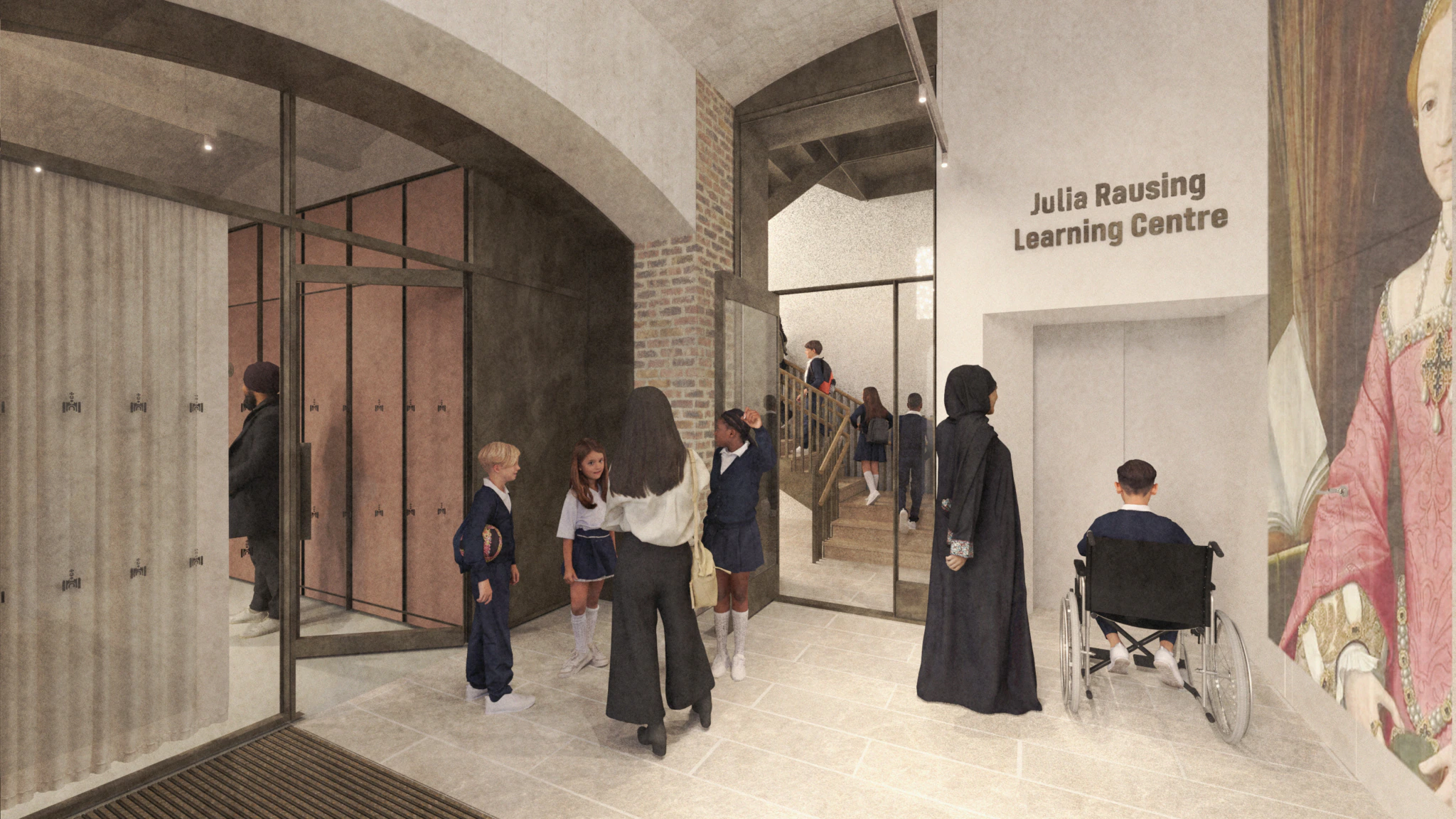
The Tower of London’s historic Waterloo Block will be adapted and conserved to create the three‑floor Julia Rausing Learning Centre, providing education spaces for curriculum-linked learning, teacher professional development, live digital learning, archive exploration and youth and community projects. The ground floor will be available for community and schools groups, with classrooms and lunchrooms on the first floor and a new broadcast studio on the second floor.
Archive Study Centre
The Tower of London’s architectural archives will be opened to the public for the first time. Based within the Julia Rausing Learning Centre, the study centre will make more than 25,000 drawings available for students, teachers, researchers and local communities.
Green classroom
The tower’s moat will be developed into a biodiverse and climate-rsilient landscape to host a new “green classroom” for schools and community groups to explore biodiversity, climate and history. Designed by landscape architects Grant Associates, it will offer hands-on opportunities for outdoor learning.
Mint Street Community Room
The project includes the tower’s first dedicated space for local East London residents – the Mint Street Community Room.