
Unesco and the International Council of Museums (Icom) have jointly launched a global survey on the use of AI in museums.
The survey aims to gather examples, baseline information and data on how museums are using AI in their operations. It will try to identify opportunities presented by the technology across diverse institutional and geographic contexts.
The survey asks museums to share their institutional approaches to using AI (for example, using AI to create or support exhibition development or for research and analysis purposes) and what tools they are using.
It also examines what departments are making use of the technology and what, if any, measurable improvements AI has had on the museum’s operations, services or activities.
They are also invited to share challenges or concerns, for example around copyright, data protection or environmental impact.
The survey asks whether respondents are taking into consideration any ethical principles when using AI. Examples include inclusivity, cultural sensitivity and accuracy.
Advertisement
Crucially, respondents can say what ethical frameworks, recommendations or policy documents have guided their use of AI. Both Unesco and Icom are keen to find out if their respective codes addressing the ethical use of AI are guiding practice.
Finally, the survey asks specific questions around budgets, training and skill gaps.
The results of the survey will be presented in a joint report, which will guide future capacity-building efforts led by both organisations. It aims to provide “an evidence-based analysis of current practices, highlight key trends and challenges, and present case studies”.
The survey closes on 21 July.
The ethical challenges of using and adopting AI within museum settings will also be explored at the Museums Association’s (MA) annual Conference in November – and the applications of AI will be the subject of a practical online event in December.
Advertisement
The MA is currently recruiting for a new AI and Ethics Expert Working Group, which will support the development of a resource to guide ethical decision-making on AI in museums.
The deadline for applications to join the working group is 2359 on Sunday 5 July 2026.
‘Making art accessible’
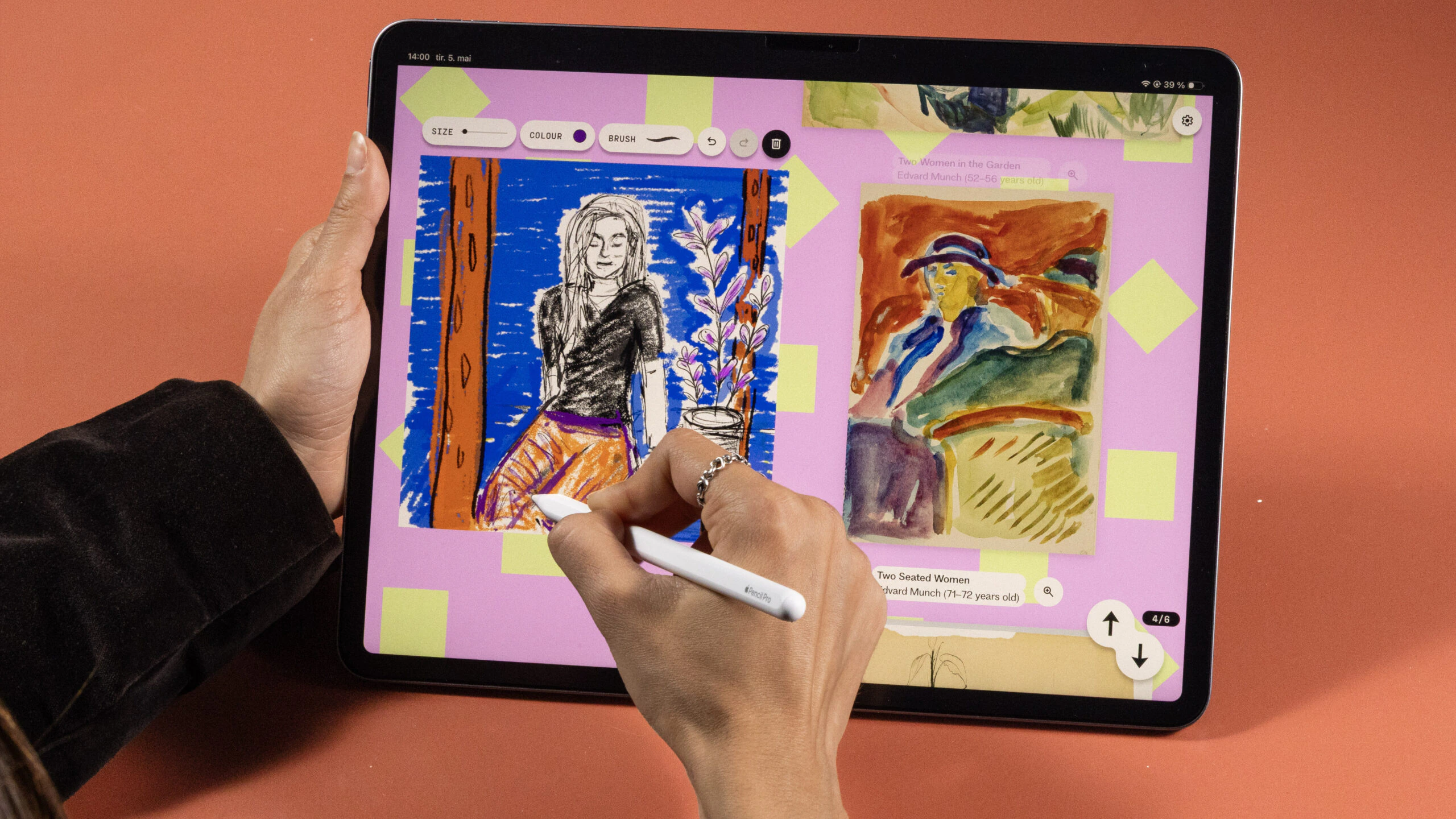
Meanwhile MUNCH, the museum dedicated to the artist Edvard Munch in Oslo, Norway, has today (24 June) announced a new interactive exhibition that aims to widen access to its extensive drawing archive using AI.
The museum holds about 7,000 drawings by the artist, most of which are too fragile to be displayed for extended periods. The new exhibition, Connect the Lines (from 26 June to 29 November) will invite visitors to use tablets to create their own drawings – an AI-based system will then analyses their lines and finds similar drawings in Munch’s digital archive.
“Through this exhibition, we want to show that Munch’s drawings are not merely historical documents, but living expressions that continue to inspire creativity, curiosity, and new encounters between people and art,” said Tone Hansen, the director of MUNCH.
Advertisement
“The technology is a tool for making art more accessible. With the help of AI, we can open up a large and fragile drawing collection that is otherwise rarely shown, while also ensuring that the works are preserved for the future.”
The exhibition is based on a research project called New Snow that investigates how technology can be used to create new encounters between art and audiences.
The AI system that connects visitors’ drawings with Munch’s works was developed in collaboration with Tata Consultancy Services.