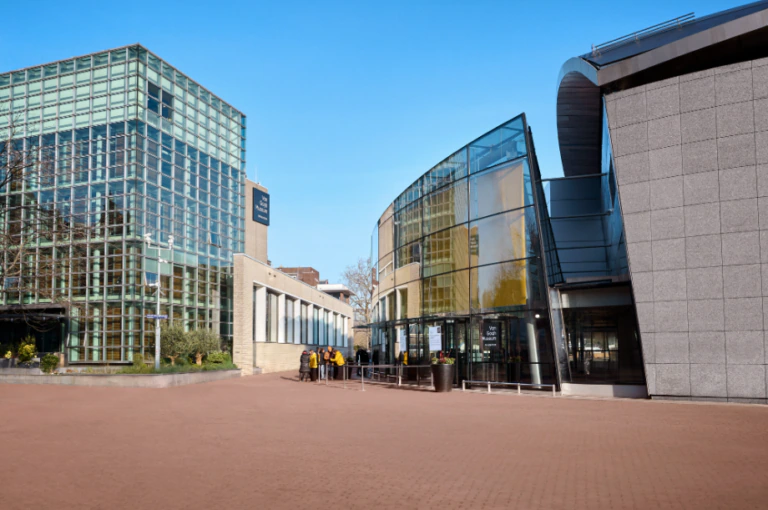
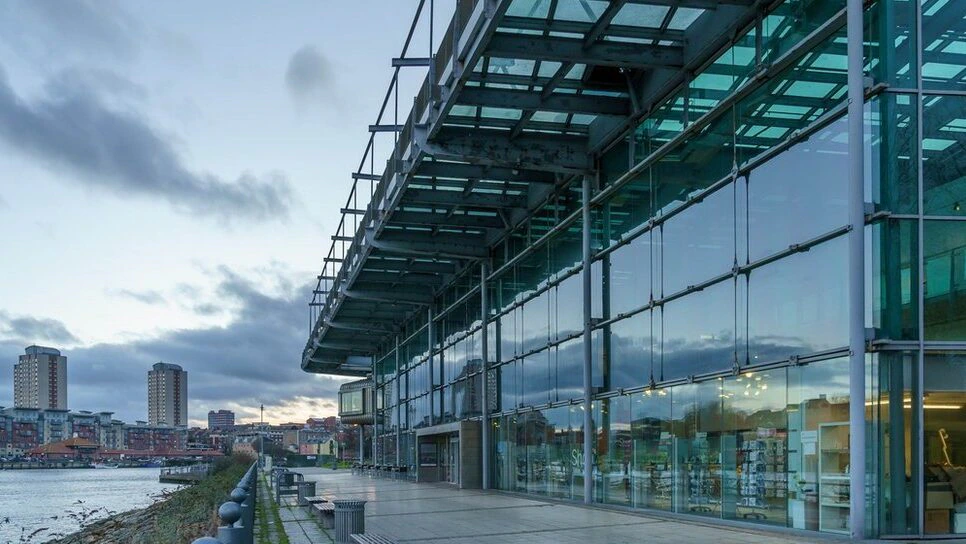
Industry leaders are calling for urgent action to safeguard the future of the UK’s glass heritage in light of the upcoming demolition of the National Glass Centre.
The centre, which houses a museum of glassmaking, hot glass furnaces and workshops as well as the Northern Gallery for Contemporary Art, will close in its current site on 31 July. The facility is of the one of the few places in the UK that still teaches the art of hot glass blowing.
The site is owned by the University of Sunderland and operated by Sunderland Culture, an independent trust responsible for several cultural assets in the city.
The university says it cannot afford to repair the 1998 building and is planning to tear it down. It has estimated that the cost of renovating the building could come to between £14m and £45m.
The building is also energy-inefficient, according to the university, with bills coming to around £500,000 a year; it says altogether the site faces an annual funding gap of £800,000.
These figures have been disputed by campaigners opposed to the closure, who say the building is structurally sound and could be adapted at amuch lower cost. The energy costs figure “is out of date, is a snapshot and doesn’t reflect what the building can be capable of in the future away from the university as it reflects how the building was being run then, not how it will be run in the future”, Carolyn Basin, chair of the Campaign to Save the National Glass Centre, told Museums Journal.
Advertisement
The university is planning to suspend its glass and ceramics degree programmes alongside the building closure, saying they are no longer financially viable.
Sunderland Culture is hoping to develop a new, £7.5m glass facility on a smaller site, and has secured a £5m grant from the Department for Culture, Media and Sport's Cultural Development Fund towards this.
In May, campaigners launched a last-ditch bid to save the centre, applying to Historic England for listed status to protect the building, which is currently scheduled to be demolished in August. In response, the university has applied for a Certificate of Immunity against listed status. The outcome of these applications has not yet been determined.
Open letter
In an open letter published this week, spearheaded by Alexander Goodger, the director of Stourbridge Glass Museum in the West Midlands, industry leaders said the National Glass Centre’s predicament was the “canary in the coalmine” for glass heritage.
“Despite the nation’s rich, millennium-spanning history of glassmaking, we stand at a precipice,” said the letter.
Advertisement
“Glass studios are hanging up their tools, and factories are closing their doors. This year alone, we have witnessed the loss of Bristol Blue Glass after 38 years of operation, and, in August, we will see the bulldozers move in on the National Glass Centre in Sunderland.
“This is not an isolated series of tragedies. It is a systemic failure that calls for immediate, targeted, and sustained intervention.”
The letter said the financial model for glass museums and craft institutions had been “critically weakened” by soaring energy costs.
Stourbridge Glass Museum, which opened in 2022, has seen its bills rise from £2,000 to over £10,000 a month as a result of the energy crisis.
“While we have successfully stabilised our finances through the creation of the world's first net-zero glass studio, powered by solar panels and featuring eco-radiators and air-source heating, we are in the minority,” said Goodger. “We used much of our unrestricted reserves to survive that period.”
Other institutions are facing similar challenges. According to the letter, the World of Glass in St Helens, Merseyside, was recently forced to launch a public appeal after the withdrawal of its council funding, and is facing a “huge deficit”.
Advertisement
The Red House Glass Cone, also in Stourbridge, is also running at a deficit. The industrial museum and heritage site ceased glassmaking in its landmark cone five years ago due to “prohibitive costs”.
“If the major museums of glass, Sunderland, St Helens, and Stourbridge, continue to teeter on the edge of annihilation, the damage will be irreversible,” said the letter.
It warned the crisis would lead to the loss of collections, loss of skills and specialist staff, and loss of culture and “connection to a craft that stretches back over a thousand years”.
Industry leaders are calling on the national government, local authorities, and museum and heritage sector bodies to take urgent action to reverse the trend.
“We need a cross-sector strategy to ensure that what remains of our glass heritage is preserved for future generations,” said the letter.
Interventions could include targeted financial support, as well as long-term investment backed by national and local government to “stabilise the sector and support the transition to sustainable energy models”.
The letter urged sector bodies to “advocate for free net-zero audits and the funding required to implement the results”, and to raise awareness among the public “that this is a major issue that needs to be addressed”.
“We urge professionals across the sector to recognise the severity of this moment,” said the letter.
“Visit the National Glass Centre before it closes forever at the end of July. Appreciate what we stand to lose. We must act now, or our glass heritage will be completely wiped out within five years.”
Update
26.06.2026
Article updated to reflect the view of campaigners that cost estimates provided by the university are inaccurate.