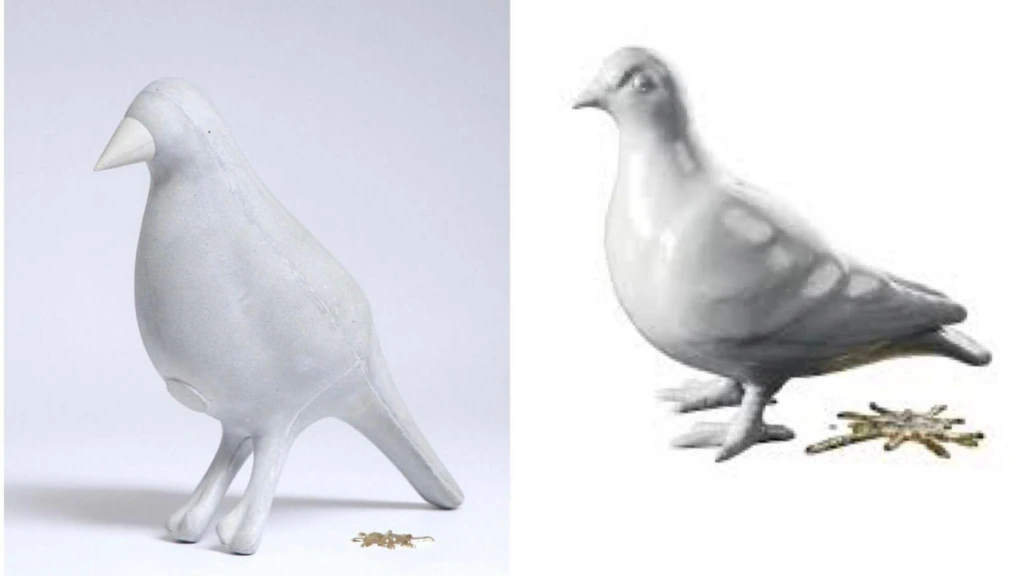
London Museum says it does not accept a claim that its famed “pigeon and splat” rebrand was plagiarised from a Manchester-based design studio.
Designers Michael Wild and Rebecca May, the husband-and-wife founders of May Wild Studio, went public last week with their claim that the museum’s 2024 landmark rebrand bears a “strikingly similar resemblance” to their Coo Pigeon design, which first launched in 2017 at London Design Festival.
The couple’s copyright claim has been supported by Anti Copying in Design (Acid), the design and intellectual property (IP) campaigning organisation.
Both designs feature a white pigeon alongside a “splat” of gold glitter. London Museum’s pigeon-and-splat motif was created by Uncommon Creative Studio and is incorporated across its website and other branding.
The designers say they approached the museum to “open [a] dialogue around attribution and visibility for independent creatives” but were rebuffed. They say they are now reserving their position and taking legal advice.
Advertisement
However, London Museum says it is confident that its design was developed independently. A spokesperson for the museum said: “London Museum’s visual identity was created by Uncommon Creative Studio following a lengthy and detailed design process in collaboration with Londoners. We are confident it was developed entirely independently and do not accept that the pigeon and splat is a copy.”
The designers say the similarities between the two motifs don’t stop at their appearance, claiming that the wording used by London Museum also echoes their design sentiments.
They have pointed to a 2024 blog published by the museum saying: “The pigeon and splat speak to a historic place full of dualities, a place where the grit and the glitter have existed side by side for millennia.”
This compares to a 2018 post by May Wild Studio stating: “Coo Pigeon is a celebration of our cities, representing two sides of them: sometimes run down but sometimes glorious, a pest but also of a creature of value. They are a story of finding beauty and humour in the everyday, in the forgotten, in our common humble pigeon and its good-luck golden droppings.”
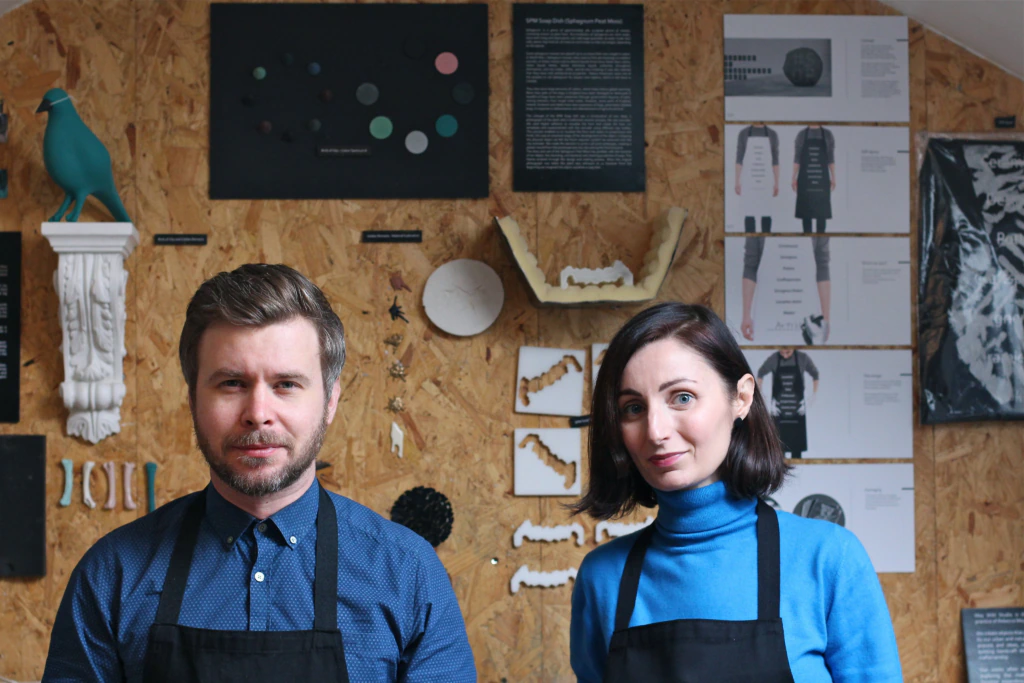
A joint statement from the couple said: “We’ve spent over a decade developing and handmaking Coo Pigeon, documenting every stage, working with local storytelling connected to people and place, and pouring our hearts into this concept.
Advertisement
“To see the London Museum pigeon celebrated internationally without any acknowledgment of our work has been difficult. We’re seeking respectful acknowledgment, not conflict. Our hope has always been for open dialogue around attribution and visibility for independent creatives. This isn’t about blame — it’s about encouraging better practice in the sector.”
Following recent media coverage of the case, the designers say they remain open to dialogue with the museum.
A spokesperson for May Wild Studio told Museums Journal: “May Wild Studio is currently exploring all options and remains open to constructive dialogue with the London Museum. The studio understands that the London Museum commissioned Uncommon Creative Studio in good faith; however, a fundamental part of any design process is due diligence — including checks for existing or similar creative work.
“May Wild raised concerns with the London Museum as soon as the similarities came to light. The studio’s ‘Coo Pigeon’, featuring its distinctive gold ‘poo splat’, was first launched at the London Design Festival in 2018 and has since become a recognised piece within the creative community.
“It is reasonable to ask how a global design agency of this scale, working on a publicly funded project, was not aware of an existing concept of this nature.
“On a positive note, the level of interest in the story has been significant, and has brought renewed international attention to May Wild’s original design.”
Advertisement
Dids Macdonald, the chair and co-founder of Acid, said: “This case reflects wider challenges faced by independent designers whose long-established work later resembles high-profile commercial or public-sector projects.
“May Wild Studio have a clear, dated audit trail for their designs, and situations like this underline the importance of robust due-diligence processes — particularly where publicly funded cultural institutions are involved.”
MacDonald welcomed recent coverage of the case, saying in a subsequent statement: “Rebecca and Michael are acknowledged in their field for not only their creative excellence but their decency. Sadly, this is a typical David and Goliath case which many other small- and medium-sized enterprises face daily.
“I am most surprised that neither the London Museum, (funded by the City of London Corporation) nor Uncommon Creative, did not do their due diligence, which would have revealed the 12-year compelling journey of the origination of this iconic design. IP ethics, respect and compliance are pivotal to Rebecca and Michael; all they wanted was the truth to be told.”
The London Museum is scheduled to open the first phase of its Smithfield Market redevelopment in late 2026.