The Powell-Cotton Museum in Kent is marking its 100th anniversary this year with a range of celebratory exhibitions, events and other activities.
The charity that runs the museum, which reopened recently after a winter break, was created in 1926. A new welcome space introduces visitors to how and why the museum was founded, highlighting the people involved and how it developed across the century.
The museum was first opened in 1910 by Percy Powell-Cotton (1866-1940), who created the venue in the grounds of his home, Quex House, to house the collection of natural history specimens and cultural objects that were collected on his expeditions. As part of its anniversary celebrations, the museum site has rebranded to Quex House and Gardens, home of the Powell-Cotton Museum.
Powell-Cotton, an explorer, hunter, naturalist and anthropologist, who led expeditions across Africa and Asia, created the charity to secure the future of the collection.
In recent years, the museum has been reinterpreting its collections of artefacts connected to Africa. Galleries that used to include captions and text panels reflecting only the interests, experiences, knowledge and perspectives of Powell-Cotton are being updated to highlight the objects themselves and the lives, cultures and beliefs of communities whose histories they belong to.
In July, the museum will unveil new displays related to the art and artefacts of the Zulu people of Southern Africa.
Advertisement
“We’re thrilled to be opening our doors again at the start of our centenary year,” said Sarah Corn, the CEO of the Powell-Cotton Trust. “Over the past year, we’ve been working hard to highlight the sheer breadth of experiences on offer throughout our beautiful venue, from stunning natural history, family friendly trails, thousands of objects waiting to be explored and researched, historic architecture and sweeping gardens.”
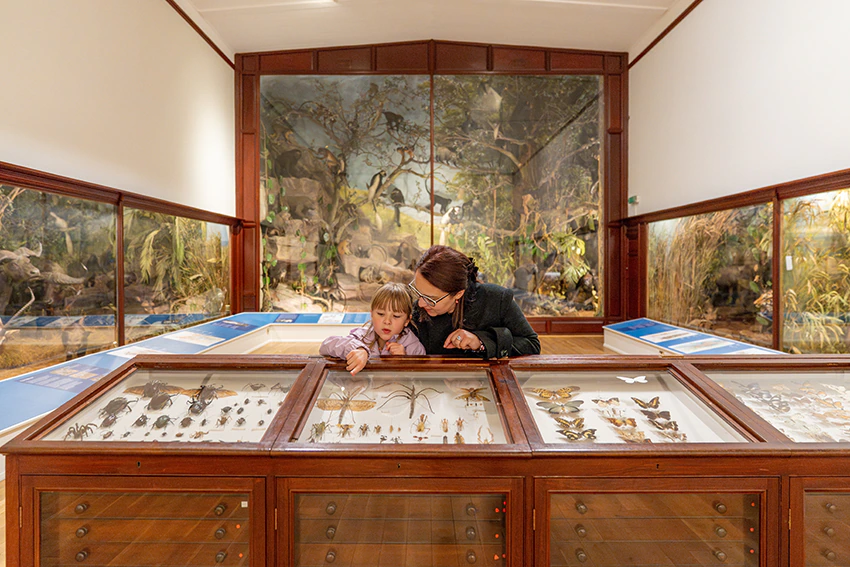
On 1 April, a new exhibition by artist Sam Parsons will open. Parsons’ paintings are steeped in ecology and the natural world, reflecting his background in zoology. The exhibition will include new work inspired by the century-old dioramas which draw so many people to the museum.
And running all year will be PCT100: Past & Present, a project in which local schools, community groups, visitors and artists will collaborate to produce 100 pieces of artwork inspired by the museum. This has been funded by Arts Council England.
The museum, house and gardens also has a new website.