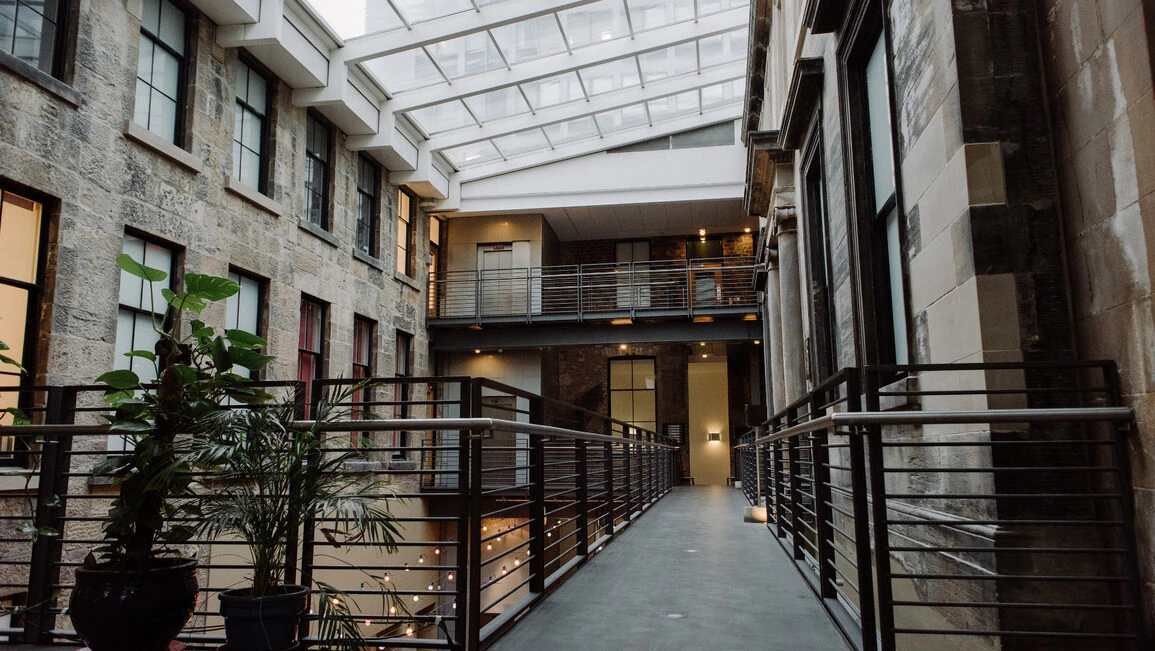
The closure of the Centre for Contemporary Art (CCA) in January is part of a pattern of “instability and loss” across Glasgow’s culture sector, former staff at the venue have said.
In a statement released this week, staff previously employed by the multi-arts venue said they had been “deeply affected by both the decision to close the organisation and the manner in which it has been handled”.
They said their experience hadn’t been an isolated incident but evidence of the increasing “precarity of venue-based cultural work” in the city.
Since the announcement of CCA’s closure, it has been revealed that multiple arts organisations including Glasgow Print Studio and Transmission Gallery are facing eviction from the cultural centre, Trongate 103, due to rent hikes. Trongate’s landlord is City Property, a property company owned by Glasgow City Council.
Meanwhile, the Listen Gallery, an independent, Iraqi-run, free artist space, was served with a short-notice eviction in early 2025.
“Compounded by the recent Union Street fire, there is a growing sense that cultural infrastructure in the city is being lost without sufficient care or protection, shifting from ‘Glasgow City of Culture’ to ‘Glasgow City of Closure’,” said the statement from the former staff.
Advertisement
“The cumulative impact of over a decade of underinvestment in the sector is now being acutely felt. Cultural work, particularly when tied to physical spaces, is becoming increasingly insecure, and the conditions experienced by CCA staff must not be allowed to be replicated elsewhere in Glasgow, or across the country.”
The ex-workers said their treatment had raised questions about how “principles such as Fair Work [introduced by the Scottish Government to improve low pay] are being upheld in practice”.
“We echo previous calls to Creative Scotland and Glasgow City Council for accountability and meaningful engagement: will those with decision-making power listen to cultural workers in Glasgow, and will meaningful consultation with staff and the sector be honoured?” they said.
The workers said they had faced significant delays in receiving their notice pay and arrears, as well as in accessing their personal belongings at CCA.
Many have faced financial hardship as a result, they said, leaving them unable to meet rent and living costs, and having to move in with family or rely on emergency support. Some have also faced risks to their visa status as a result of the sudden closure, they said.
“In the absence of any meaningful financial or wellbeing support, staff have navigated this period with patience, professionalism and mutual care, acting collectively with the backing of [the union] Unite to share information, advocate for our rights, and support one another,” they said.
Advertisement
The group of workers is now establishing a hardship fund for colleagues facing immediate financial crisis.
The workers are also planning to hold a community assembly to consider the broader challenges facing the city’s culture sector. They have invited artists, organisations, unions, and cultural workers to join a public meeting on Thursday 9 April, 6pm at The Boardwalk, Glasgow.
“This will be an opportunity to come together to discuss fair work, the future of Glasgow’s cultural spaces, and how we can organise collectively to advocate for change,” they said.
The former workers will attend Glasgow Trades Council’s May Day march on Sunday 3 May as a cultural bloc to “demonstrate and celebrate our collective support for the cultural work and community in Scotland”.
“We encourage those across the cultural and creative sectors to contribute to and help shape this over the coming weeks,” they said.