
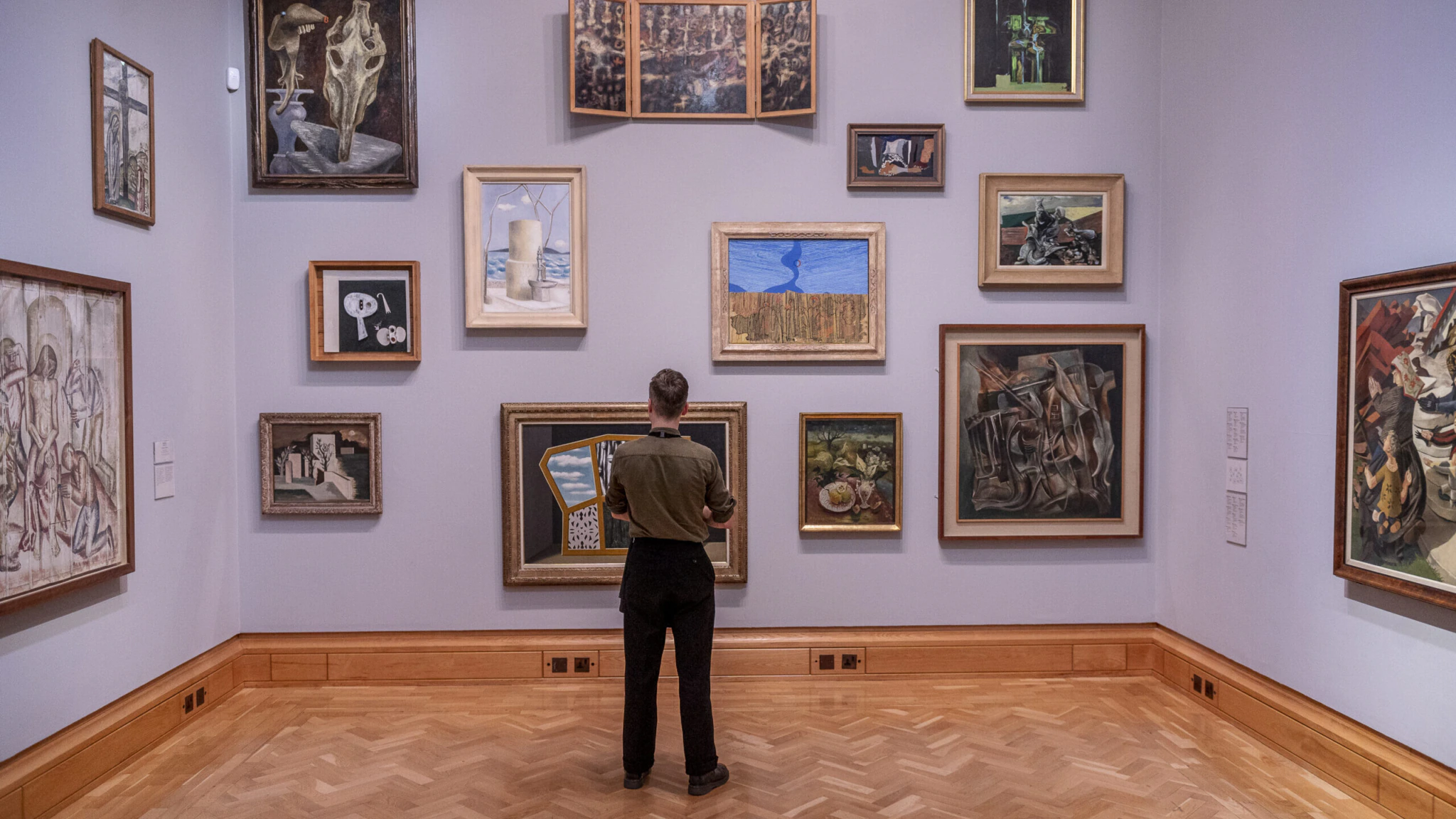
The funding crisis in the sector has led to a renewed debate about universal free entry at national museums and galleries, the New Labour policy that celebrates its 25th anniversary in December.
The recent Hodge review of Arts Council England recommended that international tourists should be charged to access the permanent collections at national institutions.
It is a move that has already been considered by the Treasury, which reportedly tried to end free entry for overseas visitors as part of a raft of spending cuts in chancellor Rachel Reeves’ 2025 budget, and also modelled and considered ending free entry for everyone during those discussions.
The plans were eventually dropped after strong pushback from ministers at the Department for Culture, Media and Sport (DCMS), including the culture secretary Lisa Nandy, LBC reported last month.
A number of museum and heritage leaders, some of whom previously supported universal free entry, have recently signalled that they would be in favour of reintroducing charges in some circumstances.
Nick Merriman, former leader of the Horniman Museum & Gardens and English Heritage, told the Daily Telegraph last week that his views on the matter had changed.
Advertisement
“The statistics show that, actually, for the national museums, not charging has increased numbers vastly, but it hasn’t done much in terms of widening the audience. So you just get more middle class people going,” he told the publication.
“In principle, why not charge? Most people, for the national museums, are willing to pay, just as they are for the National Theatre or for National Trust properties, or English Heritage properties.”
Roy Clare, the former head of Royal Museums Greenwich and the now-defunct Museums, Libraries and Archives Council, has called for a “more sophisticated approach”.
“I’m not opposed to free entry, but I don’t think it has to be free for everybody, as it were, 24/7 or 365,” he told the Telegraph.
“I think we need a more sophisticated approach to it. And so my instinct 25 years on is we must not bar people from accessing their collections. But that doesn’t mean it has to be free all the time.”
Meanwhile Mark Jones, the former director of the Victoria & Albert Museum, who recently stepped in as interim director of the British Museum after its theft scandal, has described universal free entry as “regressive and inequitable”.
Advertisement
“What’s happening is that people on relatively modest incomes are paying tax, but the people who benefit are overwhelmingly tourists, and tourists, by their nature, are not particularly hard up – otherwise they wouldn’t be coming to London, which is quite an expensive visit,” he told the Telegraph.
Jones said charging could also help with overcrowding at the national museums by reducing the burden of “heavy visitation”.
The Museums Association continues to strongly support free entry, and has warned that a reintroduction of charging could hit the tourism, retail and hospitality sectors.
Museums Association director Sharon Heal said: “We strongly support free entry to national museums and believe it has been a major cultural policy success which delivers a huge range of cultural, learning and economic benefits.
“Museums are an essential part of the fabric of society and they aim to be welcoming and accessible spaces for all.
“Introducing charging for some to national museums could create barriers to access, impact visitor numbers and result in UK residents being turned away because they don’t have ID.
“Admission charges for international visitors could also cause reputational damage for the UK, which would likely impact tourism and affect other sectors like retail and hospitality.”


Its time for a re-think. Charge tourists in London and share the profits with non-London Museums. Why are people outside of London subsidising tourists while regional museums are cash strapped? It’s not like people outside of London can pop into the majority of the Nationals. We have to pay the northeners/ southerners tax of high rail fares just to get there. People are paying twice through taxes and travel just to see the major Nationals. Bring in some balance.
I agree! There is too much of the London-centric views where anything north of the Watford Gap is struggling to remain afloat, and the nationals are generally more favoured in the funding than the regionals.
Museum ‘universalists’ have long argued against restitution and repatriation on the ground that “museums serve not just the citizens of one nation but the people of every nation.” (Declaration 2003). Or at least those who can pay for the privilege, “otherwise they wouldn’t be coming to London, which is quite an expensive visit”.