Norfolk Museums Service, Historic England and the National Museum of Scotland are coordinating the research and conservation of an “ incredibly rare” iron age hoard found last year in west Norfolk.
Made public this week, the Norfolk Carnyx Hoard was discovered during a routine excavation by the independent archaeological company Pre-Construct Archaeology (PCA) as part of the standard planning process for residential properties.
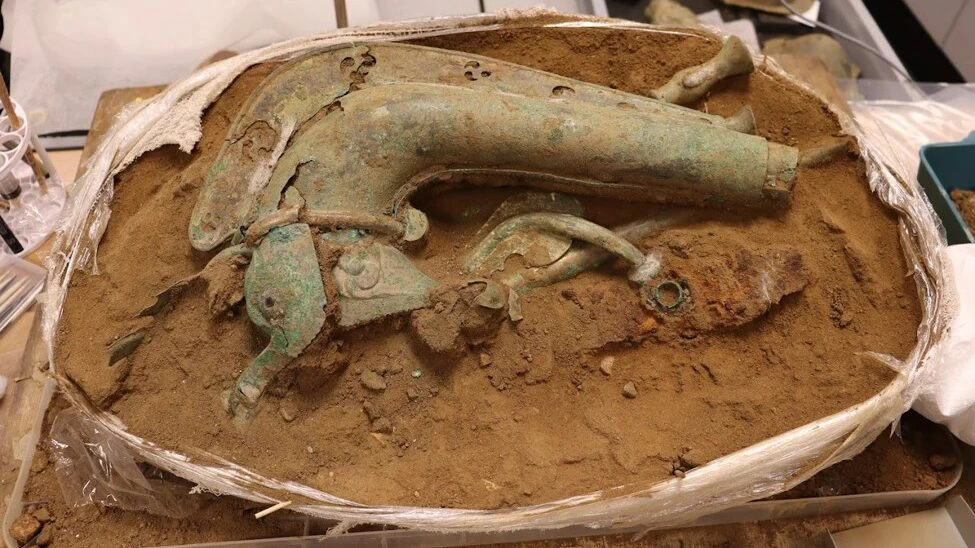
The hoard includes a near-complete animal-headed carnyx, or battle trumpet – one of just three in Britain and one of the most complete found in Europe. The bronze instruments were used by Celtic tribes to inspire their warriors in battle.
The hoard also features the first-ever boar's head flag standard to be found in Britain, as well as the components of other carnyces, shield bosses and other associated metalwork.
In a statement, PCA said: “Finds of this kind are exceptionally rare in Britain and across Europe.
“Following discovery, the hoard was carefully lifted intact within a block of soil to preserve its archaeological context. Non-invasive imaging, including X-ray and CT scanning, has revealed the complexity of the assemblage prior to conservation.”
Advertisement
PCA said it was working closely with Historic England, Norfolk Museums Service and National Museums Scotland to support the ongoing conservation and research of the hoard.
The statement added: “We are extremely proud of the PCA field team, whose expertise and careful decision-making ensured the safe recovery of this remarkable discovery.”
Historic England spokeswoman Esther Blaine said: “This newly excavated carnyx example is one of only three known from Britain and is one of the most complete found in Europe.
“The finds of the boar’s head and the shields are incredibly rare.”
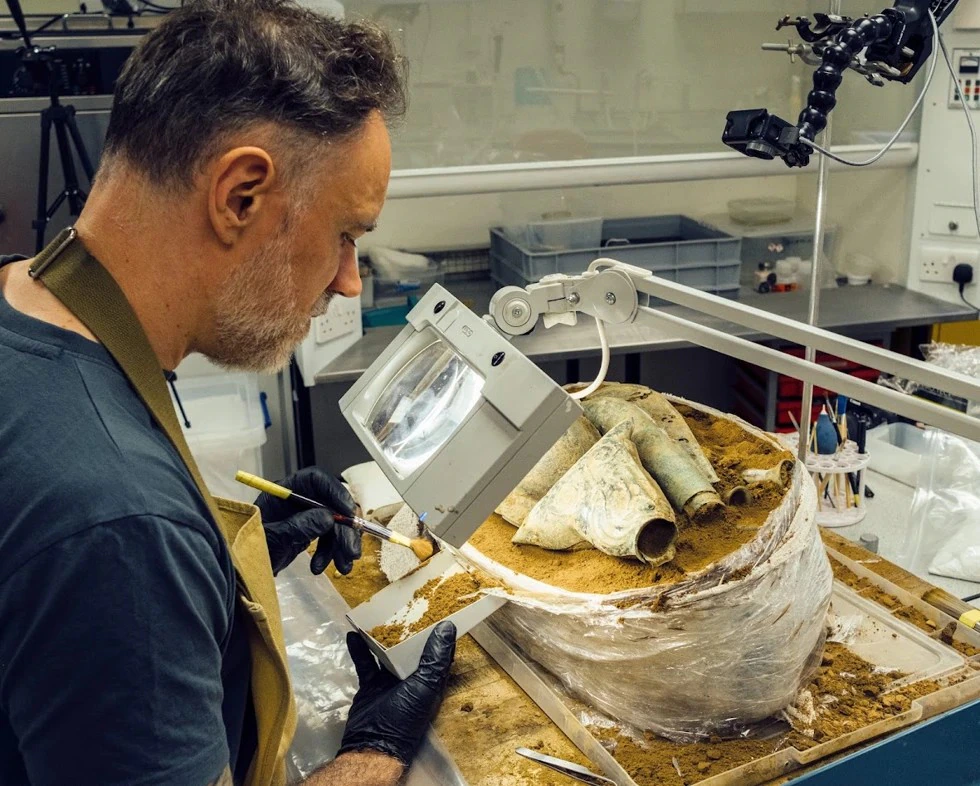
According to Historic England, the items are in a very fragile condition and require extensive stabilisation work before detailed research can begin.
Advertisement
Blaine emphasised the importance of non-invasive archaeological imagining methods and techniques in preserving the context of the hoard.
Following discovery, the objects were carefully lifted within a block of soil from the site. Initial scanning took place to reveal how the items were positioned within the soil block. Conservators at Norfolk Museums Service then removed each object for preliminary examination.
Tim Pestell, senior curator of archaelogy for Norfolk Museums Service said: “This find is a powerful reminder of Norfolk’s Iron Age past which, through the story of Boudica and the Iceni people, still retains its capacity to fascinate the British public.
“The Norfolk Carnyx Hoard will provide archaeologists with an unparalleled opportunity to investigate a number of rare objects and ultimately, to tell the story of how these came to be buried in the county two thousand years ago.”
The story of the discovery will feature in the BBC’s Digging for Britain series on 14 January 2026.
The find was reported to the coroner and an inquest will be held to determine if it is treasure. Its long-term future has yet to be decided.