Ben Uri, a London museum dedicated to spotlighting refugee and immigrant contributions to British art, has announced the launch of a research institute to mark its 110th anniversary.
The Ben Uri Research and Dissemination Institute will record, share and teach the "huge, regularly under-recognised and rarely acknowledged" contributions made by immigrants and refugees to British society since 1900.
The institute will cover 12 key specialisms:
- Visual arts
- Design
- Architecture
- Media
- Technology
- Science
- Literature
- Performance
- Music
- Business
- Sport
- Hitler Emigres
It aims to educate and inspire people across all age groups and walks of life, recognising that an estimated 40% of the London population and 20% of the wider UK population are immigrants.
Announcing the plans this week, David Glasser, the executive chair of Ben Uri, acknowledged how fraught the topic of migration had become in the current discourse.
Advertisement
“If we can make children understand that the child who's sitting next to them in school, who may be a different colour, or may speak a different language, is not anything else apart from a fellow human being, if we can make adults not pick up a brick or a fireball to throw into a hotel full of refugees, then this museum will be contributing something more than simply showing our best works,” he said.
“If we're going to be in this country, we have to live together in social harmony.”
The announcement of the research institute came as part of a wider event to celebrate 110 years since the original founding of Ben Uri in Whitechapel and 25 years since its move to St John’s Wood in north-west London.
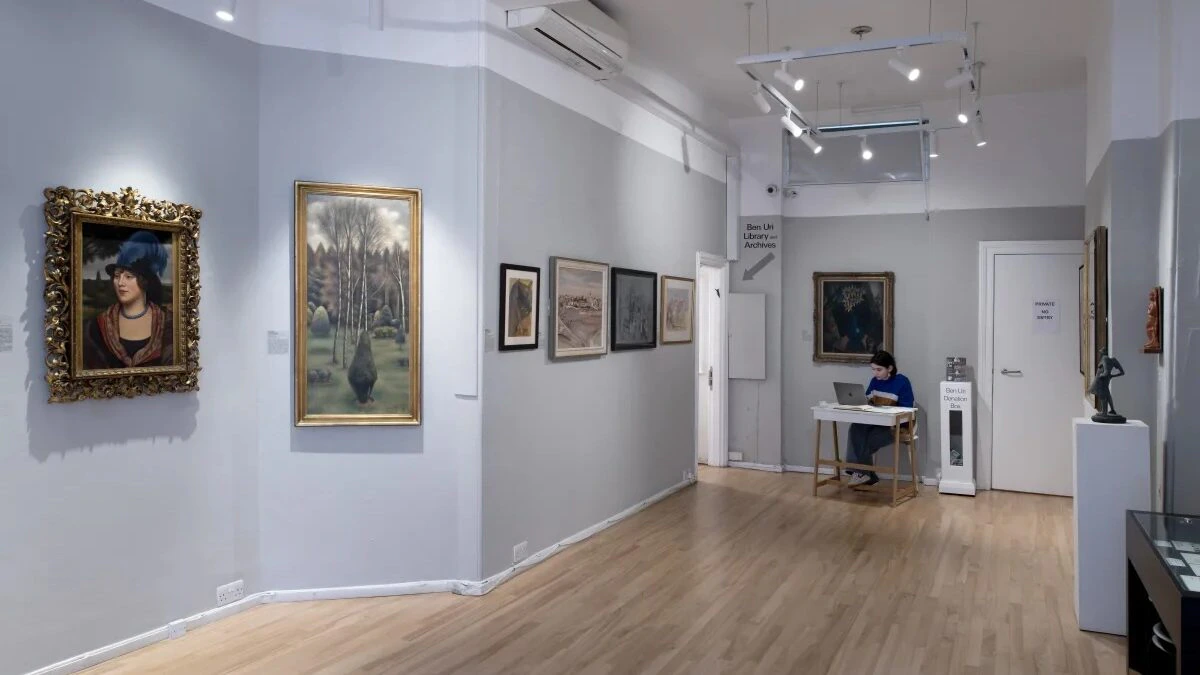
Works acquired by the gallery over the last quarter century, including those by George Grosz, Marc Chagall, Frank Auerbach and Oscar Kokoschka, were on display at the event.
The institute is the final expansion of the museum's 2018 strategic plan, which saw it commit to a "fully digital-first future".
After facing closure in 2015, Ben Uri transitioned in 2020 into a hybrid, digital gallery, increasing engagement from less than 15 in-person visitors a day to around 1,300 global visitors online.
Advertisement
Glasser said the key to Ben Uri’s longevity, despite being a small museum among many in London, is its dedication to highlighting the stories of the artists themselves as much as their artworks.
“We now live in a digital world where images are flashing past us all the time,” he said.
“The images come and they go. They’re difficult to recall, but the stories of the artists and their journey stay longer. The recall is greater.”
The museum was founded in 1915 by Lazar Berson, an émigré artist, to bring together Jewish artists unable to access mainstream art societies. Its mission has since evolved to more broadly showcase “the contribution that immigrant artists have made to the great, rich cultural mosaic of this country”.