Artes Mundi, the UK’s biggest art prize, takes place at five venues across Wales (until 1 March 2026), developing a format trialled in 2023 as the biennial marked its 20th year.
For Artes Mundi 11, a group show at Cardiff’s National Museum is complemented with solo exhibitions nationwide, providing an opportunity not just for the artists, but for the participating institutions, for whom it is a chance to showcase unique, characterful spaces, in very different parts of the country.
Artes Mundi 11
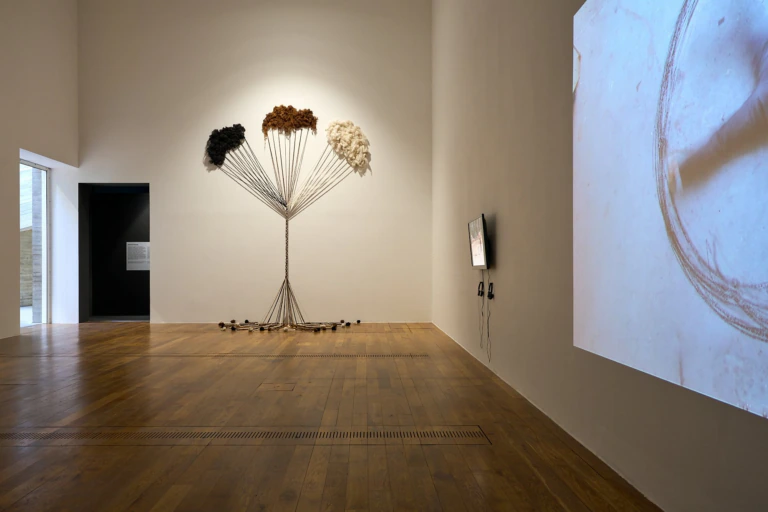
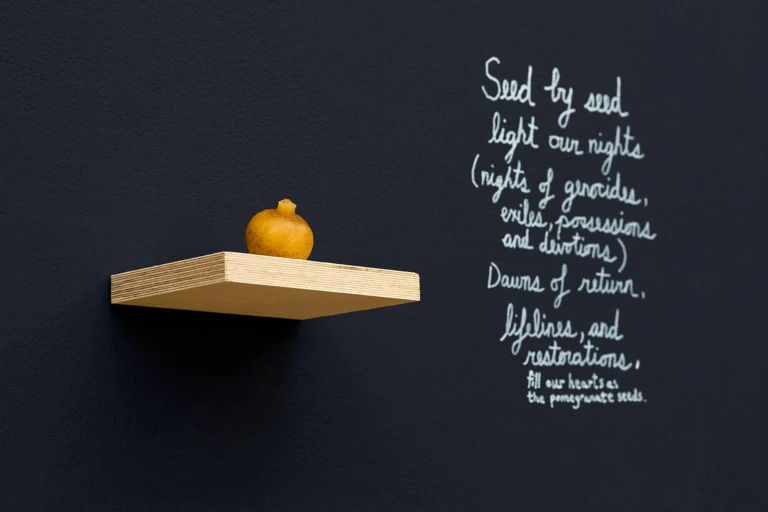
Jumana Emil Abboud (born Shefa’amer, lives and works in London, UK and and Jerusalem) exhibiting at Mostyn, Llandudno.
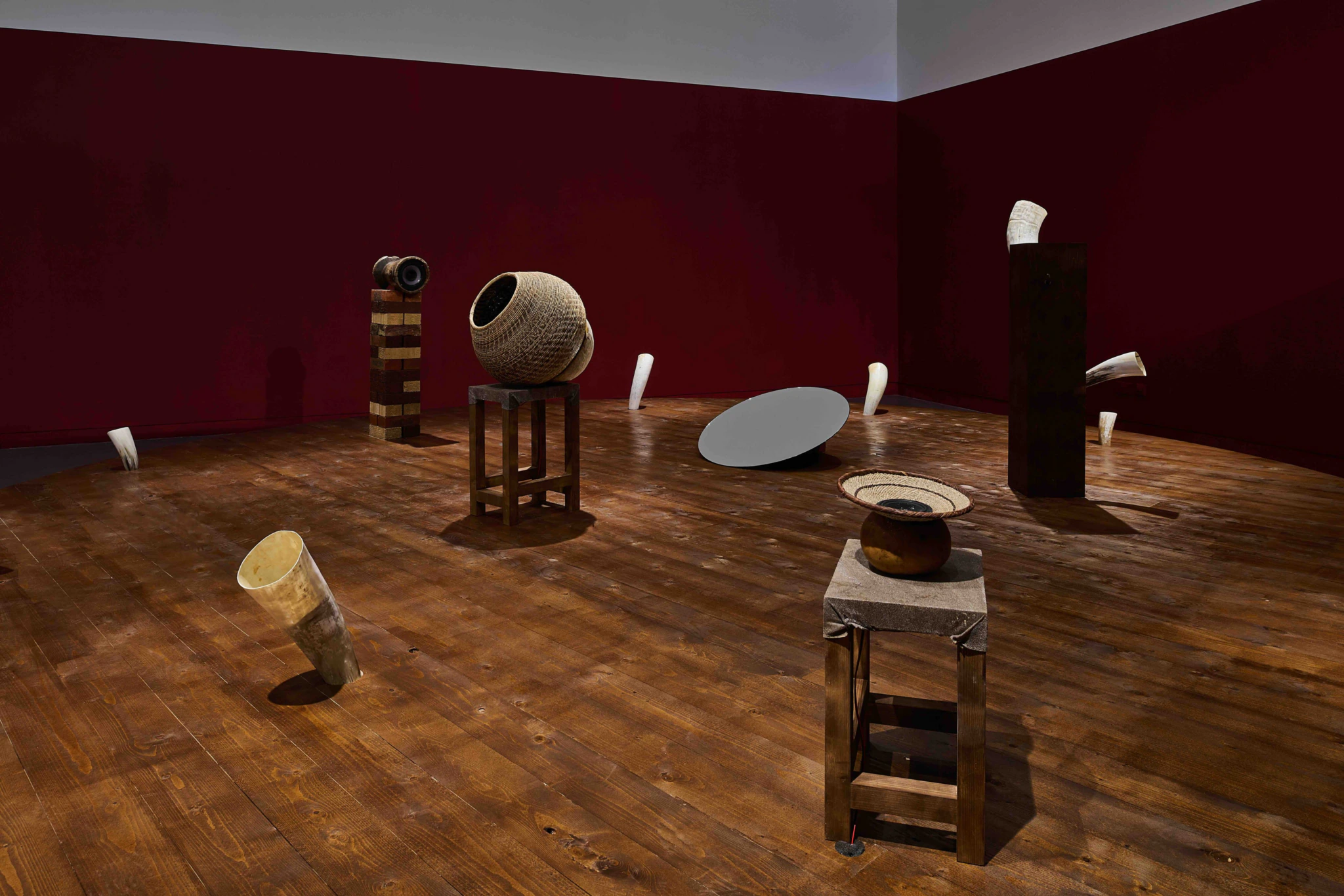
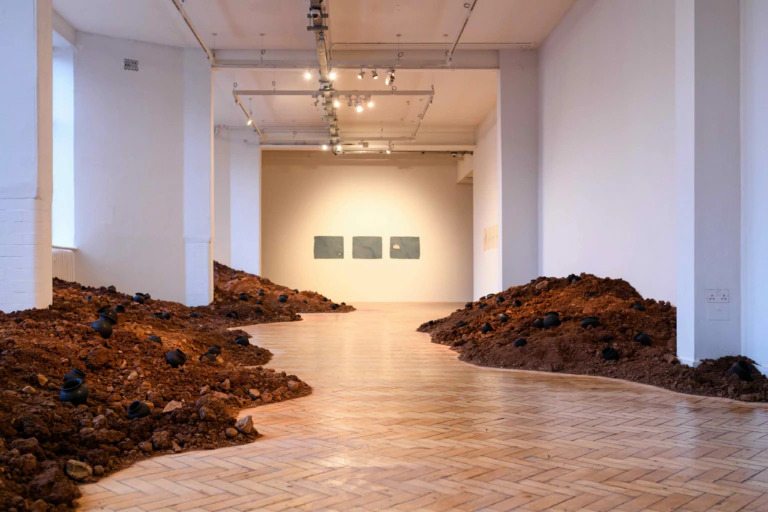
Anawana Haloba (born Livingstone, lives and works in Oslo, Norway and Livingstone, Zambia) exhibiting at Aberystwyth Arts Centre, Aberystwyth.
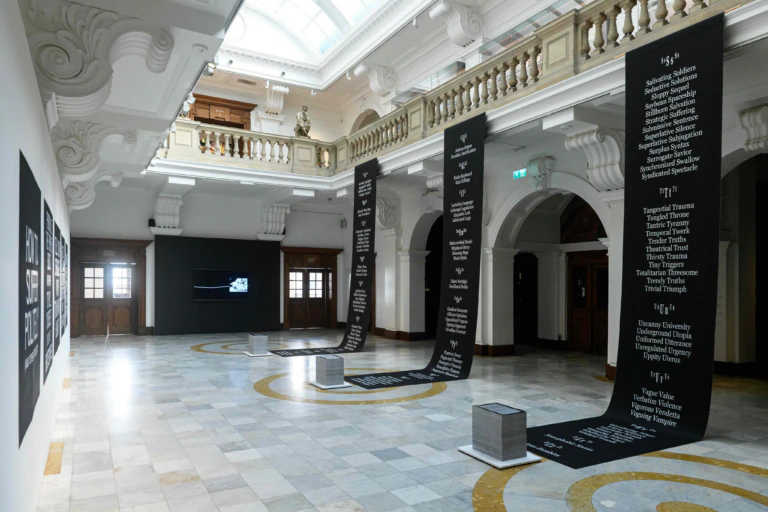
Kameelah Janan Rasheed (born East Palo Alto, lives and works in Brooklyn, NY, USA) exhibiting at Glynn Vivian Art Gallery, Swansea.
Sancintya Mohini Simpson (born Brisbane, lives and works in Brisbane, Australia) exhibiting at Chapter, Cardiff.
Antonio Paucar (born Huancayo, lives and works between Berlin, Germany and Huancayo, Peru) exhibiting at Mostyn, Llandudno.
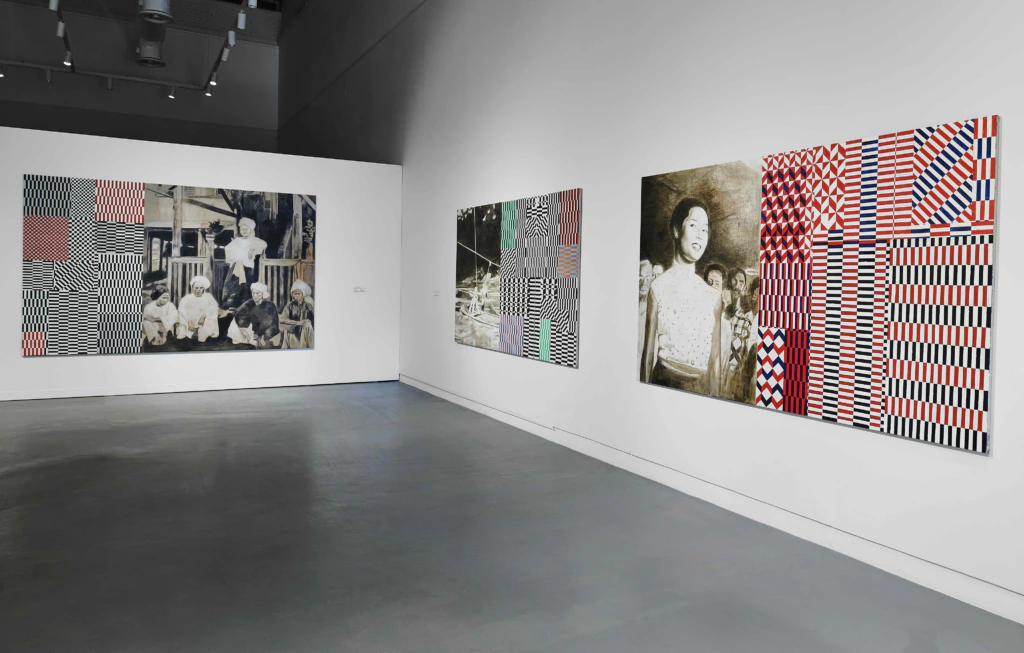
Sawangwongse Yawnghwe (born Shan State of Burma, lives and works in Amsterdam, the Netherlands) exhibiting at Aberystwyth Arts Centre, Aberystwyth.
This year Aberystwyth Arts Centre makes its debut as a venue, hosting installations by Zambian artist Anawana Haloba and the Burmese artist Sawangwongse Yawnghwe.
Curator Ffion Rhys, who was formerly on the team at Artes Mundi, said: “It opens up so many doors, to the communities that see it, the artists themselves, to the staff, to everybody - it's a much bigger project than just the exhibition."
Despite its fairly remote location on the west coast, as a university town and tourist destination Aberystwyth attracts a diverse audience, who welcome the chance to see art contributing to often difficult, topical conversations.
Advertisement
“It’s great for Aberystwyth Arts Centre to have international artists that are at the top of their game, talking about issues that affect us all,” Rhys said.
As the custodian of a historic collection donated to the city of Swansea by its founder Richard Glynn Vivian, the Glynn Vivian Art Gallery has a specifically local focus.
Even so, as a collector of European and Chinese ceramics, paintings, textiles and more, Glynn Vivian was himself an outward looking figure, whose mission chimes with that of Artes Mundi.
Glynn Vivian Art Gallery director Karen MacKinnon said: "[The biennial] is a really important project for Wales. And it's brilliant to work with international artists, especially these days, post Brexit.”
The new emphasis on a pan-Wales network brings opportunities to work together:
Advertisement
“Partnerships and collaboration are more and more important in the museum and gallery sector,” MacKinnon said. “In times of diminishing public funds the more we can work together, the better. And there is a legacy afterwards of developing long term relationships with partner organisations.”
The statistics make a clear and positive case for the pan-Wales model. Artes Mundi 10 brought a threefold increase in public engagement, with a total of 302,921 visitors across five venues compared to 96,023 for Artes Mundi 9 which took place across two venues.
“I think that's pretty remarkable,” said Artes Mundi director Nigel Prince, who notes that Artes Mundi 10 also brought a significant number of new visitors to partner institutions, including visitors from all over the world.
The total estimated economic benefit to Wales was £6.53m.
Carefully matching the shortlisted artists to partner venues is key to ensuring such positive engagement. It’s vital that the choices make sense within the broader programme, and the venue’s existing relationships with different communities and audiences in different parts of Wales.
Clare Harding, interim director at Mostyn, said the work to be done drawing in visitors beyond their faithful local audience, and dedicated art lovers. This isn’t about the work chosen, she added, but about how they present it to different sections of the public.
“How do we break down these works and concepts to deliver schools programmes, family activities, how do we connect with groups?” Harding said.
Advertisement
Since Artes Mundi 10, Artes Mundi has been working with deaf creatives to deliver BSL tours for deaf audiences. Harding says that Mostyn works with audiences with visual impairments, and is also working with a local youth club for young adults with severe mental and physical disabilities.
These, like relationships with other venues, and individual artists, are only like to grow as the biennial, and with it the Welsh contemporary art scene, continues to thrive.
Florence Hallett is a critic and journalist, and a regular contributor to the inews, the New European and the Art Newspaper