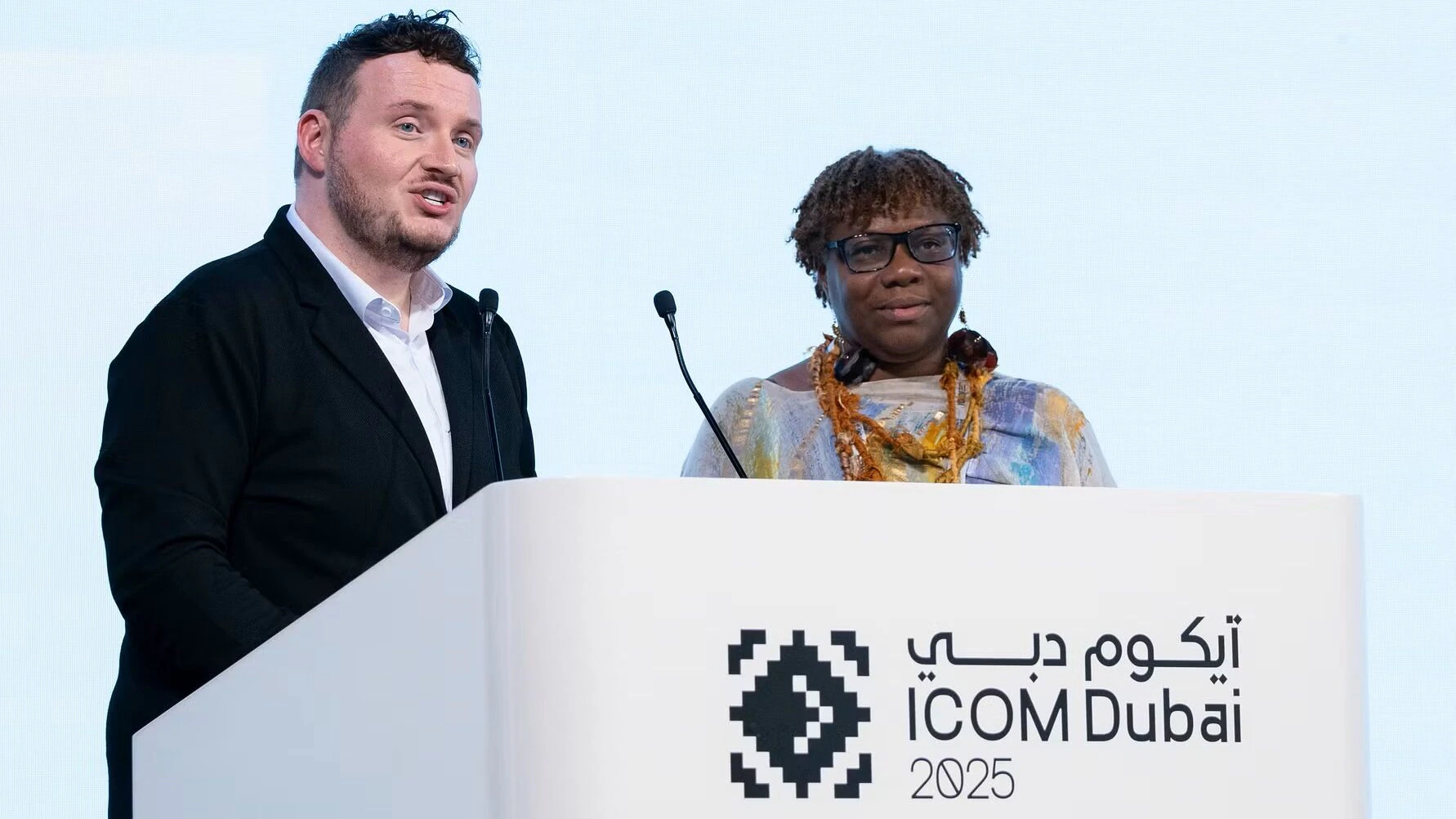
A heritage exchange project involving young people from Barbados and Scotland’s Outer Hebrides has been named the first ever winner of the award for Sustainable Development Practice in Museums.
Run by the International Council of Museums (Icom), the prize recognises museums that are “leading change by addressing the world’s most pressing challenges through the framework of the UN 2030 Agenda for Sustainable Development”.
Shared Island Stories Between Scotland and the Caribbean: Transnational Youth Exchange is a five-year research project run by the Barbados Museum & Historical Society and coordinated by the School of Art History at the University of St Andrews, with funding from UK Research & Investment.
The transnational youth exchange brings together young people from Scotland’s Outer Hebrides and Barbados to explore the connections between cultural heritage, sustainability, and climate action.
The award was announced at Icom’s triennial conference in Dubai earlier this month.
Barbados Museum & Historical Society was chosen as the winner out of 130 entries spanning 60 countries.
Advertisement
Four other finalists were recognised for their outstanding contributions: the Ghent City Museum in Belgium; the Museums Association of Namibia; the National Gallery of Victoria in Australia; and the Ars Aevi Museum of Contemporary Art in Sarajevo.
Morien Rees, chair of the jury for the award, said: “The inaugural Icom Award received a large number of submissions from all corners of the globe, showcasing a diverse range of approaches to the 5 Ps (People, Planet, Prosperity, Peace and Partnership) and 17 Sustainable Development Goals.
“This overwhelming response is a testament to the unwavering commitment of Icom’s global membership to the UN Agenda 2030’s mission of ‘leave no-one behind’.
“These submissions are a reminder too, of the significant impact individual museums can have, far beyond their own communities, as integral parts of ICOM’s global knowledge network. The diversity of approach can inspire fellow museum practitioners and institutions to make major contributions to addressing the most pressing issue of our time: the transition to a just, sustainable future for all.”
Emma Nardi, Icom’s president from 2022-25, said: “As we face global challenges, from climate crisis to social inequality, museums must be part of the solution. The Icom Award for Sustainable Development Practice in Museums celebrates institutions that have answered this call with creativity, courage, and concrete action.
“The winner, selected from an extraordinary field of 130 projects spanning 60 countries, proves that cultural institutions can drive meaningful change while fulfilling their core mission of preservation and education.
Advertisement
“It is through initiatives such as the Icom Award that we incite museums to think differently about their role and their impact within society. It is just the beginning of a transformation that will reshape museums for generations to come.”
Shared Island Stories
The transnational youth exchange draws on history, heritage and memory studies and sustainable development to explore which collections from the islands tell unfinished stories of empire.
Designed as an immersive and collaborative programme, the exchange aims to foster “meaningful dialogue between island youth, heritage professionals, and community leaders, encouraging participants to reflect on shared histories, contemporary challenges, and future solutions”.
Young people engage with the programme through hands-on workshops, site visits, and intergenerational knowledge-sharing, exploring topics such as community ownership, traditional ecological practices, and the role of museums in addressing the climate emergency.
The University of St Andrews says of the project: “By participating in this exchange, young people from both islands have developed skills in storytelling, heritage interpretation, and environmental advocacy, positioning themselves as active agents of change within their communities.
“From exploring the impact of coastal erosion in Scotland to contributing to climate resilience initiatives in Barbados, the programme highlights the power of youth-led action in shaping sustainable futures.
“The exchange also strengthens transatlantic collaborations, ensuring that the voices and perspectives of young people are central to discussions on decolonisation, climate justice, and the role of cultural heritage in building resilient island communities.”