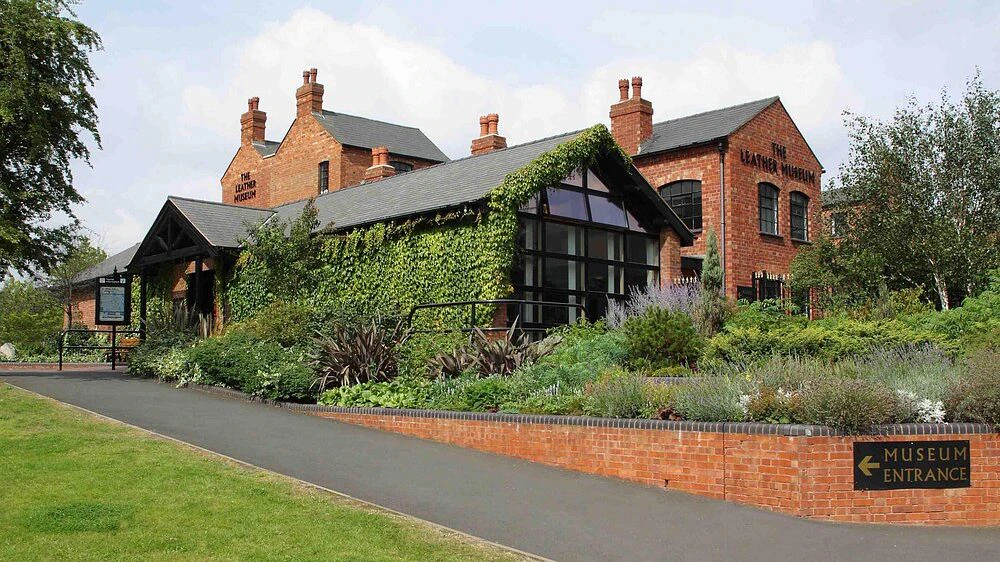
Campaigners have expressed shock and concern after Walsall Council rubberstamped plans to relocate Walsall Leather Museum and lease out the original 1888 leather factory that houses the museum.
Councillors last week signed off on a 125-year lease of the building to Walsall College, which will rent it at a peppercorn rate to use as a centre for adults with special educational needs and disabilities (Send).
Under the plans, a new property in the centre of the West Midlands town will be purchased for the museum.
First proposed in 2024, the planned relocation is intended to address some of the challenges the council says are facing the venue, including low footfall and high running costs.
The proposals have met with significant local opposition; a public consultation earlier this year showed that 59% of people were against the plans, with many expressing a strong attachment to the current building.
A campaign and protest action, led by those involved in the town’s leatherworking industry, was launched to preserve the museum at its current site. Campaigners say the building should itself be considered a key exhibit of the town’s leatherworking heritage.
Advertisement
As an historic property, they say it is not suitable for use as a Send facility and fear it may not be preserved in its current form.
Due to the backlash, former council leader Gary Perry u-turned on the proposal earlier this year and removed it from the council’s 2025-26 budget. He said at the time that the discussions were ongoing and decisions about the museum would be taken in collaboration with local people.
Perry later stepped down and rumours grew over the summer that the proposal was still being pursued. The Conservative-led council last week gave 24 hours’ notice that a vote would be taken on the proposal, and the cabinet rubberstamped the move, which it says will save £190,000, on 24 September.
Following the meeting, a statement from the local authority said: “This decision… supports the development of the new and enhanced Adult Learning Centre, which will be located in the heart of Walsall.
“The new centre will offer a broad range of educational services, including employability, business, and IT skills, and will play a vital role in supporting adult learners across the borough.”
The council said Walsall Leather Museum would be relocated to a “central location”.
Advertisement
“Discussions regarding the future of the museum are ongoing with stakeholders from business, education, and the community,” said the statement.
Lauren Broxton, a Walsall-based leatherworker who has spearheaded the campaign to save the museum since the start of 2025, told Museums Journal that she felt the decision had been rushed through without proper consultation or scrutiny.
“I do not feel due process has been done here,” she said. “These things take time, process and scrutiny. My overall feeling from the beginning has been that this has been kept quiet and conducted quickly on both occasions to quell public backlash and scrutiny – whilst decisions have been long decided – given the significance that the building and the collections hold to the people of Walsall.”
Broxton said the council had ignored community concerns about the building.
“The community here in Walsall should be a priority – we do not feel that this has been central to the operations,” said Broxton.
“We do not feel that the building itself is suitable for what they are proposing and our concerns are increasingly growing that the structure won't even be there in its current standing over the next few years.”
Advertisement
Leatherworking heritage
Broxton highlighted the importance of the building to the town’s heritage. “Very little remains of original leatherworking factories in the borough,” she said.
“We do not visit the museum because we want to see it in a sterile environment and reduced capacity, we visit – and that includes a global visitor base – because it is an authentic experience in an authentic environment that aptly captures the significance of Walsall as a leatherworking leader.”
Broxton said the council had taken the decision in the context of a booming public appetite for craft and growing interest in Walsall’s leather heritage from the media, livery companies and major fashion brands.
“With new leather businesses growing year on year as a result of engagement with trusted council-funded projects, globally acknowledged prestigious showcases, and a growing public interest in learning craft-based skills, is this really the right decision?” she asked.
The museum in its current location could play a key role in this growth, said Broxton, who runs bespoke leatherwork courses at Birmingham City University.
“Our plans [for the university courses] suggested heavily involving the museum alongside this, including it as an essential research archive, exhibition space and events hub to deliver our annual leather symposium, which draws leather industry professionals from all over the country…
“We are doing everything we can to drive leather heritage, history and craft forward and bringing the museum along with us.”
Fellow campaigner and leatherworker Georgie Curtis-Brown said she was concerned about what would happen to the museum’s collections during the relocation.
“There are no clear plans,” she said. “We do not know where the items will end up, or how they will be catalogued.”
She added: “We are also not promised that the building will not be changed beyond recognition, or flattened and a new more suitable building in its place, as in its current condition it is in no way suitable as a Send education space.”
In response to the concerns raised, a Walsall Council spokesperson told Museums Journal: “Due process has been followed in this decision. The council has been consulting with stakeholders from business, education, and the community throughout, and will continue to do so in developing an improved offer for Walsall as part of a wider cultural offer.”
The spokesperson said “the collections will be secured through the move and any items not shown will be part of our existing archive”.
Regarding the current museum building, the council spokesperson said: “A high quality Send offer will be delivered from the building. A new building is not planned for the site.”
The council previously proposed closing Walsall Leather Museum in 2014 and 2016 but abandoned the plans after a public backlash.
Museum closures in the West Midlands
A number of museums in Walsall and surrounding areas of the West Midlands have closed over the past 20 years.
Walsall Museum was closed by the council in 2015. The museum’s collections, including the nationally significant Hodson Shop textile collection, are currently in storage.
Birchalls Canal Museum shut in 2003. Some artefacts were transferred to the now-closed Walsall Museum.
The Jerome K Jerome Birthplace Museum, dedicated to the 19th-century writer and humourist, closed in 2007 after Walsall Council support was withdrawn.
The Locksmith’s House at Willenhall closed in 2009 after Walsall Council cut its annual funding. The house is owned and operated by the Black Country Living Museum, which now opens it on select dates throughout the year.
The Museum of Cannock Chase closed in April this year after its funding was cut by Cannock Chase District Council.