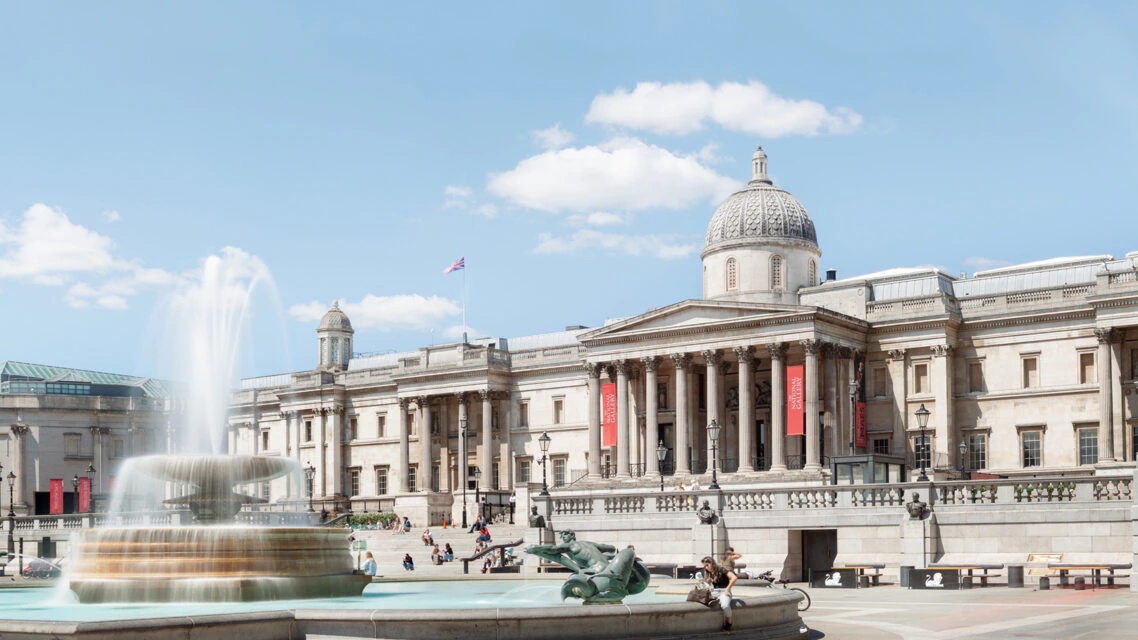
London’s National Gallery is planning to build a new £375m wing to house its expanding collection – the largest transformation of the gallery since its formation in 1824.
An international architectural competition is launching on 10 September that the gallery expects to attract “both long established and exciting, younger architectural firms”.
The wing will be built on the site of the last remaining part of the National Gallery’s current campus, St Vincent House. The property was acquired nearly 30 years ago for the purpose of expanding gallery space, and currently houses a hotel and office complex.
The initiative, dubbed Project Domani, will also revitalise the area between Leicester Square and Trafalgar Square.
The development has already secured the necessary amount in cash pledges, including what the institution describes as the two largest cash donations to a single museum or gallery ever publicly reported in the world.
The £375m funding will also support the gallery's ambition to extend its historic collection and marks the beginning of an “exciting new collaboration” with Tate and other museums in the United Kingdom and around the world.
Advertisement
“The National Gallery was formed to make great art accessible to all,” the museum said in a statement.
“With this new physical and artistic expansion, we are reaffirming our commitment to the public. We will broaden our engagement with local, national and international visitors through enhanced displays, exhibitions, research, public programmes and educational initiatives.”
The project aims to “bolster the relevance of both the National Gallery and the UK within a highly competitive global cultural landscape”, the statement continued.
“The National Gallery’s renowned collection of great paintings and our ambition to develop this further for the benefit of a larger, more diverse public, demands a space that not only preserves and displays the artwork, but also elevates the visitor experience, enhancing the gallery’s status as one of the most visited museums in the world.”
The gallery said the new wing would benefit from the dramatic advances made in building techniques and sustainability during recent decades, and would be a “landmark of both local and international significance, enriching the nation’s artistic presence on a global scale”.
The gallery’s director Gabriele Finaldi said: “With the bicentenary celebrations now completed, the National Gallery looks to the future.
Advertisement
“We want to be the place where the UK public and visitors from across the globe can enjoy the finest painting collection in the world from medieval times to our own, in a superb architectural setting.
“We are hugely excited by these developments and are immensely grateful to our donors for their support – on an unprecedented scale – as the National Gallery steps into its third century. We look forward to an ever-closer collaboration with Tate on this significant new initiative.”
Culture secretary Lisa Nandy said: “I've been clear that we want the arts to be accessible for everyone and that philanthropy is crucial to that mission.
“The new wing at the National Gallery will open up world class art for millions of people from home and abroad. I want to thank the generous donors who will help to transform the National Gallery, cementing its position as one of the most loved and visited institutions that will inspire people for generations.”
The launch of the architectural competition is the third stage of an ambitious masterplan commissioned by the gallery in 2018.
Previous phases of the masterplan have included the revamp of the Sainsbury Wing, which was unveiled in May as the culmination of the gallery’s year-long bicentenary celebrations.
Advertisement
Collections development
The gallery has provided further details of its plans to develop and extend its collections, which span Western European painting from the early 13th to the early 20th centuries.
“For the benefit of audiences everywhere, the National Gallery will be the one place in the world that presents the history of Western painting in a comprehensive and dynamic way, where the beauty and drama of extraordinary paintings is presented against the timeless and enduring backdrop of great architecture,” the institution said.
This includes a partnership with Tate, whose collections include British art from the 1500s onwards along with international modern and contemporary art from 1900 onwards.
The National Gallery said the two institutions would work together as the “joint custodians of the national collection”.
“We are seeking to broaden and extend the range of our collection, displays and exhibitions,” said the gallery.
“This development offers an exciting opportunity to collaborate with our colleagues at Tate as joint custodians of the national collection. The trustees of the National Gallery and Tate recently held a joint meeting to develop new ways of working together more closely.
“While both institutions will continue to tell their stories in distinct and complementary ways, a new, historic partnership is underway that sees the National Gallery and Tate working together to build and further develop the UK’s world-leading national collection for the benefit of everyone.”
Tate director Maria Balshaw said: “Tate looks forward to working closely with colleagues at the National Gallery on loans, curatorial and conservational expertise to support the development of their new displays.
“The trustees of both institutions recently held a joint meeting and, together, established a working group with trustee and curatorial representatives from each to determine the ways in which we can collaborate to further the national collection as a whole.”