There are “significant gaps in leadership diversity across the creative and cultural sectors” according to a new report, which found that 88% of the arts, culture and heritage workforce is white.
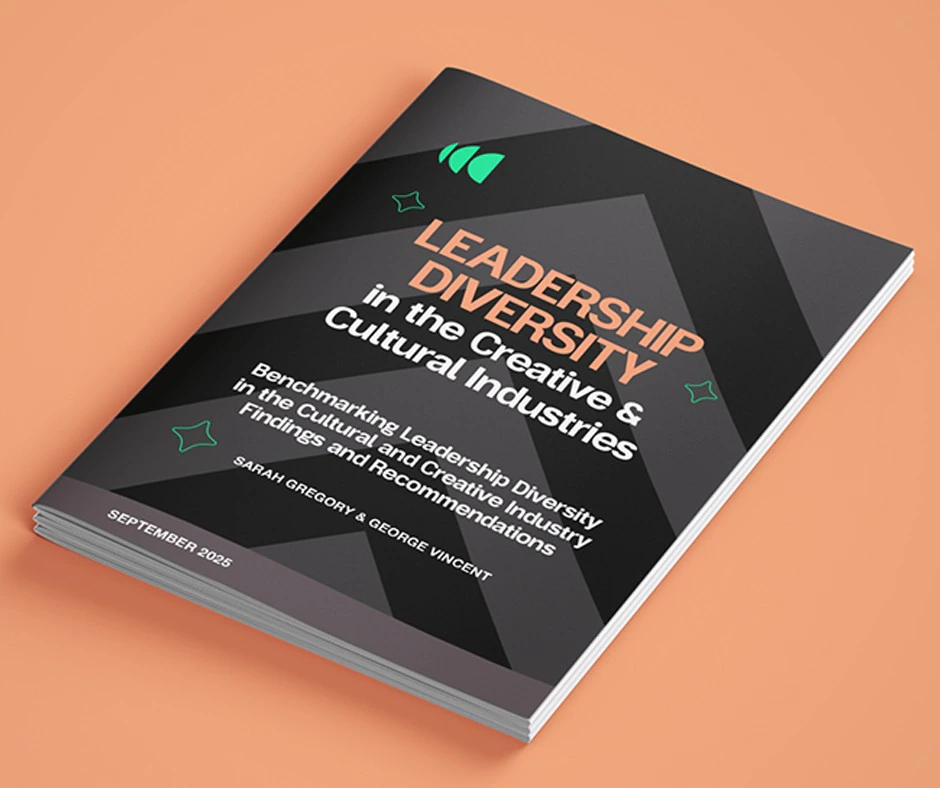
The research, published by the cultural and creative industries membership body Creative UK, maps leadership representation in the creative and cultural industries for key groups, including women, disabled people, people from ethnic minority backgrounds, and those who identify as working class.
It found diversity in the workforce has stalled and, in some cases, appears to be “going backwards” – despite evidence that more diverse-led companies are 39% more likely to outperform their competitors in profitability.
Just 6% of those occupying higher level managerial and administrative positions in the heritage sector in England are from an ethnic minority background, the report found.
Similarly, for Arts Council England (ACE) National Portfolio Organisations (NPOs) in the funding year 2022/23, 17% of chairs and 20% of CEOs were from ethnic minority backgrounds.
Advertisement
Across the entire cultural sector, only 9.8% of managers and directors are from ethnic minority backgrounds, compared to 15.9% of the wider UK workforce.
In terms of disability representation, 15% of chairs and 13% of CEOs of NPOs were people with a disability between 2022 and 2023.
Caroline Norbury, the chief executive of Creative UK, said she was hopeful the report would be “a catalyst for more meaningful change”.
“Decades of evidence have shown that more diverse and more equal communities and businesses are happier, more productive and more prosperous,” she said. “That’s why increasing access and diversity matters so much.”
The report also raised issues concerning data collection, saying the creative and cultural sector does not have “benchmarks that can tell a bigger story about how diversity is mapped across team structures – and crucially, how it is represented in the sector’s leadership”.
It represents the first attempt to look at cultural leadership diversity as a whole and highlight particularly concerning areas.
Advertisement
The report found that no diverse demographic other than those identifying as LGBT+ has equal representation in creative and cultural leadership roles.
Relative parity does exist for women in cultural leadership roles, with ACE’s most recent data showing that 58% of chair and CEO positions were occupied by women.
In Scottish national cultural bodies, 50% of board positions were occupied by women in 2023, and 51% of Scottish museums and galleries were run by women.
When widened to the cultural and creative sector however, women made up 39.3% of managers and directors in 2021.
Sarah Gregory, the head of equality, diversity and inclusion at Creative UK, said: “These are problems we must solve together. It makes not only economic, but strong social and moral sense to better represent and meet the needs and interests of the diverse, multivariant communities from where creativity springs and is enjoyed.”