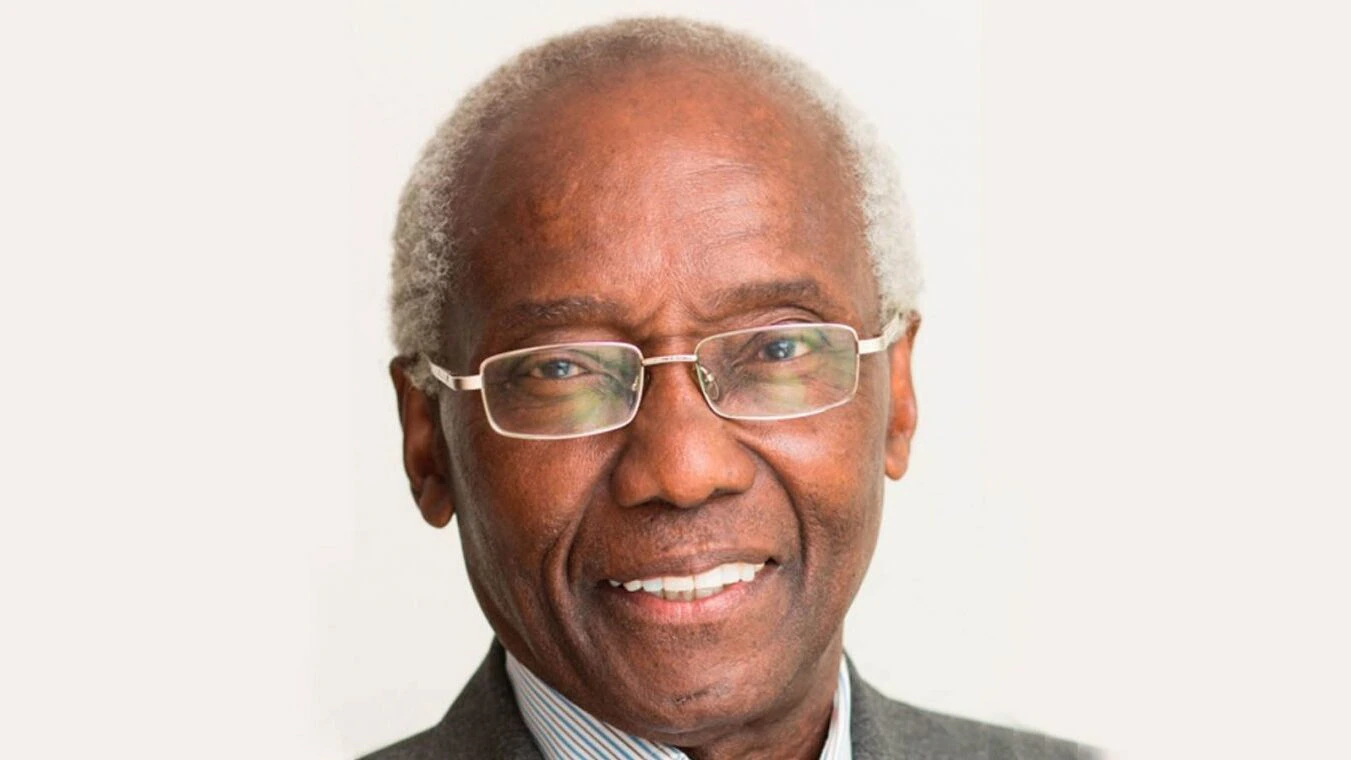
Tributes have been paid across the Scottish museum sector following the death of Geoff Palmer, the renowned scientist and human rights activist who chaired the Scottish Government’s Empire, Slavery and Scotland’s Museums project from 2020 to 2022.
Palmer, who died at the age of 85 on 12 June, was a member of the Windrush generation, arriving in London from Jamaica as a teenager in 1955.
He went on to become a leading grain scientist known for inventing the barley abrasion process, which saw him awarded the American Society of Brewing Chemists Award of Distinction. In 1989, he was appointed Scotland’s first Black university professor at the Heriot-Watt University in Edinburgh.
Alongside his scientific work, Palmer became a campaigner for racial equality and human rights who worked to raise awareness of Scotland’s links to transatlantic slavery.
In 2020, he was appointed chair of the steering group for the Empire, Slavery & Scotland’s Museums: Addressing Our Colonial Legacy project, which was set up by the Scottish Government in response to the worldwide Black Lives Matter protests that year.
The group was tasked with examining how the legacies of slavery and empire could be better represented in Scotland’s museums. The project, coordinated by Museums Galleries Scotland (MGS), reported its findings in 2022, making six recommendations for the government and museum sector, one of which was for the creation of a new dedicated space to address Scotland’s colonial past.
Advertisement
The government has accepted all of the group's recommendations and work is currently underway to establish a new institution that will be known as the Scottish Museum of Empire, Slavery, Colonialism and Migration.
In a post on social media, MGS said: “We are deeply saddened to hear of Sir Geoff Palmer's passing. As chair of the Empire, Slavery, and Scotland’s Museums project, his leadership was instrumental to its work. Sir Geoff was a renowned scientist and human rights activist and we were privileged to benefit from his wisdom, compassion, and guidance. Our thoughts are with his family and friends at this time.”
The Museums Association said in a statement: “We are saddened to hear about the passing of Sir Geoff Palmer, esteemed scholar and human rights activist.
“Geoff Palmer’s work as chair of the Empire, Slavery and Scotland’s Museums project was instrumental in raising awareness of the role of museums in confronting systemic racism and addressing the legacy of British colonialism. We offer our sincere condolences to his friends and family at this time.”
A statement from Kelvingrove Museum & Art Gallery in Glasgow said Palmer had been an “activist and advocate for the rights of Black communities” who had chaired Edinburgh Council's Slavery and Colonial Legacy Review looking at colonial legacies in the city.
“A passionate campaigner for equality, equity and justice, our condolences go to his family and friends,” the statement added.
Advertisement
The Group for Education in Museums (GEM) said it was “deeply saddened” by Palmer’s death, describing him as a “leading figure in social sciences, human rights and education”.
“Sir Geoff’s life was dedicated not only to groundbreaking scientific discovery, but to challenging injustice and promoting inclusion through education,” said the group.
“His powerful advocacy has made a positive, transformative impact on museums, heritage organisations, and learning professionals across the UK and beyond.”
The organisation said it had been “honoured” to welcome Palmer as the keynote speaker at its conference in 2022.
It said: “With characteristic warmth, clarity and conviction, he reminded us that: ‘We can’t change the past, but we can change consequences, such as racism, through education.’
“In his keynote, he shared how he came to understand the history of slavery through the everyday object of a sugar bowl, not just as a beautiful item, but as something that represents the sugar it held, produced by people who were enslaved to make it. Through this powerful story, he challenged us to confront challenging histories through heritage learning.”
GEM said Palmer had “believed passionately in the role of museums and cultural organisations as places where our difficult past can be explored honestly, and where empathy can be nurtured”.
“We extend our deepest condolences to Sir Geoff’s family, friends and all who had the privilege of working with him,” said the organisation. “His legacy will live on in the work of educators and communities who, like him, believe that change is possible.”