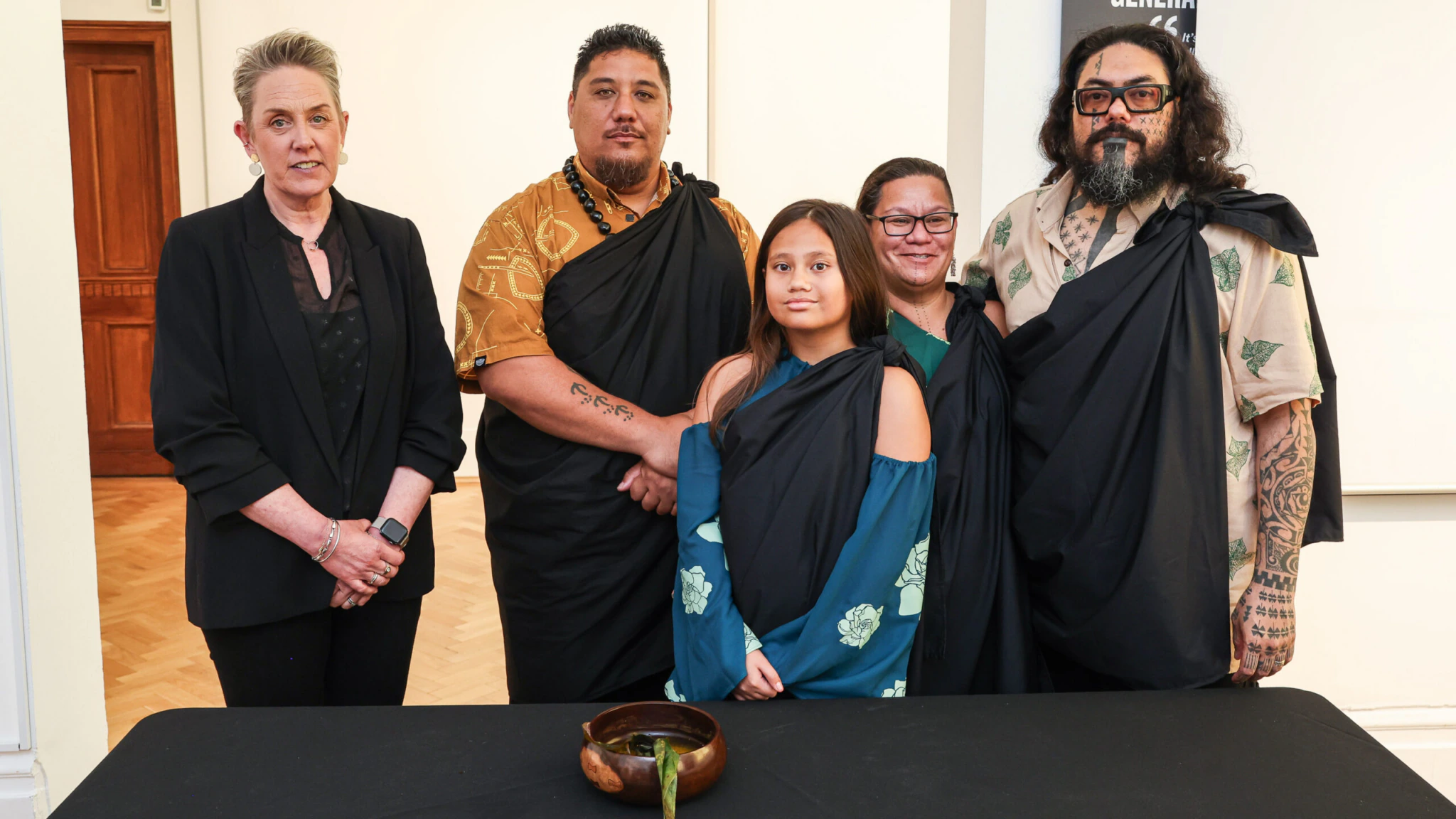
National Museums NI has hosted a repatriation ceremony at Ulster Museum, Belfast, as part of an ongoing process to return ancestral remains to Hawaiʻi.
National Museums NI has been in dialogue with the Office of Hawaiian Affairs (OHA) in collaboration with Hui Iwi Kuamoʻo (an organisation created to care for and protect Hawaiian objects) since 2022, when five mea kapu (sacred items) and two iwi kūpuna (ancestral remains) were repatriated.
After the 2022 repatriation, National Museums NI continued searching for three iwi kūpuna that could not be located. Given the 19th-century context in which the iwi kūpuna were brought to Belfast, and the absence of professional collection management practices at the time, their whereabouts remained uncertain.
In 2024, the three iwi kūpuna were located during a review of human remains in the National Museums NI collections, and OHA was notified.
These items were repatriated in a private ceremony that was followed by the public ceremony at the Ulster Museum on 28 April. This included the formal signing of repatriation documents. The event was attended by representatives from OHA, Hui Iwi Kuamo‘o, National Museums NI, and the US Embassy.
Stacy Ferreira of OHA said: "With deep humility and reverence, we witness the healing of a long-standing kaumaha (sadness). The return of our iwi kūpuna is about restoring dignity, healing generations, and reaffirming the living spirit of our ancestors."
Advertisement
Based on provenance research into the ancestral remains, it is believed that Gordon Augustus Thomson, who travelled from Belfast to Hawaiʻi Island in 1840, had removed iwi kūpuna from burial caves and donated them to Belfast Natural History and Philosophical Society in 1857. They were then included in a 1910 donation to the Belfast Museum and Art Gallery, a precursor to Ulster Museum and National Museums NI.
National Museums NI chief executive Kathryn Thomson said: “While the motivation behind the acquisition of ethnological material can appear strange today, it reflected curiosity about the wider world and a desire to represent diverse cultures. However, the European bias and power imbalances that often characterised this collecting have left a complex and sensitive legacy for us to address today.
“National Museums NI believes it has ethical responsibilities to redress any injustices shown to cultural values and traditions.
“There was regret when we found ourselves unable to honour the full repatriation request from Hawaiʻi in 2022, so we are pleased this has now been resolved. We are grateful to Hawaiʻi for its support, patience and respect throughout the process. We remain in ongoing liaison with various source communities around the world and are open to further repatriations as these engagements develop.”
Hannah Crowdy, the head of curatorial at National Museums NI, said: “Inclusive Global Histories is National Museums NI’s programme for the decolonisation of our museums and collections. It involves ongoing dialogue and collaboration with communities both here in Northern Ireland and further afield.
"With their support and guidance, we are re-evaluating the 4,500 items in the World Cultures Collection. We want to better understand and ethically represent the often-complex stories they carry, including how and why they came to be in Belfast.”