Universities in Aberdeen and Glasgow are holding handover ceremonies this week to return Tasmanian items to their communities of origin.
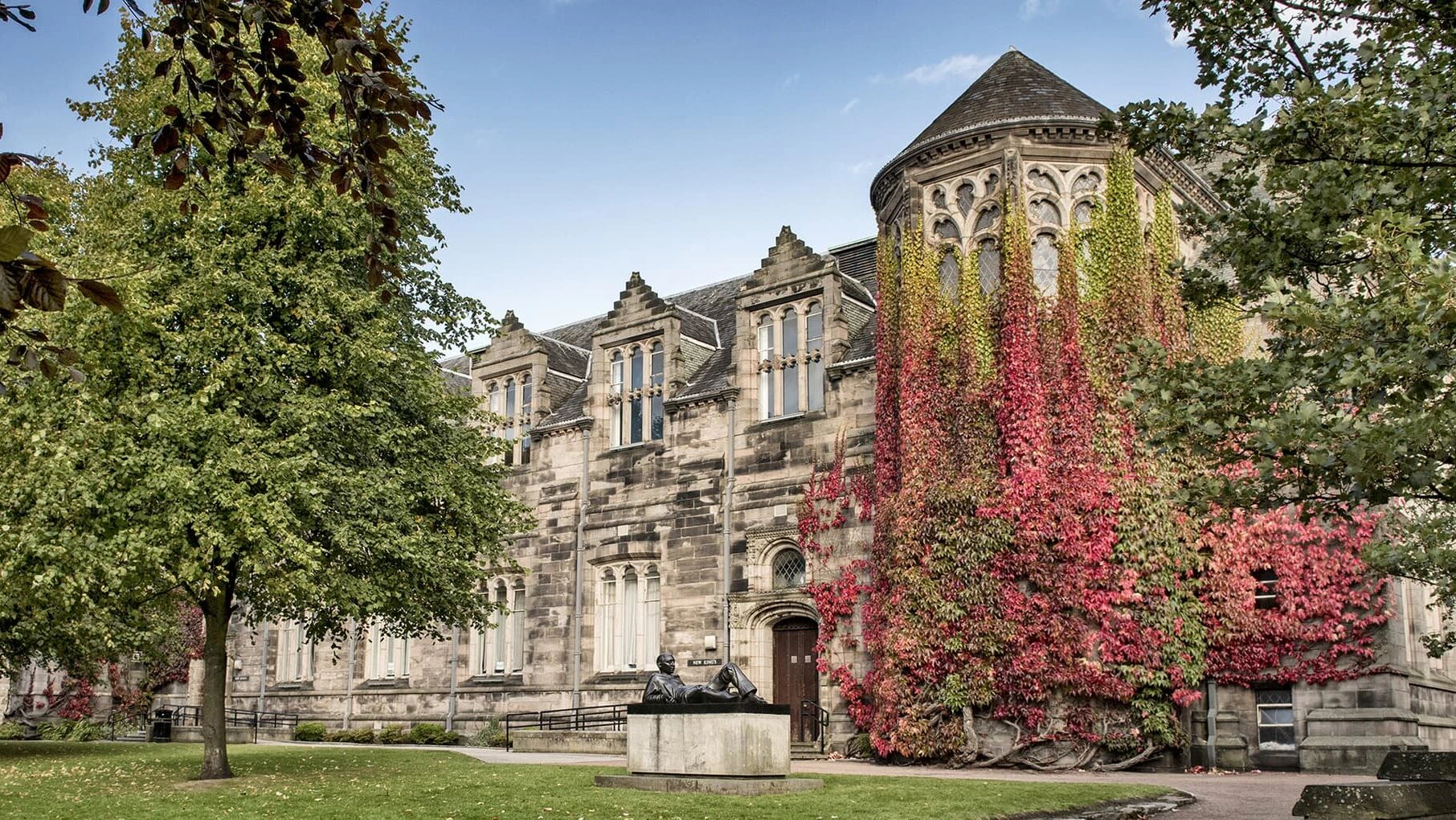
The University of Aberdeen is hosting a ceremony on 21 March to repatriate the skull of a young man thought to have been murdered in the early 19th century to service the trade in Aboriginal body parts.
The remains have been in the university’s collections since the 1850s.
The university approached the Tasmanian Aboriginal Centre in 2019 to make it aware of the skull, and the repatriation was unconditionally approved by the university’s governing body in 2020.
The centre will take the remains back to Tasmania, where they will be laid to rest in a traditional ceremony conducted by Aboriginal people.
Details of how the remains were acquired by the university are limited. Records show that the skull was part of the collection of William MacGillivray, regius professor of natural history in Marischal College. After his death in 1852, the collection was purchased by the university, with the remains described in the sale catalogue as “Native of Van Diemen's Land, who was shot on the Shannon River”.
Advertisement
There is no record surviving to indicate how the skull was acquired by McGillivray.
The Tasmanian Aboriginal Centre, a non-profit community-based organisation established in 1973, is recognised by Australian and international governments as the only appropriate organisation to which all repatriated Tasmanian Aboriginal skeletal remains and cultural property are returned.
The centre has said that “there can be no doubt that this skull was removed from the man shot at the Shannon River in order to service [the] trade in Aboriginal body parts. The decapitation was most likely performed by one of the killers, stock-keepers, property owners or lessees involved in or associated with the man’s murder”.
The murder may have taken place in the 1820s or 1830s. It is unlikely that the identity of the man will ever be known beyond that of his tribal group, the “Big River” tribe, one of many original tribes that were entirely wiped out and have no surviving direct descendants.
After being acquired by the university, the skull was kept as part of its Comparative Anatomy collection, before being transferred to the Human Culture collection in the early 2000s.
It was used in medical education in the 19th and early 20th centuries, but the collection is no longer used for teaching and there is no current or intended research associated with it.
Advertisement
Andry Sculthorpe, delegate and project manager at the Tasmanian Aboriginal Centre said: “Aboriginal people feel the enormous responsibility of restoring to our own country both the physical remains, and through them, the spirits of our ancestral dead.
“This is a record of racist attitudes to the study of humanity, including human remains acquired by grave robbing and other immoral activity; in this case, murder.
“We applaud the institutions that have the courage to let go of their perceptions of intellectual supremacy, embrace their own humanity and do what is right by the people who are most impacted by the atrocities they have inflicted in the past. This young man’s murder will not be forgotten and we will bring him home to rest at last.”
Neil Curtis, head of University Collections at the University of Aberdeen, said: “Given the violence and racism that led to their acquisition, it would be unacceptable for these ancestral remains to be used for research, teaching or exhibitions purposes.
“We are pleased that the remains of this young man can now be handed over to the Tasmanian Aboriginal Centre for appropriate burial in his homeland.”
The university has a well-established procedure for considering repatriation from the collections in its care, and says it welcomes proposals for returning ancestral remains, sacred and other items, especially where they can be returned to their community of origin.
Advertisement
The institution is also reviewing its collections to identify items that were looted or unethically acquired and initiate discussions with their communities of origin. This proactive approach led the return of a Benin Bronze in 2021, the first such repatriation in the world by a museum.
Hunterian returns rare shell necklace
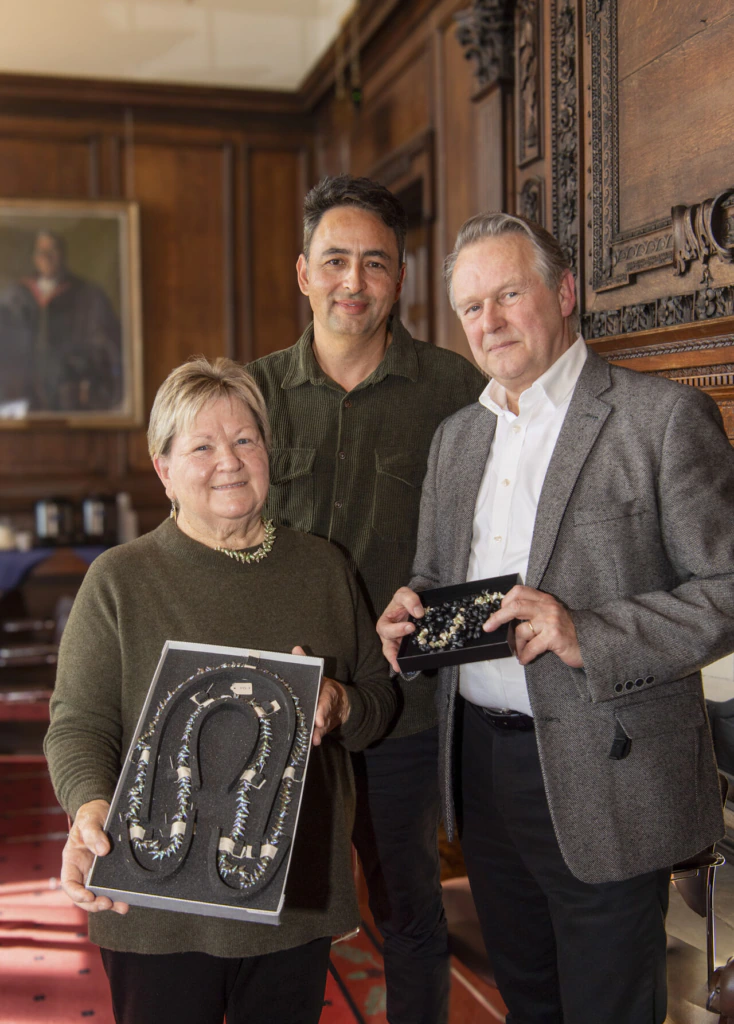
The Hunterian Museum at the University of Glasgow held a ceremony on 18 March to hand over a rare shell necklace to the Tasmanian Aboriginal Centre, 30 years after the first request was made for its return.
The 148cm-long necklace will be cared for by the Tasmanian Aboriginal Centre, where it will be accessible to the Tasmanian Aboriginal community for research, learning and inspiration.
The unique artefact is believed to originate from the Bass Strait islands, located between Tasmania and mainland Australia. It is recorded as being donated to the Hunterian by Margaret Miller of Launceston on a visit to Scotland in 1877.
The necklace features elenchus or maireener shells, which are found off the coast of Tasmania. The individual maker’s name is not recorded but the necklace is attributed to the women makers of the Bass Strait islands, who traded the items as commodities in the 19th century.
Necklace-making is the oldest continual cultural practice in Tasmania, and is acknowledged as a highly skilled and unique Aboriginal art form. There are concerns that the practice may die out due to a decline in the number of shells, which has been attributed to climate change.
Early shell necklaces are rare and considered a vital learning resource for present-day makers, with the physical presence of original objects seen as critical to projects aimed at recovering traditional knowledge.
Shell necklaces were attractive to 19th-century collectors and at least 16 examples are still held in UK collections, including the British Museum, the Victoria and Albert Museum and National Museum of Scotland.
Each shell necklace is unique, with the patterns and shell types indicating the maker and place of creation. Examination of the shells, stringing method and pattern may enable identification of the maker and reconnect the necklace with its community of origin.
The Tasmanian Aboriginal Centre first requested that the Hunterian return the necklace in 1995 but was turned down. A second request in 2002 was also rejected on the grounds that there was no evidence that the acquisition was unethical.
In a statement announcing the return, the university said: “Attitudes to repatriation have changed dramatically since then and as part of its aim to be an ethical institution, the Hunterian welcomes repatriation claims and prioritises the return of non-British culturally significant heritage items.”
Andry Sculthorpe, of the Tasmanian Aboriginal Centre, said: "The Hunterian has graciously and with goodwill accepted our claim to our important cultural items.
“The situation for Tasmanian Aboriginal people since invasion has meant that every cultural piece made by our ancestors is precious and rare and maintains our connection with our culture and identity."
A representative of the Tasmanian Aboriginal Centre gifted a newly made shell necklace to the Hunterian during the ceremony.
Hunterian director Steph Scholten said: “I am glad that we can set a new precedent today: that the University of Glasgow and the Hunterian, amongst a growing number of museums, are open to discussing and acting on repatriation claims.
“We have come to understand the urgent need for museums in Europe and beyond to address their pasts in equitable ways with originating and diasporic communities.”
Hunterian staff have been working with communities from countries including Aotearoa (New Zealand), Australia, South Africa and Ireland on repatriation requests. Most recently, the museum partnered with the University of the West Indies on the repatriation of a Giant Jamaican Galliwasp specimen, which is now in the Natural History Museum of Jamaica.
Museums Association’s (MA) policy officer India Divers, who attended the ceremony at the Hunterian, said the MA welcomed the repatriation of the remains and the necklace.
“Repatriation of museum objects is a powerful, cultural, and symbolic act which recognises past wrongs,” she said. “Museums have a responsibility to address their colonial legacies and this includes being honest with visitors about how the items in the museum were acquired.”