The museum jobs market is set to contract in the coming months as several large institutions enact redundancy programmes.
Tate confirmed that it has been working to reduce its overall staff costs by 7% and says that this “streamlining” has been achieved through voluntary means such as not replacing vacant roles and accepting voluntary exits.
A spokesperson for the gallery, which includes Tate Modern and Tate Britain in London as well as Tate Liverpool and Tate St Ives, said they couldn’t confirm how many roles had been affected, but reports in the national press that suggest as many as 40 roles have been deleted through this approach.
Tate’s statutory accounts for 2023/2024 show that the charity carried a deficit budget into the new financial year.
“After carefully reviewing the financial position and considering the ongoing impact of the wider cost pressures and the slow recovery of visitor numbers post-pandemic, the trustees approved a budgeted deficit for the 2024-25 financial year while work is done to develop a new financially sustainable business model,” the accounts read.
“The trustees will continue to prioritise growing self-generated income and controlling costs and have had discussions with the Department for Media, Culture and Sport (DCMS) about the financial position.”
Advertisement
It states that DCMS has offered reassurance that “support will be provided to ensure that Tate remains a viable going concern over the 12-month period from the date of signing the accounts”.
Tate’s accounts show that it had 6.36 million visitors in 2023/24 – 77% of pre-pandemic levels. Tate Modern’s audiences were 82% of their pre-Covid average, Tate Britain’s were 79% and Tate St Ives were around 90% of those before 2020. Tate Liverpool closed in 2023 for a major redevelopment.
A spokesperson for the gallery said: “Tate has an ambitious programme to grow our audiences across the nation and beyond. To eliminate the deficit left over from the pandemic, we have strengthened new income streams, strategically prioritised our most impactful activities, and carefully streamlined our workforce. Such changes ensure we have the stability we need to continue being as ambitious and innovative as ever.”
Tate is not alone in reducing its workforce amid financial uncertainty.
About 20 staff from the Science Museum Group (SMG) are leaving the organisation as part of a recently ended change programme that also included team planning and vacancy management.
The group comprises the Science Museum in London, the National Railway Museum in York, Locomotion in Shildon, the National Science and Media Museum in Bradford, the Science and Industry Museum in Manchester, and the Science and Innovation Park in Wiltshire
Advertisement
A spokesperson for the SMG said: “We are focused on growing audiences and delivering inspiring experiences for visitors to our five museums.
“To ensure we are in a position to achieve our goals in a challenging financial climate, we needed to reduce our staff budget by around £3m over the past 18 months.
“Most of this reduction of around 85 roles has been achieved through careful team planning and vacancy management, but a small number of redundancies was unavoidable.”
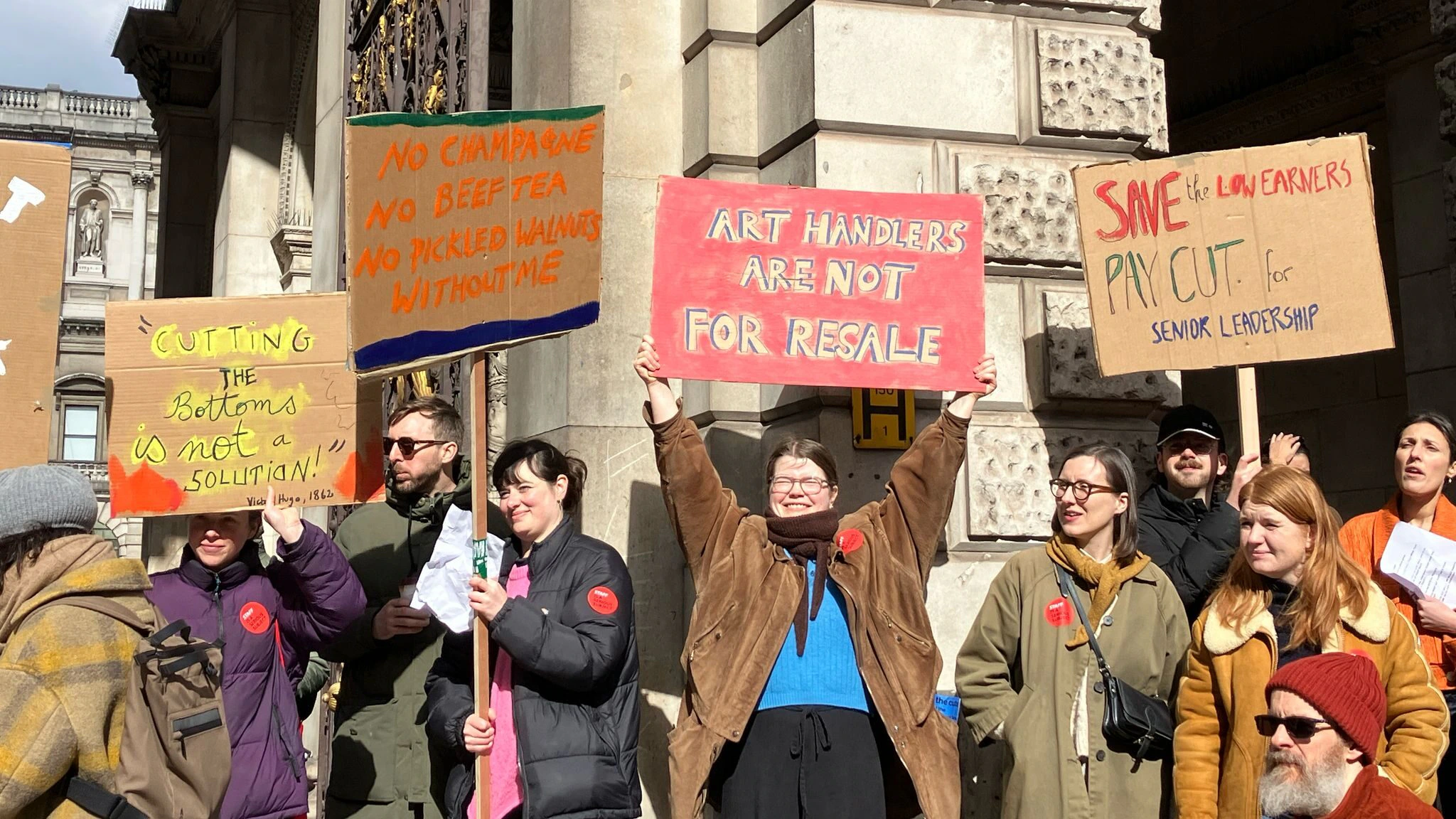
Elsewhere, staff at London's Royal Academy (RA) staged protests last weekend against its plans to cut 60 roles – about 18% of the workforce. Of the roles at risk, about half are currently vacant.
The arts organisation, which doesn’t receive any public funding, said that “cost savings” were required amid increasing costs and changing visitor behaviours.
Natasha Mitchell, the interim secretary and chief executive of the RA, said: “Together with many in the arts sector, we are facing a serious financial challenge. We have a robust plan to improve the RA’s financial position and the proposal to reduce our workforce has been put forward after careful consideration.
Advertisement
“We understand the profound impact these proposed changes will have and we are committed to supporting affected employees through this transition. This is a challenging time for all involved, however it is our belief that these steps are critical for ensuring a sustainable future for the RA.”
In a statement, a spokesperson for the RA said the job cuts would affect all levels of the organisation with different impacts on different departments, but added that no decisions had been taken and the redundancies were subject to consultation with staff.
A spokesperson for the Charity Workers’ Branch of the Independent Workers’ Union of Great Britain, which organised Saturday’s protest, said: “Institutions like the RA have a vital role in producing exhibitions and widening access to art and this race to the bottom is only going to drive the organisation further away from its core mission. Redundancies are not the answer, and are killing the art world, not saving it."
And a member of staff at the RA, who asked to remain anonymous, said: “Since the announcement of redundancies, it has been a truly exhausting and frustrating time for those of us working at the RA. The sense of collective anxiety has been overwhelming.
"We will all grieve the loss of colleagues who are full of talent and expertise, and who have brought their brilliance to this institution. Redundancies will only sink this ship, not keep it afloat.”