
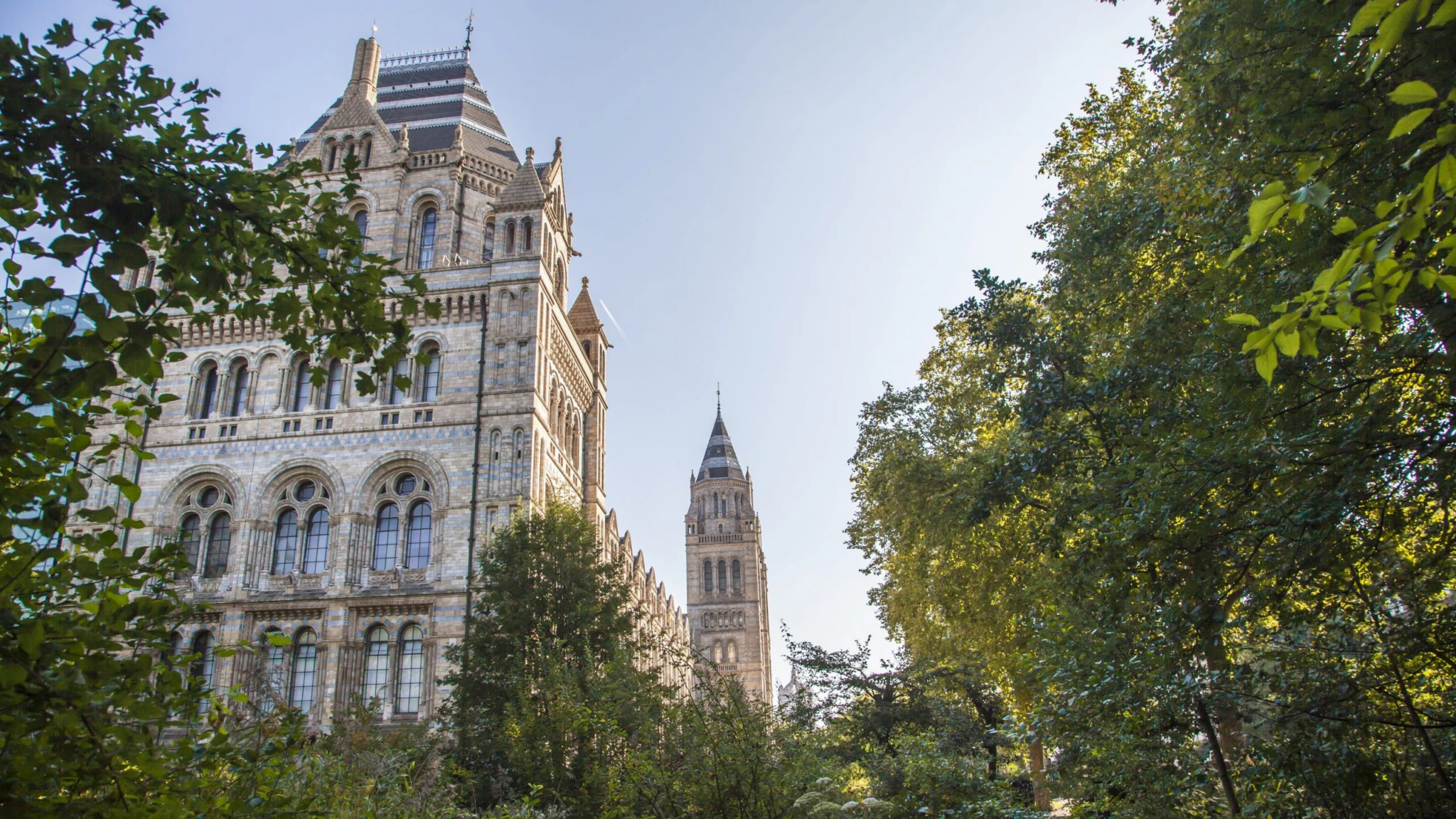
The Natural History Museum has apologised for hosting a gala dinner last month for the National Conservatism conference, saying it had been “shocked and horrified to see hateful rhetoric being expressed” at the event.
National Conservatism is a pro-nationalist political project launched by the Edmund Burke Foundation, a US thinktank. The initiative has been criticised for platforming extreme views and policies on immigration and race, climate change and LGBTQ+ rights.
Over three days, the conference featured talks by a number of senior UK politicians and commentators, including remarks by the historian David Starkey that anti-racist groups such as Black Lives Matter were engaged in the “symbolic destruction of white culture”, and were jealous of the “moral primacy of the Holocaust” and determined to replace it with slavery.
There was particular controversy over remarks made at the gala by the conservative intellectual Douglas Murray, who was accused of downplaying the Holocaust after commenting that he didn’t “see why no one should be allowed to love their country because the Germans mucked up twice in a century”.
National Conservatism promoted Murray’s comments in a tweet featuring an image of the museum’s blue whale skeleton, Hope.
In a statement on its blog, the Natural History Museum said: “Had we anticipated some of the rhetoric that was expressed at the event, we would not have permitted it to be held on our site. We should have anticipated this, but because of a genuine mistake our usual processes were not followed, and we take full responsibility for this.”
Advertisement
It said it was taking immediate action to “fix the mistakes” that led to the booking and was consulting with staff on the best way to use the proceeds of the venue hire.
The NHM added: “It was particularly painful to see an image of Hope the Whale used to illustrate a tweet alongside rhetoric that minimised the horrors of the Holocaust. We didn’t call out and reject these posts as we should have done when they were first published and gathering attention. We want to apologise and unreservedly reject any association of these messages with the museum.
“We want to make clear that we utterly abhor the statements made and we are sorry they were shared with imagery of the museum. None of our colleagues attended this event (which was hosted by a third party who hired the space), but we didn’t make this sufficiently clear in our response.”
The statement continued: “We know we have a lot more to do to make the museum a welcoming space for all and that new and growing partnerships require trust which can easily be eroded. Engaging and involving the widest audience possible is central to our mission: we apologise for our mistake, for the association of these views with the museum, and commit to doing better.”
There have been calls in the museum sector for greater clarity around the legal and ethical issues raised by the incident. The Museums Association's Code of Ethics asks museums to “seek support from organisations whose ethical values are consistent with those of the museum [and] exercise due diligence in understanding the ethical standards of commercial partners with a view to maintaining public trust and integrity in all museum activities”.
However recent legal cases have shown that caution is required in this area; venues that refuse or cancel an otherwise publicly available service on the basis of a client's philosophical or religious beliefs could find themselves in legal hot water if those views are classed as protected.
Last year, Glasgow City Council was ordered to pay £97,000 to the US Christian preacher Franklin Graham after cancelling his booking at the Hydro concert venue, citing concern over the views that may have been expressed at the event. A judge ruled that the venue had breached the Equality Act by not letting Graham perform.

How ridiculous! I wasn’t there but based on what I’ve read, there was no “hateful language” at all. Douglas Murray’s comments actually referred to the role of German nationalism in the First and Second World Wars, not the Holocaust (and his description of the wars as Germany having “mucked up” is just understatement, not anything sinister.
As for the “extreme views” on race and immigration expressed, it must be said that an ethnic minority woman from an immigrant family (Suella Braverman) spoke at the event. Suella Braverman’s boss himself is an ethnic minority man from an immigrant family. I think this statement is just from a cowardly PR team scared of a potential woke backlash to the event.
I couldn’t agree more! It was a conference representing a right of centre mainstream political world-view. These are the views of many millions of British citizens. Nothing “fascist”, or “hateful”. Amongst the very diverse range of those speaking were a Sikh and people of East European, Jewish, South Asian and African Heritage. Many speakers including David Starkey and Darren Grimes are openly gay too. It’s always interesting to note that many museums and organisations including the MA are happy to promote “radical activism”, which is always on the left, whilst right wing viewpoints are demonised. It’s all part of the stifling of opposing voices, which seems to be prevalent nowadays. To be honest, the best thing for both museums and organisations, such as the MA, is either to allow groups of all shades of the political spectrum to hold events etc, or to allow no partisan politics at all within their organisation and go back to the core values of educating people about the past and the conservation and interpretation of our material heritage.
It’s absolutely right that the Natural History Museum apologises for this. It would be helpful for this article to have a direct link to the Blog though – I can’t find it on the NHM website, nor on their social media. The article also doesn’t reference that the NHM is shortlisted for Art Fund Museum of the Year and, for me, there are questions about whether their apology is more motivated by that – personally, I think that their hosting of the National Conservatism conference should take them off that shortlist. Who are we as a sector if we can be seen to facilitate these views?
Hosting an event by an organisation calling itself the ‘National Conservatives’ and then *expressing surprise* that the group platforms extremist rhetoric is the part that gives me serious pause for thought; The dog-whistles were so loud they may as well have been foghorns. I worry this will begin to be come more common across the sector as more and more institutions are driven into Faustian pacts with anyone who will pay to keep the lights on.