The museum and heritage sector is marking the 35th Black History Month through new exhibitions, art, listings and other initiatives.
The government has made two new heritage listings to recognise their significance to Black history.
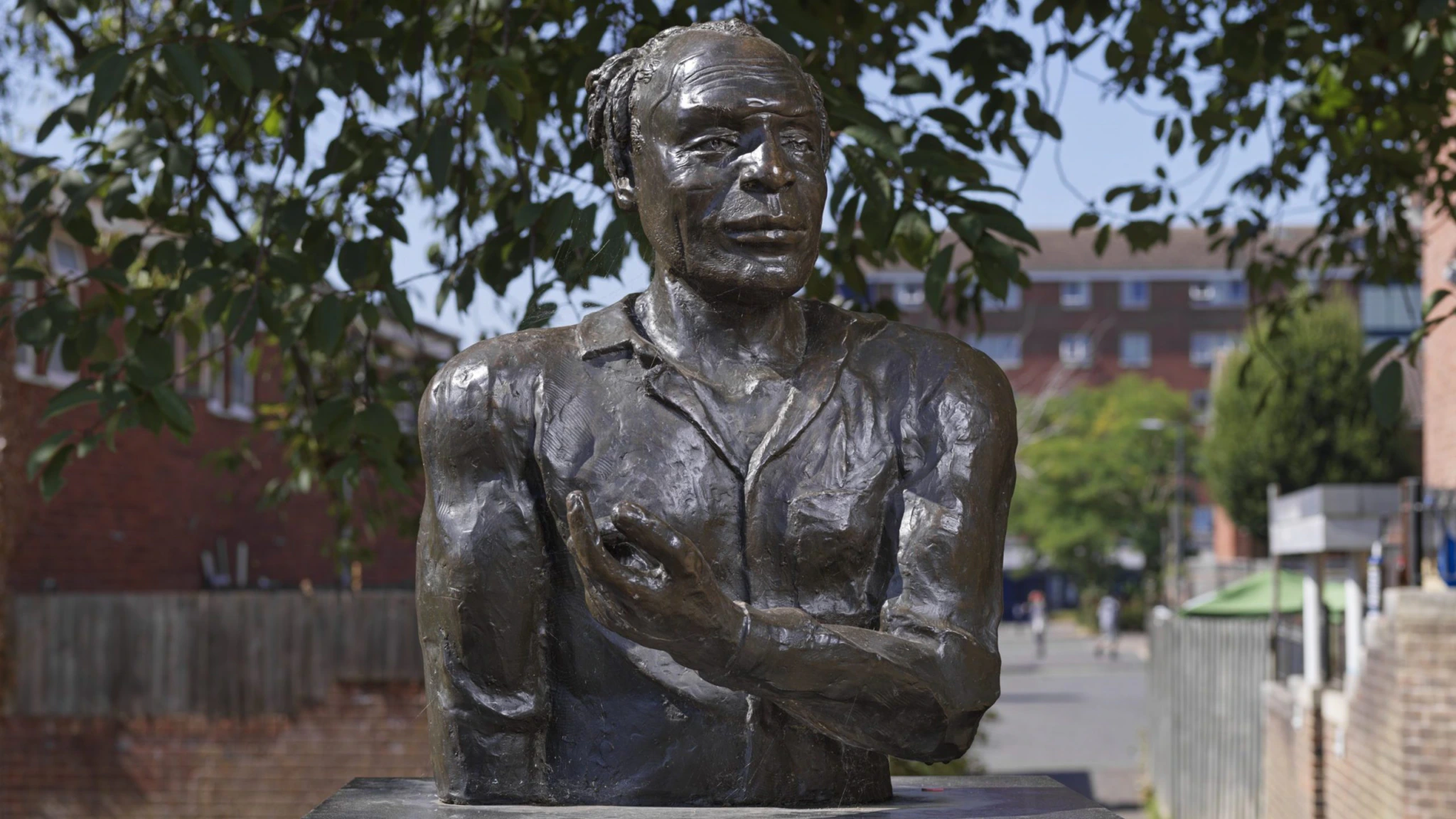
A statue of the Black British playwright Alfred Fagon in Bristol, and a gravestone in Chelmsford marking the life of Joseph Freeman, an enslaved man from New Orleans who sought refuge in England, have both been listed at Grade II.
Fagon was one of the most notable Black British playwrights of the 1970s and 1980s. The gravestone for Freeman, who died in 1875, is internationally significant in providing tangible evidence of previously enslaved African American people in England.
Heritage minister Lord Kamall said: "These new listings will preserve important pieces of our history and make sure the stories behind the landmarks are told to new generations."
In addition, three existing listings have been amended to highlight their connection to significant figures. These include the Baptist Church in North Shields that welcomed abolitionist Frederick Douglass as a speaker in 1846.
Advertisement
A number of venues are marking the month through new exhibitions or art. On 14 October, London’s Brent Council will unveil a new public artwork addressing the contested history of Gladstone Park. The park is named after the British prime minister Lord William Gladstone, whose family owned plantations in the Caribbean.
The horticultural art installation – called The Anchor, The Drum, The Ship – will incorporate plant species native to Africa, Britain and the Mediterranean.
In Southampton, the arts and heritage venue God’s House Tower is holding a solo exhibition by the multidisciplinary artist Ebun Sodipo, exploring changing attitudes towards Africans and their descendants in the city between the 16th and 20th centuries through “a visual and audio love story”. The exhibition was specially commissioned for Black History Month by ‘a space’ arts.
Another venue holding an exhibition of Black artists’ work to coincide with the month is London’s Saatchi Gallery. On 28 October, it will open The New Black Vanguard, focusing on fashion photography that celebrates Black culture, including work by fifteen Black international photographers.
And Glasgow University’s Hunterian Museum is now holding an outdoor exhibition of self-portraits by the South African visual activist Zanele Muholi.
Other institutions are marking the month through events, activities or new content. On the weekend of 22 and 23 October, the David Livingstone Birthplace Museum in Blantyre will host a storytelling festival by creatives from across the Scottish African diaspora. The event, programmed by Scottish-Zimbabwean artist and researcher Natasha Thembiso Ruwona, will include workshops, discussions, and live music.
Advertisement
The Museum of London is running a programme of readings, talks, tours, and other activities. This includes working with social enterprise The Heritage & Honour Collection to hold creative workshops that focus on London-based Black women in history.
The Jewish Museum London is running tours revealing objects relating to Black history. It will also hold a festival day celebrating Black women from Jewish scripture, including baking and object handling.
The National Archives will be sharing resources through blogs, events and its social media channels. This includes a blog on the story of Euan Lucie-Smith, who in 1915 became possibly the first Black British Army officer to be killed in action.
And the Towner Eastbourne’s cinema will be screening a range of films celebrating Black identity and talent. These include Julie Dash’s Daughters of the Dust, which in 1991 became the first feature film directed by an African-American woman to be distributed theatrically in the US.