Delegates at Moving On Up, a conference organised by the Museums Association (MA) last month and aimed at those starting a career in the sector, said they were confused and angered by the high number of qualifications demanded and the low levels of pay for entry-level jobs.
Jeremy Kimmel, the events and education officer at the Royal Engineers Museum, said: "Like all museum staff, pay is not quite where it should be compared to other people with a similar education to my own. It is the price you pay at the moment for going into the museum field. You get all these extra diplomas and degrees, then you come into a field that's under-funded and under-appreciated."
Deborah Hull, an enabler at Bradford Industrial Museum, said: "It is not just the salary, but the job I'm doing now does not represent the qualifications I have. I think that is more of a problem than the money at the moment."
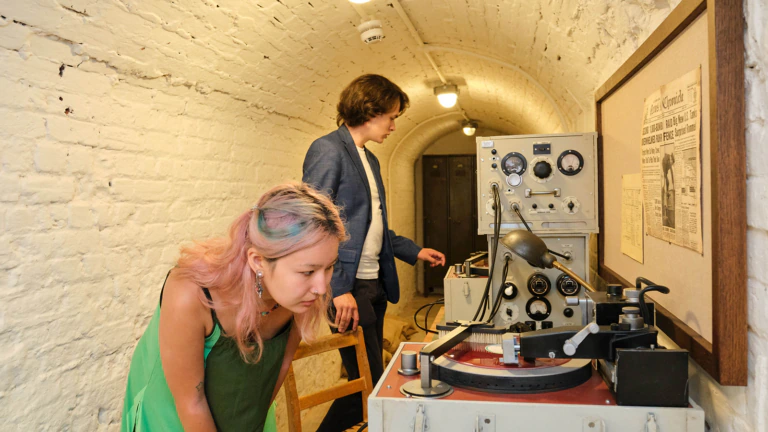
Edward Smith, a Merlin Plan Image Scanner for collection services at the British Museum, said: "The role I'm in is just scanning images to link to a catalogue, which is then going online. Even for that job, a master's in museum studies was a 'desirable' or even 'essential' requirement. Other than it being a sifting strategy to get rid of non-museum applicants, none of us can work out why."
Rebecca Jacobs, the MA's museum development officer, said the organisation's salary guidelines were designed to help employers set salaries and to promote them to funding bodies and governing organisations.
"Aside from publishing the guidelines, we communicate directly with heads of service and directors," she said. "A lot of it is about advocacy and working with employers, rather than punishing them for not meeting guidelines." The two-day event, hosted by Leicester University, attracted 130 delegates.
A film exploring this issue is at www.museumsassociation.org/salary
Jeremy Kimmel, the events and education officer at the Royal Engineers Museum, said: "Like all museum staff, pay is not quite where it should be compared to other people with a similar education to my own. It is the price you pay at the moment for going into the museum field. You get all these extra diplomas and degrees, then you come into a field that's under-funded and under-appreciated."
Deborah Hull, an enabler at Bradford Industrial Museum, said: "It is not just the salary, but the job I'm doing now does not represent the qualifications I have. I think that is more of a problem than the money at the moment."
Edward Smith, a Merlin Plan Image Scanner for collection services at the British Museum, said: "The role I'm in is just scanning images to link to a catalogue, which is then going online. Even for that job, a master's in museum studies was a 'desirable' or even 'essential' requirement. Other than it being a sifting strategy to get rid of non-museum applicants, none of us can work out why."
Rebecca Jacobs, the MA's museum development officer, said the organisation's salary guidelines were designed to help employers set salaries and to promote them to funding bodies and governing organisations.
"Aside from publishing the guidelines, we communicate directly with heads of service and directors," she said. "A lot of it is about advocacy and working with employers, rather than punishing them for not meeting guidelines." The two-day event, hosted by Leicester University, attracted 130 delegates.
A film exploring this issue is at www.museumsassociation.org/salary
The tomorrow people
Maurice Davies, the MA's deputy director, is the author of The Tomorrow People, a research report looking at the issues around entry-level jobs in the museum sector. "Museum work is, on balance, underpaid," he said.
"It is in the power of some museum managers and directors to increase pay if they choose to, particularly in bigger organisations. If they took a strategic decision to pay staff more over five years then they could do this."
Maurice Davies, the MA's deputy director, is the author of The Tomorrow People, a research report looking at the issues around entry-level jobs in the museum sector. "Museum work is, on balance, underpaid," he said.
"It is in the power of some museum managers and directors to increase pay if they choose to, particularly in bigger organisations. If they took a strategic decision to pay staff more over five years then they could do this."