Last month, the Royal Armouries announced that it is collaborating with Forensic Alliance Ltd, to create a firearms crime detection facility in Leeds, part of the museum's National Firearms Centre.
The centre, opening later this year, will include a firing range and display space, and will bring the Armouries into the modern world. It will allow the museum to explore the fascination guns exert in society and the role of guns in crime, as well as offering its business partner access to the museum's library and expertise.
Paul Evans, the museum's chief executive, says: 'We suspect people see this as a museum of war. But our collection is about power and conflict, and we have to demonstrate that relevance, both inside and outside our four walls. People are carrying guns and knives and we should have a role to play in addressing that.'
The museum, he argues, has a 'purposeful social role' as a facilitator and as agent.
No surprise, then, to find a group of children undergoing an education session examining conflict resolution when I visited. The museum is embarking on a programme of education and outreach, and it is clear that Evans sees these - more so than the displays inside the museum - as a key to tackling a range of social problems.
This is all a far cry from the starting point of the Royal Armouries in Leeds, at least in public perception - which was arguably less to do even with war, and more to do with ye olde England, Henry VIII and jousting.
Back in 1996, when the Royal Armouries opened, opinion was divided. Some applauded the entrepreneurial initiative of one of the first cultural PFI deals, and the expansion from London to the north. But there were others who wondered if PFI would work for cultural organisations. And they were unsure if the citizens of Leeds were ready for 886 sq metres devoted to historic armour.
By 1999, it seemed the doubters were proved right. The PFI was pulled apart - a situation that leaves the current museum management without many of the money-making assets, such as catering and corporate hire, that other public museums enjoy.
Meanwhile there were doubts about the visitor experience: the fortress-like building won few admirers, while the displays were difficult and academic, and visitor numbers didn't even come close to the predicted 750,000.
In 2003, the then operations director, Paul Evans, was promoted to chief executive, to turn the museum around.
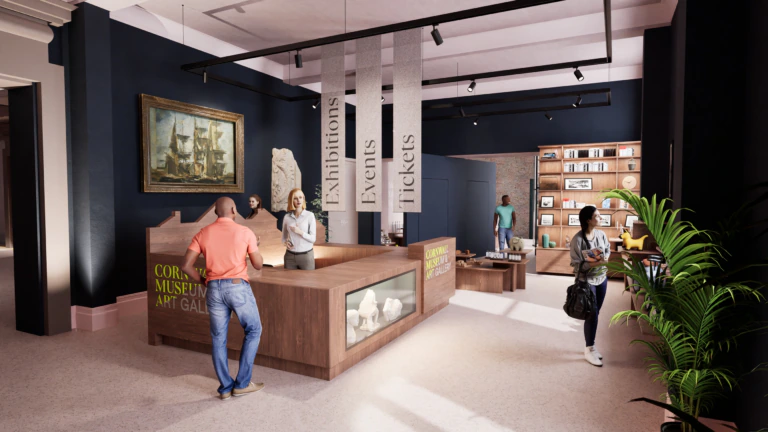
Nearly two years later, there may not be an enormous difference: the entrance hall still looks like a shopping mall (though it is soon to be revamped) and most of the displays are the same.
There are, however, a lot more visitors - around 300,000 last financial year, up from 150,000 in 1999/2000: partly a result of free entry, and partly an increasing programme of events and trails.
Meanwhile Evans has been busy: the museum's management has been restructured: including hiring Peter Armstrong as museum director, Jocelyn McConnachie as commercial director, and promoting Graeme Rimer to academic director.
Armstrong is leading a programme of redisplay with a newly created Creative Production department. Wisely, given the cost of refurbishments, the plan is to retain the structure of the existing displays but add new interpretation, timelines and study areas to make them more accessible.
'It is going to be about telling one story in each display, not 50, simply and well,' says Armstrong. 'Then telling people where the rest of the information can be found.'
Commercial development includes exploiting the museum's successful live interpretation team, US fundraising (the motivation behind the partnership with the Frazier Historical Arms Museum in Louisville) and the opportunities raised by private sector construction in the surrounding area, including a hotel, shops and conference centre.
Most controversially, Evans is firmly in the charging camp, to be 'masters of their destiny' as he puts it. He, like Armstrong, believes that C2, D and E visitors will not come to the museum simply because of free entry, and that the museum's role is therefore to go out and work directly with these groups.
'Our grant from the department for culture is enough to run the museum,' he says, adding that charging could generate as much as £500,000 a year to spend on community programmes. But this is a position that will isolate the Armouries from other major museums in the region, most of which are intellectually wedded to non-charging.
Some suggest the Armouries already keeps itself quite separate from regional museum initiatives. Not that this is likely to bother its senior management, which seems self-confident and willing to go against the grain.
By mid-2006 the Royal Armouries expects to look noticeably different, less isolated physically from the city as the development around it grows up, and less isolated from the community as its outreach programme increases.
The next exhibition, Shogun, is eye-catching and the redisplay of permanent exhibitions will almost certainly make more of the splendid collection. Allied to its entrepreneurialism, the future certainly looks brighter.
In this situation, the Armouries doesn't need too many friends - at least not among other museums.
The centre, opening later this year, will include a firing range and display space, and will bring the Armouries into the modern world. It will allow the museum to explore the fascination guns exert in society and the role of guns in crime, as well as offering its business partner access to the museum's library and expertise.
Paul Evans, the museum's chief executive, says: 'We suspect people see this as a museum of war. But our collection is about power and conflict, and we have to demonstrate that relevance, both inside and outside our four walls. People are carrying guns and knives and we should have a role to play in addressing that.'
The museum, he argues, has a 'purposeful social role' as a facilitator and as agent.
No surprise, then, to find a group of children undergoing an education session examining conflict resolution when I visited. The museum is embarking on a programme of education and outreach, and it is clear that Evans sees these - more so than the displays inside the museum - as a key to tackling a range of social problems.
This is all a far cry from the starting point of the Royal Armouries in Leeds, at least in public perception - which was arguably less to do even with war, and more to do with ye olde England, Henry VIII and jousting.
Back in 1996, when the Royal Armouries opened, opinion was divided. Some applauded the entrepreneurial initiative of one of the first cultural PFI deals, and the expansion from London to the north. But there were others who wondered if PFI would work for cultural organisations. And they were unsure if the citizens of Leeds were ready for 886 sq metres devoted to historic armour.
By 1999, it seemed the doubters were proved right. The PFI was pulled apart - a situation that leaves the current museum management without many of the money-making assets, such as catering and corporate hire, that other public museums enjoy.
Meanwhile there were doubts about the visitor experience: the fortress-like building won few admirers, while the displays were difficult and academic, and visitor numbers didn't even come close to the predicted 750,000.
In 2003, the then operations director, Paul Evans, was promoted to chief executive, to turn the museum around.
Nearly two years later, there may not be an enormous difference: the entrance hall still looks like a shopping mall (though it is soon to be revamped) and most of the displays are the same.
There are, however, a lot more visitors - around 300,000 last financial year, up from 150,000 in 1999/2000: partly a result of free entry, and partly an increasing programme of events and trails.
Meanwhile Evans has been busy: the museum's management has been restructured: including hiring Peter Armstrong as museum director, Jocelyn McConnachie as commercial director, and promoting Graeme Rimer to academic director.
Armstrong is leading a programme of redisplay with a newly created Creative Production department. Wisely, given the cost of refurbishments, the plan is to retain the structure of the existing displays but add new interpretation, timelines and study areas to make them more accessible.
'It is going to be about telling one story in each display, not 50, simply and well,' says Armstrong. 'Then telling people where the rest of the information can be found.'
Commercial development includes exploiting the museum's successful live interpretation team, US fundraising (the motivation behind the partnership with the Frazier Historical Arms Museum in Louisville) and the opportunities raised by private sector construction in the surrounding area, including a hotel, shops and conference centre.
Most controversially, Evans is firmly in the charging camp, to be 'masters of their destiny' as he puts it. He, like Armstrong, believes that C2, D and E visitors will not come to the museum simply because of free entry, and that the museum's role is therefore to go out and work directly with these groups.
'Our grant from the department for culture is enough to run the museum,' he says, adding that charging could generate as much as £500,000 a year to spend on community programmes. But this is a position that will isolate the Armouries from other major museums in the region, most of which are intellectually wedded to non-charging.
Some suggest the Armouries already keeps itself quite separate from regional museum initiatives. Not that this is likely to bother its senior management, which seems self-confident and willing to go against the grain.
By mid-2006 the Royal Armouries expects to look noticeably different, less isolated physically from the city as the development around it grows up, and less isolated from the community as its outreach programme increases.
The next exhibition, Shogun, is eye-catching and the redisplay of permanent exhibitions will almost certainly make more of the splendid collection. Allied to its entrepreneurialism, the future certainly looks brighter.
In this situation, the Armouries doesn't need too many friends - at least not among other museums.