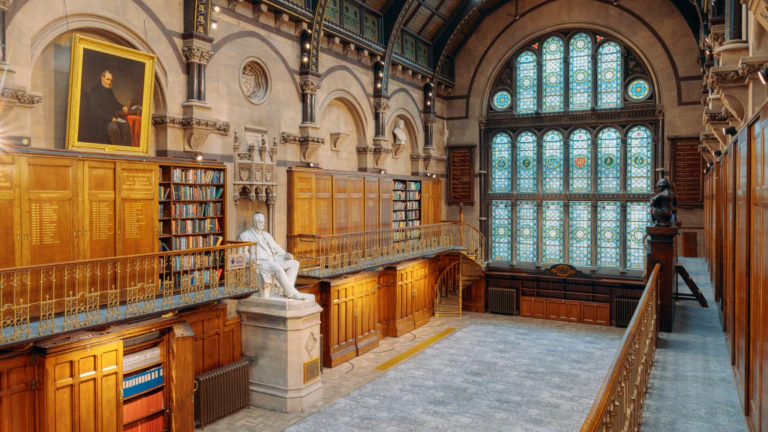
It houses a world-class collection of books covering science, technology and medicine, as well as historic periodicals, and first editions by Isaac Newton and Albert Einstein. But more than 100 years after its foundation, the Science Museum's unique library has only just staved off closure, after plans to split the collections between the museum, the Imperial College and the British Library were shelved by the trustees.
Fears about the library's future came to a head during the strike at the museum in February. Although the dispute was about pay and conditions - forced, according to the museum's senior management, by years of underfunding - it highlighted other pressures on the museum.
A number of galleries have shut, most recently Flight Lab, which the museum's director, Jon Tucker, says 'was hugely popular but simply wore out'. Staff at the museum remain in dispute with NMSI and are currently negotiating the 2005 pay settlement. The 2004 settlement of 2.5 per cent was imposed by the management, after union members failed to reach agreement.
The fate of the library, and its staff of 13, remains uncertain after the landlord, Imperial College, decided to increase its management charge from £65,000 to £288,000. 'The truth is that two huge tectonic plates - museum underfunding
and university underfunding - have collided in our library,' Tucker told Museums Journal. The department for culture allowed £200,000 for the museum to address the future of the library, including the possibility of transfer, in its 2004 spending round.
But now the trustees have decided to create an independent review team to examine the overall situation at the museum: government funding, earned income and reviewing priorities are among its various activities. The team will report in early 2006.
Museum management say the basic problem stems from reductions in grant-in-aid, in real terms amounting to more than £7m cumulatively since 1997/98, coupled with a rise in visitor numbers from 2.2 million to 3.5 million since the introduction of free entry in 2002. Tucker also argues that science displays are expensive to produce.
Meanwhile, possibilities for the library include a transfer to the main stores at Wroughton in Wiltshire. The irony is that the library's biggest users are the students and teachers at Imperial College: it sits a stone's throw from the campus off Exhibition Road.
Fears about the library's future came to a head during the strike at the museum in February. Although the dispute was about pay and conditions - forced, according to the museum's senior management, by years of underfunding - it highlighted other pressures on the museum.
A number of galleries have shut, most recently Flight Lab, which the museum's director, Jon Tucker, says 'was hugely popular but simply wore out'. Staff at the museum remain in dispute with NMSI and are currently negotiating the 2005 pay settlement. The 2004 settlement of 2.5 per cent was imposed by the management, after union members failed to reach agreement.
The fate of the library, and its staff of 13, remains uncertain after the landlord, Imperial College, decided to increase its management charge from £65,000 to £288,000. 'The truth is that two huge tectonic plates - museum underfunding
and university underfunding - have collided in our library,' Tucker told Museums Journal. The department for culture allowed £200,000 for the museum to address the future of the library, including the possibility of transfer, in its 2004 spending round.
But now the trustees have decided to create an independent review team to examine the overall situation at the museum: government funding, earned income and reviewing priorities are among its various activities. The team will report in early 2006.
Museum management say the basic problem stems from reductions in grant-in-aid, in real terms amounting to more than £7m cumulatively since 1997/98, coupled with a rise in visitor numbers from 2.2 million to 3.5 million since the introduction of free entry in 2002. Tucker also argues that science displays are expensive to produce.
Meanwhile, possibilities for the library include a transfer to the main stores at Wroughton in Wiltshire. The irony is that the library's biggest users are the students and teachers at Imperial College: it sits a stone's throw from the campus off Exhibition Road.