Birmingham Museums Trust (BMT) has seen more than its fair share of change over the past 14 years. Having shifted from local authority ownership to trust status in 2012, the organisation is still relatively young, in terms of its board culture. Now it is evolving again, with chair Stephen Hughes joining this year and new council representatives on board after the local elections in May.
Over the past 12 months, the board has also recruited a chair for its finance and risk committee and is seeking trustees and a new chair of its trading board.
BMT’s co-chief executive, Sara Wajid, says: “There has been quite a lot of change for us. It has been an interesting process over the past six to nine months of recruiting.
“When I first started in the role [in 2020], I didn’t realise the weight of the importance of governance and the relationship between the chief executive and the chair,” she adds, pointing to sector-wide work on improving the connection between the two roles. “I’ve learned a lot about the importance of those relationships and the balance between scrutiny, support and challenge.”
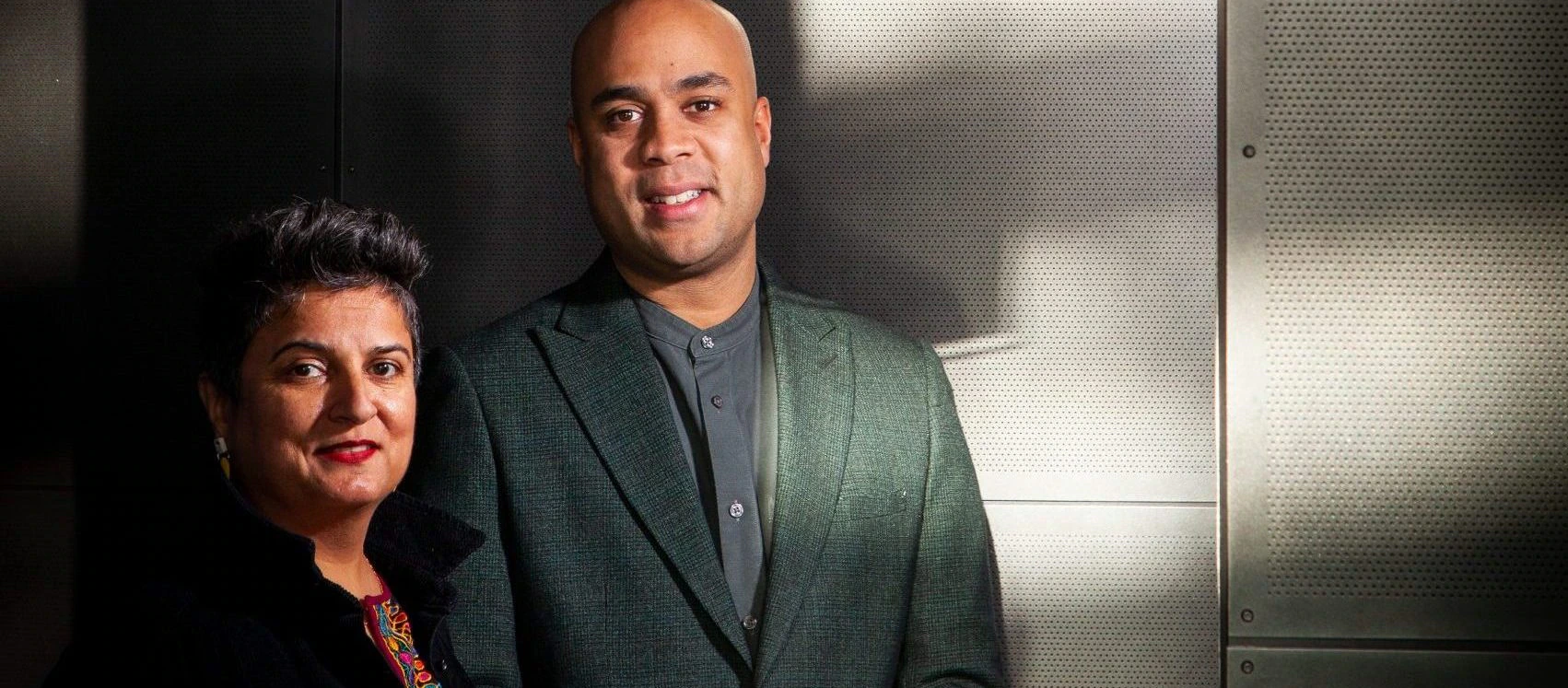
Wajid, the first British Pakistani museum director in the UK, and her co-chief executive Zak Mensah, the second Black museum director at BMT, worked closely with former chair Niels de Vos to build an effective relationship between the senior staff and board members.
Co-leadership coaching
“We had specific co-leadership coaching, and we got Niels talking quite early on about his attitudes to co-leadership and why it mattered,” says Wajid. “Niels had previous experience of chairing co-chief executives and was confident in appointing us, where often boards might be resistant to these more inclusive models. It also meant he invested the extra time needed to make it work.
Advertisement
“Zak is a working-class Black man. I am a queer Asian woman. Niels is a middle-class, Oxbridge-educated white man from Birmingham. The power dynamics were kind of classic. It was almost like a sociological control experiment.
“If the three of us can form a good working relationship for the good of Birmingham, then that’s what we are trying to do for the wider organisation – bring that complexity and diversity and
cultural difference and get that richness and the best of all of us.”
Wajid says the trio understood there would be some uncomfortable conversations about class, race, gender and politics. “It surfaced and sometimes in ways that were not helpful, particularly to me,” she says. “I think Niels would be happy for me to say that we both had to shift and learn. There were times when those very direct conversations weren’t very comfortable.”
Beyond the leadership structure, Wajid and Mensah have focused on building a more diverse senior leadership team and extending that approach to the board.
Wajid says: “When it comes to the questions of diversity, it’s not just about asking whether there are X number of women on the board or X number of people with protected characteristics. It’s about the culture of the board. Is everyone able to speak? Are there conditions to thrive? Is the board structured in a way that means we are looking out for social norms, such as senior men dominating conversations? Is there an alert chair?”
This requires a diversity and skills audit alongside a 360-degree review of the chair’s performance. Then you have the data to assess your strategic aims and identify where there are gaps, as well as areas that need more support.
Advertisement
When recruiting for trustees, Wajid says it is essential to keep diversity high on the agenda.
“The person leading the process should report back to the board on the recruitment process, such as the composition of the longlist versus the shortlist, and the balance of gender, race and other factors. It is not always where you want it to be because of structural barriers such as unpaid roles and time commitments. So you have to be really proactive.”
Reshaping decision-making
Wajid highlights BMT’s Citizen’s Jury as a reminder that diversity is not just about who sits on the board, but how decisions are made, by creating the right conditions for meaningful participation and scrutiny.
The jury, which aims to reshape Birmingham’s museums by directly involving local residents in the decision-making process, is given time to deliberate, and is supported by dedicated facilitators who create space for structured discussion and debate.
“At times, I’ve observed those workshops and thought it is better than a board meeting,” says Wajid. “It’s a better quality of conversation – a more challenging form of scrutiny for us as executives.”
The lesson for boards, she suggests, is that diversity must be accompanied by structures that encourage participation, challenge and reflection.