At National Museums NI, the environment is one of four key impact areas in our 2025–2030 Corporate Strategy, reflecting our commitment to embedding sustainability in everything we do –from collections care and community engagement to the design and delivery of exhibitions.
Our work in this area is guided by the understanding that museums are not neutral spaces. The choices we make (from materials to narratives) can model better ways of thinking and acting in response to the climate emergency.
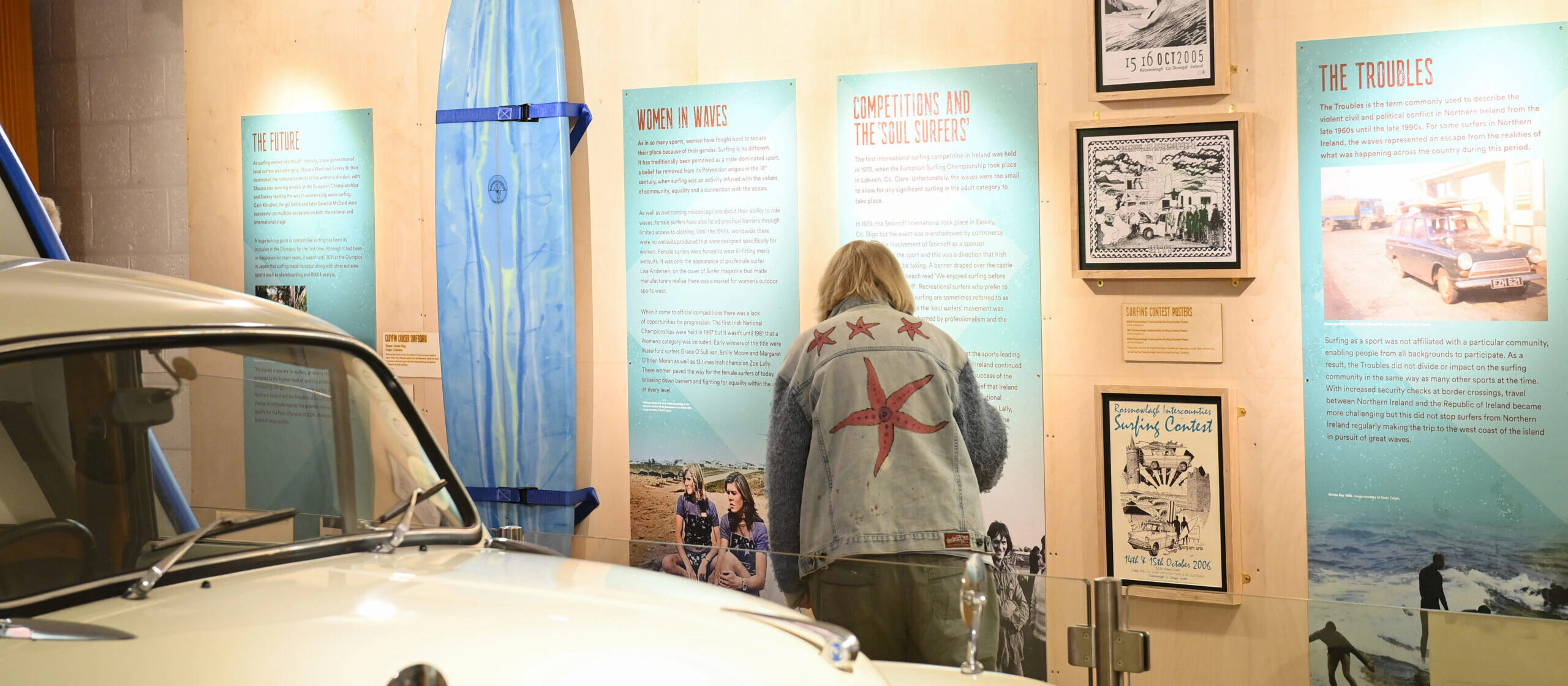
At the Ulster Transport Museum, that philosophy has found powerful expression in Celtic Wave. Opened in July 2022, the exhibition explores the evolution of Irish surfing from its origins in the 1960s to the vibrant culture of today while piloting new, more sustainable approaches to exhibition design.
Film, photography, objects and personal accounts reveal how a pastime rooted in adventure and creativity evolved into a passionate community grounded in respect for nature.
That connection to the ocean provided a natural foundation for rethinking the environmental footprint of the exhibition itself.
Interested in sustainable exhibition design?
Hear from Celtic Wave's designers and more at Show Time: Designing Great Exhibitions on 18 March
Advertisement
“The marine environment is central to the story we’re telling — it made sense that the way we told it should reflect the same values of care, resourcefulness, and respect for our surroundings,” says Clare Ablett, curator of history at National Museums NI.
For the in-house design team, Celtic Wave presented both an opportunity and a challenge. The exhibition space at the Ulster Transport Museum required significant adaptation to accommodate large surfboards, interactive displays and film screenings, while maintaining an immersive coastal atmosphere.
“Sustainability is always a priority in our exhibition design,” says Stefan McKee, the interpretation officer at National Museums NI. “But this project in particular demanded a thoughtful balance between material integrity, environmental responsibility and the DIY ethos that has always been part of surfing culture in Ireland.”
The team clad the gallery in unpainted timber, avoiding large vinyl wallpapers or PVC-based panels. This approach reduced the use of paints and adhesives while complementing the exhibition’s handmade aesthetic — echoing the early surfers who shaped boards from old doors and scrap wood.
Objects were mounted using cardboard-based graphics fitted with visible, mechanical fixings rather than adhesives or tapes, ensuring every element could be easily recycled. Labels were etched on recycled plywood, produced in-house using a laser cutter. Paper-based acoustic panels helped to separate the video area, demonstrating that sustainability and function can coexist seamlessly.
Practicality was as important as principle. The team found that sustainable materials often offered unexpected advantages. Natural timber and cardboard surfaces proved more durable than traditional printed or painted finishes — less prone to visible damage from wear and tear. McKee says that while a few traditional vinyl graphics have needed refreshing, none of the sustainable elements have shown any signs of “fatigue”.
Advertisement
Technology reuse was another key area of focus. Where possible, screens and digital hardware were recycled or repurposed from previous installations, reducing waste and extending the life cycle of existing resources.
Objects on display also told their own sustainability story. A pair of rash vests from Cork-based company OceanR, made from recycled plastic bottles, highlight innovation within the Irish surf industry. The inclusion of boards from local shapers reinforced the message of supporting small-scale, regional craft - and the broader environmental benefits of buying local.
Celtic Wave has become a prototype for National Museums NI’s evolving approach to sustainable exhibition design. The lessons learned about materials, durability, storytelling and visitor perception are informing how we think about future gallery refurbishments and temporary exhibitions across our sites.
The project also reinforces a broader cultural truth: that sustainability is not only a technical or logistical challenge, but also a creative one. The exhibition’s tactile, unfinished surfaces and natural tones became part of the visitor experience, evoking the rugged authenticity of Ireland’s coastline. In doing so, they demonstrated that environmentally responsible design can also deepen thematic resonance.