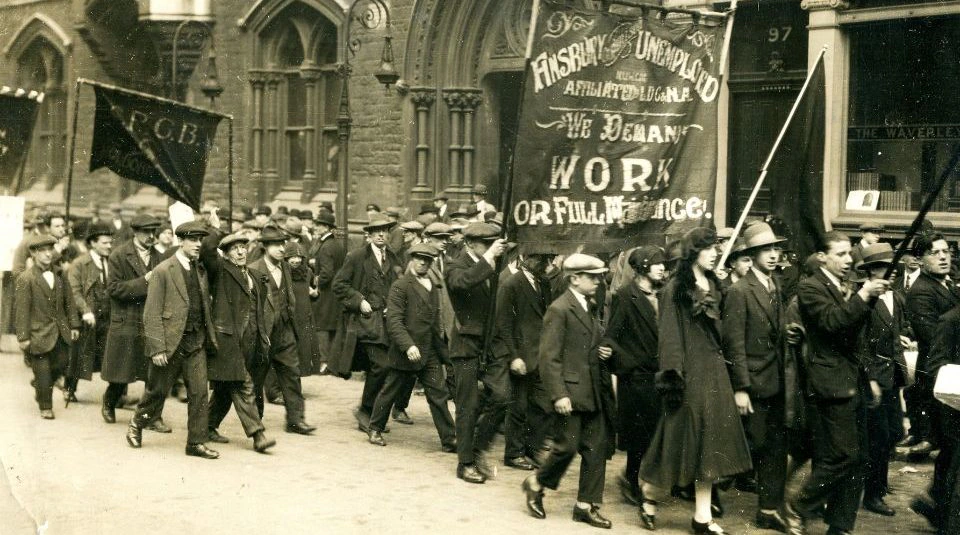
In 1926, the general secretary of the Miners’ Federation of Great Britain, AJ Cook, said: “Not a penny off the pay, not a minute on the day.” He completely encapsulated the miners’ demands in the face of insurmountable pressure.
Postwar Britain’s failure to keep pace with industrial change alongside the turbulent economic climate saw private mine owners reduce wages and extend working hours to keep their businesses profitable. This pushed communities into unsustainable poverty and to breaking point.
When negotiations failed, the Trades Union Congress (TUC) called a national strike in support of over one million locked-out miners. By 4 May 1926, about 1.5 million workers had stopped work. After nine days, the strike ended when the government declared sympathetic action illegal. This was enshrined in law and still stands today.
The TUC secured the workers’ return supposedly without discrimination, but the outcome of the strike brought division, isolation and no tangible gains for workers.
As the story of the General Strike is told through exhibitions, events and articles this summer, highlighting enduring debates around wages, working conditions and collective action, the theme of this year’s Social History Curators' Group (SHCG) conference is inspired by these events.
Alex Longrigg and Fran Stovold are SHCG trustees