
Increasing representation is a familiar topic across many cultural institutions. Most museums and galleries carry a legacy of exclusion, both in their collections and how they’re interpreted, and are often seen as exclusive and expensive.
Historically, these institutions prioritised authority over authenticity, resulting in displays that were informative but limited to telling the major stories in society. Rightly, they have been rethinking their collections and who holds narrative control.
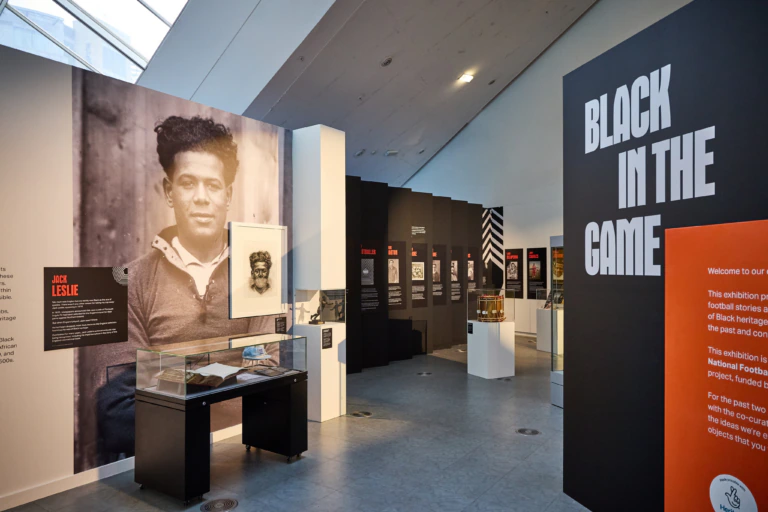
An example of a museum seeking to address this imbalance was the recent Black in the Game exhibition at the National Football Museum in Manchester. Three years in the making and launched during Black History Month 2025, it showcased the cultural impact, unique achievements and untold stories of African and Caribbean communities within English football.
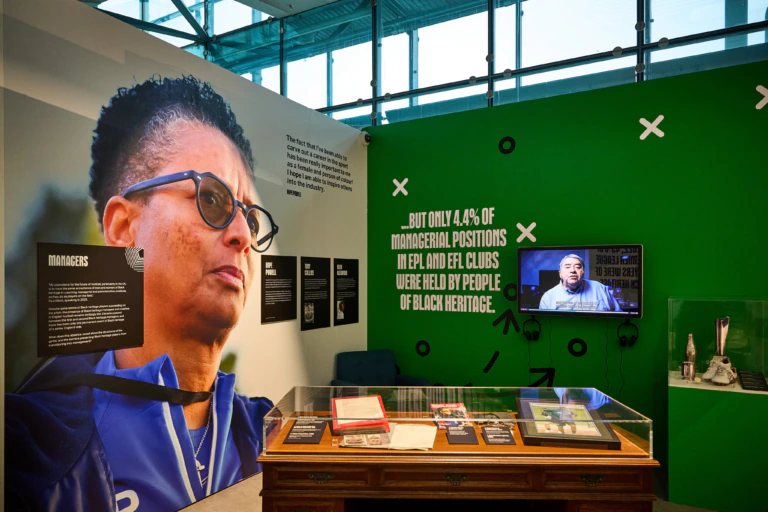
Crucially, it was co-curated by representatives from across football’s Black heritage community. As well as stories, the exhibition featured iconic objects, many of which were displayed for the first time. The focus was on Black players, but also other marginalised groups in football, including women and the LGBTQIA+ community.
I was commissioned by the National Football Museum to work on both the 2D and 3D aspects of the exhibition design. Having the opportunity to work on a project like this, which not only celebrated Black excellence but combined three of my passions – design, museums and football – was a joy, and one I had to do justice.
I worked with the steering group to reimagine what a football exhibition could look like; one that didn’t just focus on events on the pitch, but also told stories of activism and social justice. Above all, it had to be a celebration.
Advertisement
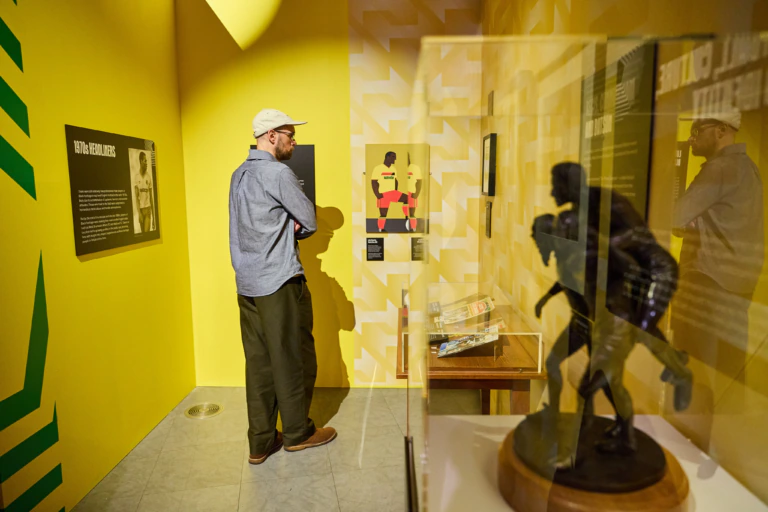
The exhibition design and identity highlighted the pioneering figures in the game and represented the broad Black diaspora through its imagery and palette. Every detail was chosen for its relevance and significance, right down to the typeface, VTC Garibaldi, which was designed by Vocal Type’s Tré Seals, a Black type designer.
The space guided visitors through time, telling the stories of pioneers such as Jack Leslie – the first Black footballer to be picked for the English national side – to modern stars such as Marcus Rashford and Michelle Agyemang.
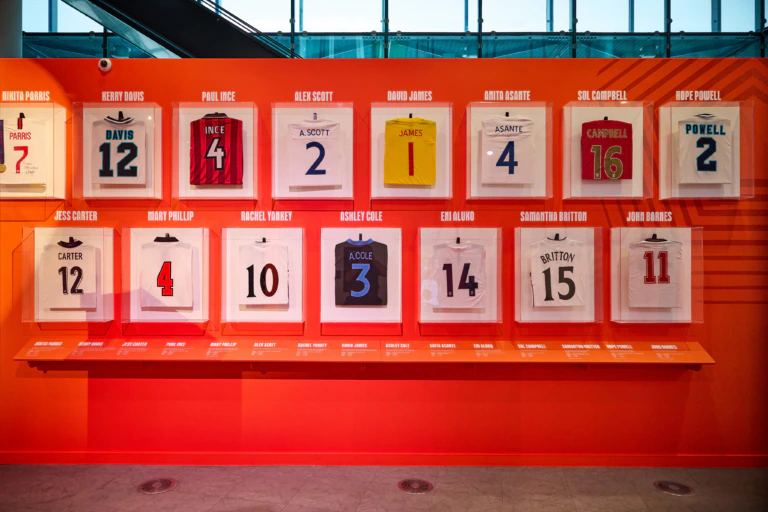
Vibrant patterns and large-scale imagery helped define separate zones that celebrated the pioneers, culture and wider football family, culminating in a feature wall of Black icons from the England team’s past and present. Throughout the space, powerful quotes enlightened visitors, such as the one from South African-born player Albert Johanneson’s daughter: “Football’s strength is in its diversity.”
The exhibition was a great example of what can be achieved when a museum and community come together in common purpose, and I feel the design reflected this.
Representation doesn’t just apply to race, but also to faith, disability, gender and sexuality. Another example was the Victoria and Albert Museum's recent exhibition Design and Disability, which highlighted the contributions of disabled, deaf and neurodivergent people to design history and contemporary culture.
Advertisement
The exhibition took a considered and inclusive approach, ensuring authentic voices were involved from the start in its production and design.
Despite best intentions, diverse representation all too frequently feels like an add-on rather than a foundational principle. Exhibitions like these are often confined to temporary spaces, themed months or reactive programming. These initiatives are still valuable, but there’s a risk that they appear supplementary rather than being a core part of a museum or gallery’s mission.
Institutions are slowly changing, but representation still feels difficult. Real progress requires a shift in process. It must be embedded in all stages, not just in content and commissioning, but also in day-to-day decision making.
Steering groups are often brought together for particular shows but are then disbanded. Why can’t they be included in decisions on an ongoing basis? Institutions could also dedicate permanent spaces to be curated by diverse groups working in partnership with them.
If diverse stories are consistently presented as temporary, it reinforces the idea that they’re special shows and not the norm. Often, the momentum of a well-intentioned and thoughtful exhibition is lost as the institution defaults to the old standard with its next show. A way forward might include expanding programming to include concurrent exhibitions.
Representation doesn’t just apply to museum and gallery visitors, but to the organisations themselves and the decision-making structures within them. It’s important to acknowledge the role of lived experience and the paths by which people enter the creative and museum industries.
Advertisement
With the rising cost of education, it’s becoming more difficult for many to pursue a creative degree or consider careers in galleries, libraries, archives and museums as a realistic option. The literal price of entry to an institution can be enough to exclude many communities. It's to their credit that many/increasing numbers of organisations and institutions are discounting entry and offering bursaries to diverse communities. Finding ways to inspire and provide ongoing opportunities and education is just as valuable outside of a themed exhibition.
Another key role is the commissioning cycle. Typically, decision-makers and those commissioned gain experience without having faced any cultural barriers. As the tender process favours those with relevant experience, this reinforces the status quo.
So how do we change that? Ultimately, improving representation in our cultural institutions isn’t just about single exhibitions. It’s about structural change.
Exhibitions like Black in the Game are important contributions to the conversation. But there is still a long way to go.
Ty Abiodun is a designer and art director based in Brighton. He has his own consultancy, The Trees