
Annabel Turpin
CEO of Storyhouse and co-director of Future Arts Centres
Over the last 5-10 years there has been a consistent reduction in third spaces.
According to YMCA data, there were 54% fewer youth centres in England since 2010–11 by 2023–24. From a peak of around 3,600 Sure Start family centres in 2010, today there are an estimated 2,500, a loss of more than 1,000.
Collaborative research efforts by HuffPost UK and the Bureau of Investigative Journalism suggests that more than 12,000 public spaces such as libraries, community centres and playgrounds have been disposed of by local authorities since 2014/15.
UK high streets are also seeing a marked decline in social, community-oriented gathering places, such as pubs, cafés, and essential services. These are being replaced by takeaway food outlets, vape shops, and, to an extent, charity retailers. This shift is particularly pronounced in deprived areas.
Is it any wonder then that the role of arts centres as community hubs – warm, free and open spaces – has therefore become more important?
Advertisement
This month at Storyhouse, staff dealt with seven incidents of anti-social behaviour caused by bored young people without a place to go, supported someone in a mental health crisis, signposted a homeless person to support services and provided digital support for three people struggling to claim benefits via online systems.
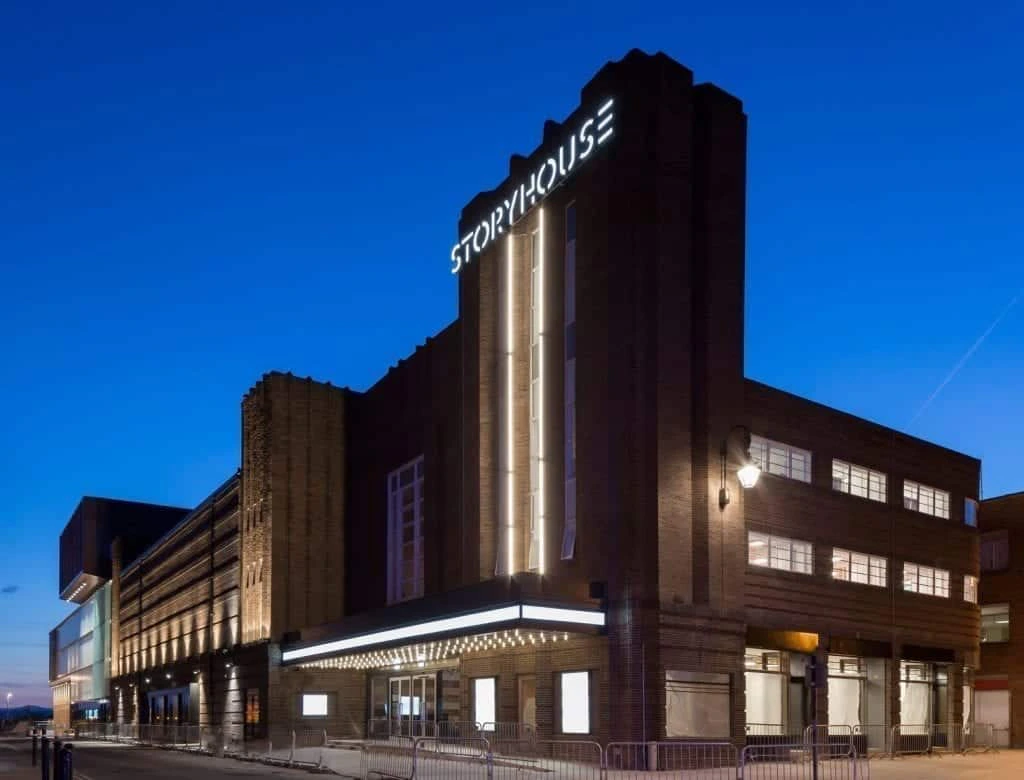
Storyhouse is an arts centre in Chester. Earlier this month, we also staged live performances, screened films, hosted a number of creative workshops, offered free storytelling and provided a home for 15 community groups.
Thriving, healthy communities need to be connected: to each other and to their place. Arts centres facilitate this connection in both visible and less visible ways – through physical space and shared experiences, through events, workshops, festivals, films, performances and exhibitions. They give people reasons to come together, and places to do so.
People facing disadvantages – those from lower socio-economic backgrounds, or those whose identities may leave them marginalised or isolated – are often the most disconnected. They are also the least likely to access traditional cultural venues or institutions, where cost, cultural familiarity, and perceived relevance all act as barriers.
Arts centres can, and often do, play a unique role here: they’re places where it’s possible to just be, with no expectation to buy a ticket, behave a certain way, or know anything about art.
The most effective arts centres are community-led – audience-driven rather than artform-driven. This distinguishes them from single-artform venues whose focus is often the development of a particular discipline (like opera, theatre, or classical music). While these venues have immeasurable value to artists honing their craft, they often do not offer the same broad benefits to their communities.
Advertisement
Arts centres, by contrast, shape their programming around the people they serve. They build their offer in response to local need, curiosity, and opportunity – not just curatorial instinct. At their best, they belong to the community, rather than merely serving it.
It’s also worth noting that much of the UK’s subsidised arts infrastructure still prioritises traditional, often white and middle-class, artforms – and the funding follows. That landscape can feel distant, even unwelcoming, to many.
Arts centres often bridge this gap. With a mix of subsidised and commercial work – theatre alongside comedy, film, music and visual art – they bring a broader and more representative audience through the door.
It’s not uncommon for a family to visit for a free storytelling session, and then return for a film, a gig, or a workshop. That’s the point. Access breeds familiarity, and familiarity unlocks engagement.
Programming for children and young people is often central to this. Early exposure to creative opportunity helps build cultural capital – a sense of ownership, confidence, and ‘right to belong’ in cultural spaces.
In communities where access has historically been low, this can be transformative. A child’s regular participation in arts activities not only supports their self-expression and development, but often acts as a ‘passport’ for wider family engagement.
Advertisement
Parents return, bring siblings, and participate in events they may not have considered before. Young people lead the way.
This matters because arts engagement isn't just about entertainment – it’s about identity. It builds self-esteem and confidence, nurtures communication and empathy, and helps people see themselves and others differently.
In a society that is increasingly fragmented, arts engagement creates space for dialogue, for difference, for shared experience. It helps shape more cohesive communities.
And in practical terms, arts centres often do more than just deliver creative programming. As we’ve seen at Storyhouse, they provide digital access, welfare support, signposting, warm spaces, food, safety, company.
The work is cultural, yes – but it is also civic. It’s the modern-day equivalent of the public hall, the local club, the library, the youth centre, the advice service. Because so many of those things no longer exist.
So as the number of traditional third spaces declines, and more communities lose access to essential public infrastructure, it’s time to look more seriously at the role of arts centres as civic anchors. These are not luxury institutions or optional extras – they are increasingly central to the health and wellbeing of communities.
If we care about place, about inclusion, about the next generation’s sense of belonging and potential – we need to ensure these spaces not only survive, but thrive.
Headshot image copyright: Kit Hannon



So well articulated Annabel – thank you.
I agree wholeheartedly with everything you’ve said. I’ve worked in this space for a long time.
“…arts engagement isn’t just about entertainment – it’s about identity” – HOORAH!
What I find challenging is linking the experience an audience member has (I know, one narrow experience) with the notion that, as you say, arts engagement creates space for dialogue, for difference, for shared experience. It helps shape more cohesive communities.
When considering all those factors, and the many ways they can be delivered, I find it hard to rationalise so much of the ‘stuff’ that happens in the hard infrastructure of an arts centre – as opposed to the myriad of arts programs that happen around/outside them.
I want to believe that the 15,000 people who attend the ballet in our capital city over the next two weeks will build a more cohesive society, and that the space created for their dialogue will have broader benefits….tolerance, connection, empathy etc…
Among the many other ways this can occur, I fear I’m starting to lose faith; and communicating this to the ‘unconvinced’ isn’t easy.
Maybe as you say, it’s the access and ‘the right to belong in cultural spaces’ that is the critical factor.
Thank you again.
Rick