

Clare Annamalai
In press interviews to launch V&A East Storehouse, Tristram Hunt finally said of the proposed Holocaust Learning Centre what many leaders in the museums, heritage and cultural sector have surely been thinking: that excavating a park to create a tiny, poorly defined exhibition, when public funding is in such short supply is “a terribly bad idea”.
With the chancellor’s recent 1.4% cut to the Department for Culture, Media and Sport’s budget, the project looks even more profligate. As the Museums Association warned, organisations face the “prospect of more cuts and… financial uncertainty”.
Many will face tough choices over the next few years if they are to continue offering great art and culture for everyone, or in some cases to survive at all. The Jewish Museum London is a particularly pertinent example of an institution that has already had to sell its premises and develop a new operating model.
But the Holocaust Learning Centre seems not to be subject to the same financial pressures as the rest of the sector. When David Cameron first announced the project, its budget was £75m, of which £50m would come from government.
The most recent estimate is £147m, of which £122m will come from government. In light of spiraling construction costs and the complexity of building underground just metres from an ageing river wall, on a site of archeological interest which is threaded with tree roots, a “responsible” but undisclosed contingency budget has also been allocated.
Advertisement
In most cultural or heritage organisations, such runaway costs would mean crisis talks with funders, sponsors and boards. In the case of the Holocaust Learning Centre, government funding just keeps filling the gap.
This is not the only respect in which it differs from other publicly funded capital projects. There is no published plan for the content of the learning centre.
We know it will be entirely digital, but over the years, organisers have said sometimes that it will consider the Holocaust through a uniquely British lens, sometimes that will explore “the many meanings” of the Holocaust.
They have said it will encompass genocides subsequent to the Holocaust, and conversely that it would be “quite wrong” to deal with anything other than the Shoah.
In any case, it is hard to imagine schools bringing KS3 students from anywhere beyond London to see a small exhibition of digital content. Which raises a further question: just who is the primary audience for this learning centre?
Lord Pickles, its loudest cheerleader in Parliament, claims it “will be the most visited Holocaust museum anywhere in the world”, because of its high-traffic location. But entry will be by pre-booking only, which will deter many passers-by from visiting.
Advertisement
The Imperial War Museum, less than a mile away, will provide stiff competition: it is free to enter, requires no pre-booking, and contains the much-admired Holocaust Galleries.
Nor is there any business plan for review by an independent body. Applicants for Arts Council England funding have to provide detailed visitor forecasts, they have to be specific about desired outcomes and how these will be measured, they have to consider risks and mitigations, and of course provide projections of income and expenditure.
Where are these details for the Holocaust Learning Centre and who is scrutinising them? The National Audit Office concluded, in 2022, that the then-Department for Levelling Up, Housing & Communities, “does not have a track record of managing programmes of this nature”.
The Infrastructure & Projects Authority has consistently assessed the project as “undeliverable”, and the MP Robert Jenrick, as communities secretary, promised that entry to the learning centre would be free in perpetuity, without explaining how ongoing operational costs would be covered.
Driven through parliament first by a Conservative government and now by a Labour one, this major capital project is entirely unshackled from the constraints of measurement, evaluation and cost-control that govern every other sector organisation.
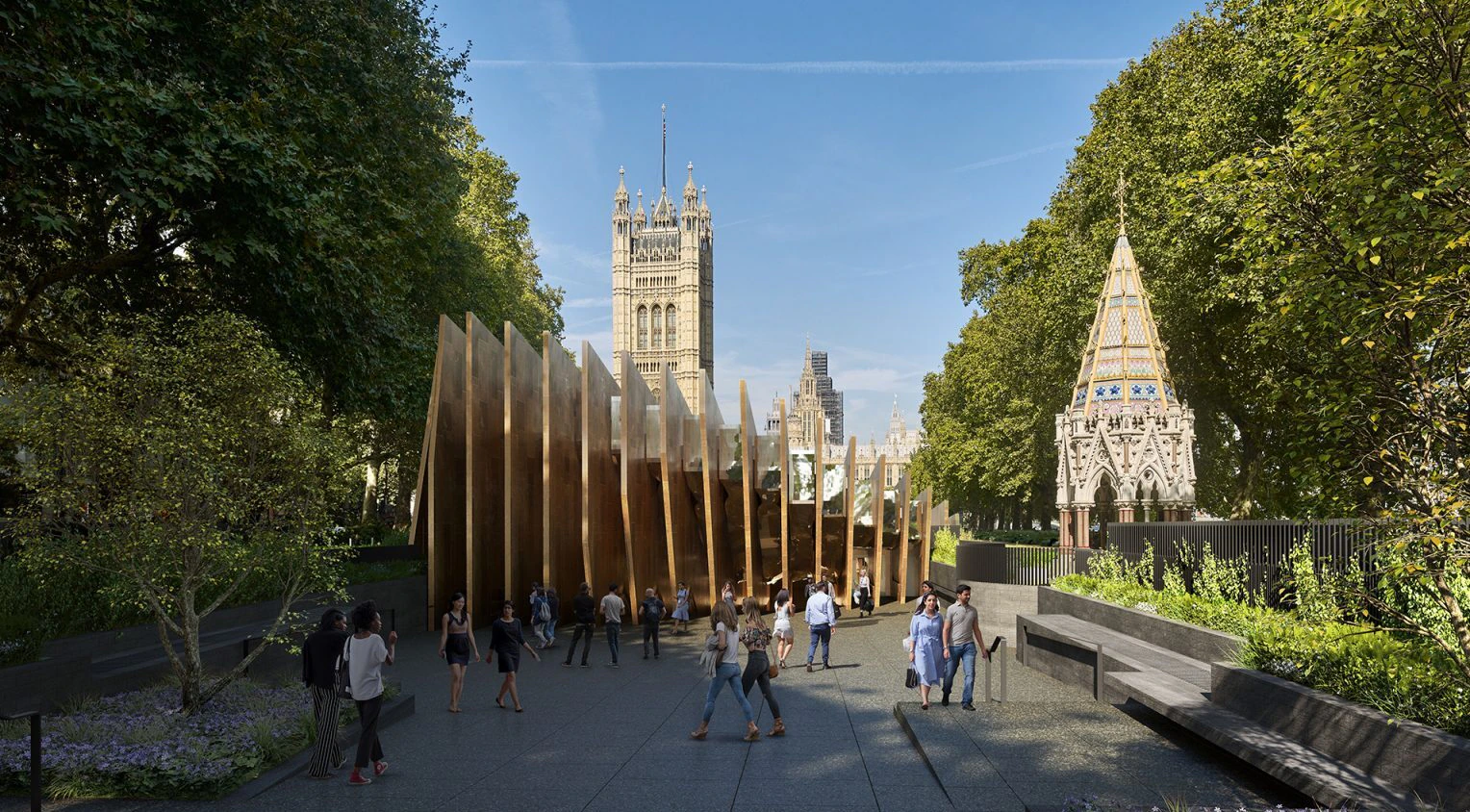
If built, the consequence of failure for the Holocaust Learning Centre (however that may be measured) will be exceptionally tangible: a redundant underground bunker in a park, which would be very hard to repurpose.
Tristram Hunt is right; this is “a massive misallocation of resources”, and if the government doesn’t start holding the Holocaust Learning Centre to the same standards of governance and scrutiny as the rest of sector, they may end up staring, almost literally, into a moneypit.
Clare Annamalai works in the arts sector and is a member of the Save Victoria Tower Gardens campaign group.