Large or small, the marketing of museum exhibitions tends to follow a wearily familiar path. Get a cultural bigwig to write a piece for a Sunday broadsheet, or the local hack to put something in the weekly free; plaster the Tube with posters or tout some flyers about town; secure a slot on the South Bank Show or regional radio; then reap the footfall from the same old tourists and members of the public, all the while conducting board meetings about how to reach out to the locals, the working class, families.
The truth is that in a media-savvy world, with countless organisations clamouring for our leisure time in just this way, word-of-mouth wins out. Museums have a natural advantage in this landscape as they are spaces designed to provoke conversation and inspiration; but they're also particularly bad at reaching beyond their core converts.
When the statistics prove that peer-to-peer conversation is what is influencing people's decisions about where to spend their attention, it's incredible that museums aren't investing in spreading and sustaining a more diverse body of word-of-mouth.
There have been some notable successes. Elderly institutions are wary of giving up control of their assets and their image, but they are realising that the control has already gone. Social media have become our global museum; we can now find virtually any video, image or document we want online, often with commentary and context.
Rarefied artefacts preserved behind glass have become digital pieces of culture that can be shared and discussed. Some museums are learning to embrace this psychology.
The Commons project on Flickr promises to "show you hidden treasures in the world's public photography archives, and how your input and knowledge can help make these collections even richer". Participants include the Smithsonian, Imperial War Museum and Australia's Powerhouse.
Commons members are encouraged to give their own thoughts and interpretations on the images and exhibitions, rather than accepting sanctioned meanings or arrangements of the works. This transforms passive exhibiting into an active process of co-creation, inspiring rich and relevant conversation.
But becoming word-of-mouth-enabled isn't just about the web. The Natural History Museum has adopted the brilliantly conversational tactic of transforming its central hall into an after-hours club on the last Friday of every month, offering cocktails and jazz alongside late-opening exhibitions.
This encourages people to think about the museum as a stimulating social facilitator rather than a place of solitary contemplation. And for all the criticism about turning sacred spaces into cattle yards, it's actually a glorious return to roots, reminiscent of the sociability of 1851's Great Exhibition and other epic Victorian show-and-tells.
So when word-of-mouth specialists 1000heads was engaged by the Victoria and Albert Museum (V&A) to promote its Cold War Modern show, we jumped at the chance to combine online social platforms with the powerful social platform of the museum itself.
Re-creating the tensions and aesthetics of the time, we designed an alternative reality game centred on a shadowy intelligence organisation called the 7th Syndikate.
Thirty-five key social media voices were profiled from across a variety of passion groups (such as design, film and history) and a range of mediascapes (such as blogs, microblogs and social networks) before being engaged to become "agents" for the 7th Syndikate and immersed in a series of challenges, puzzles and clues leading to a final "reveal" - a private showing of the exhibition.
One day an agent might receive online a cryptic geo-tagged image from the exhibition; that afternoon they might spot an advert in Metro directing them to the 7th Syndikate site; that evening they might encounter one of the 2,000 Syndikate stickers or 20 reverse graffiti logos placed across the capital.
Once they'd cracked the hidden map references, they congregated in Trafalgar Square dressed as spies, where a former sergeant major led them to the V&A in theatrical style, earning a spread in the Evening Standard.
The content and conversation produced was exceptional: 35 core agents created 328 units of word-of-mouth alone, and as they were active across 50 different mediascapes, their wider communities soon joined in.
As the game unfolded, Facebook groups sprung up, debate spread on Twitter and Flickr, and the word-of-mouth was exposed to a further 90,000 people.
The real success of the campaign lay in establishing the beginnings of a long-term V&A advocate tribe, who are very different to the usual museum crowd. By tapping into what makes people talk, the V&A proved its relevance and value to a new and vibrant tribe of fans.
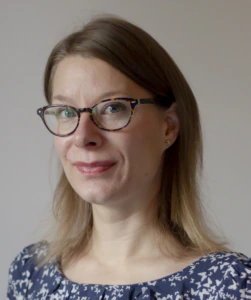
Molly Flatt is an advocate for 1000heads. She will be presenting at the Communicating the Museum conference, Malaga, 24-27 June.
The truth is that in a media-savvy world, with countless organisations clamouring for our leisure time in just this way, word-of-mouth wins out. Museums have a natural advantage in this landscape as they are spaces designed to provoke conversation and inspiration; but they're also particularly bad at reaching beyond their core converts.
When the statistics prove that peer-to-peer conversation is what is influencing people's decisions about where to spend their attention, it's incredible that museums aren't investing in spreading and sustaining a more diverse body of word-of-mouth.
There have been some notable successes. Elderly institutions are wary of giving up control of their assets and their image, but they are realising that the control has already gone. Social media have become our global museum; we can now find virtually any video, image or document we want online, often with commentary and context.
Rarefied artefacts preserved behind glass have become digital pieces of culture that can be shared and discussed. Some museums are learning to embrace this psychology.
The Commons project on Flickr promises to "show you hidden treasures in the world's public photography archives, and how your input and knowledge can help make these collections even richer". Participants include the Smithsonian, Imperial War Museum and Australia's Powerhouse.
Commons members are encouraged to give their own thoughts and interpretations on the images and exhibitions, rather than accepting sanctioned meanings or arrangements of the works. This transforms passive exhibiting into an active process of co-creation, inspiring rich and relevant conversation.
But becoming word-of-mouth-enabled isn't just about the web. The Natural History Museum has adopted the brilliantly conversational tactic of transforming its central hall into an after-hours club on the last Friday of every month, offering cocktails and jazz alongside late-opening exhibitions.
This encourages people to think about the museum as a stimulating social facilitator rather than a place of solitary contemplation. And for all the criticism about turning sacred spaces into cattle yards, it's actually a glorious return to roots, reminiscent of the sociability of 1851's Great Exhibition and other epic Victorian show-and-tells.
So when word-of-mouth specialists 1000heads was engaged by the Victoria and Albert Museum (V&A) to promote its Cold War Modern show, we jumped at the chance to combine online social platforms with the powerful social platform of the museum itself.
Re-creating the tensions and aesthetics of the time, we designed an alternative reality game centred on a shadowy intelligence organisation called the 7th Syndikate.
Thirty-five key social media voices were profiled from across a variety of passion groups (such as design, film and history) and a range of mediascapes (such as blogs, microblogs and social networks) before being engaged to become "agents" for the 7th Syndikate and immersed in a series of challenges, puzzles and clues leading to a final "reveal" - a private showing of the exhibition.
One day an agent might receive online a cryptic geo-tagged image from the exhibition; that afternoon they might spot an advert in Metro directing them to the 7th Syndikate site; that evening they might encounter one of the 2,000 Syndikate stickers or 20 reverse graffiti logos placed across the capital.
Once they'd cracked the hidden map references, they congregated in Trafalgar Square dressed as spies, where a former sergeant major led them to the V&A in theatrical style, earning a spread in the Evening Standard.
The content and conversation produced was exceptional: 35 core agents created 328 units of word-of-mouth alone, and as they were active across 50 different mediascapes, their wider communities soon joined in.
As the game unfolded, Facebook groups sprung up, debate spread on Twitter and Flickr, and the word-of-mouth was exposed to a further 90,000 people.
The real success of the campaign lay in establishing the beginnings of a long-term V&A advocate tribe, who are very different to the usual museum crowd. By tapping into what makes people talk, the V&A proved its relevance and value to a new and vibrant tribe of fans.
Molly Flatt is an advocate for 1000heads. She will be presenting at the Communicating the Museum conference, Malaga, 24-27 June.
Links
www.communicatingthemuseum.com
www.communicatingthemuseum.com