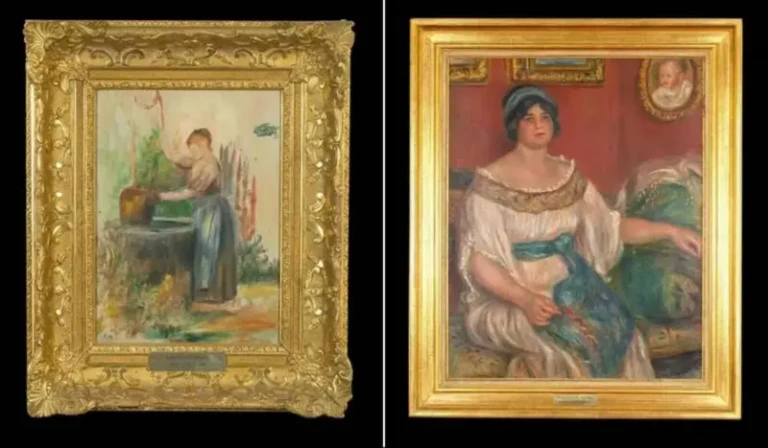
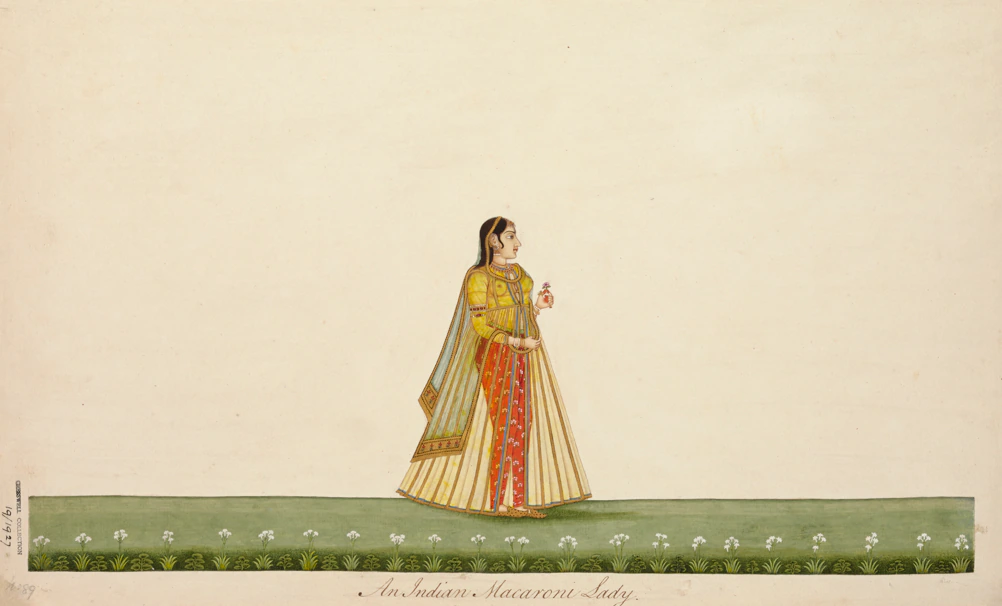
Wikipedia pages containing images from the Royal Albert Memorial Museum (Ramm) have been viewed almost 13 million times after the museum made its digitised public-domain collections freely available for reuse.
A report published this week explores the impact of the Exeter museum's open access strategy, which was announced in 2024 as part of a partnership between Ramm, the Glam-E Lab, and law students at the University of Exeter funded by the Arts and Humanities Research Council (AHRC).
The museum, which is run by Exeter City Council, now publishes reproduction images of out-of-copyright objects and artworks under an open licence, enabling them to be reused by anyone for any purpose.
The strategy was developed with the aim of balancing the commercial needs of the museum with its commitment to bring collections directly to the people of Exeter.
Over the past 18 months, Ramm has been releasing batches of medium-resolution images and 3D models for free public reuse on Collections Explorer – the standalone website that hosts the museum’s online collections database – as well as on the public domain platform Wikimedia Commons and the 3D viewing platform SketchFab.
In total, 18 batches of images have been released themed around artists, exhibitions, holidays and locations. Ten 3D models have been released of objects including a Georgian gentleman’s suit, a beaver skull and a terracotta figure of Harpocrates.
Advertisement
According to the report, “open access lets users access and use digitised public domain collections and contribute to the rich cultural heritage of Exeter, regardless of their location”.
Findings on the impact of the museum’s open access programme include:
- An 85% spike in visits to the museum’s website around the time of the open access announcement.
- A total of 12,880,510 Wikipedia page views of articles containing Ramm images.
- Ramm images featuring across 32 different Wikipedia languages, including English, Portuguese, Slovak, Urdu and Korean.
- A total of 529 downloads of Ramm’s open access 3D models from SketchFab.
- A further 11 local cultural heritage organisations uploading works open access in collaboration with Ramm.
The report also documented instances of the public contacting Ramm about image use and engagement, with examples including a local historian using one of Ramm’s open access images for the cover of a self-published book, and Exeter Red Coat tour guides using the museum’s images of historical Exeter in their tours.
“People from all over the world have interacted with Ramm’s images, raising the public profile of Ramm globally,” the report said. “As a regional museum, Ramm would never have been able to achieve this reach without Wikimedia platforms.”
The museum says it takes care to ensure that no in-copyright materials or sensitive works are included in its open access releases.
Advertisement
The strategy is part of a growing movement to change the thinking around copyright in the museum sector, where many cultural institutions claim and enforce rights over reproduction images of their works and often refuse requests for the use of the images or charge high fees.
Proponents of open access say the current “culture of copyright” in the sector impedes free and creative expression, especially when copyright in the artwork has expired.
The open access approach is also backed by copyright law, most notably a 2023 legal ruling which confirmed that copyright fees should not be charged on digital surrogates of material that is out of copyright and in the public domain.
The Glam-E Lab, which was previously based at the University of Exeter but has since moved to the University of Warwick, works with galleries, libraries, archives and museums (Glam) to develop open access solutions for their collections.
“We’re thrilled to be able to see how people around the world are using Ramm’s public domain images,” said Glam-E Lab research fellow Francesca Farmer.
“By collecting this data we hope to show that open access work can be done with a small budget while resulting in big gains, encouraging many more UK-based galleries, libraries, archives and museums to adopt open access programmes.”
Advertisement
Exeter City Council’s councillor for culture, Lucy Findlay, said: “Open access is an important step in making sure Exeter’s important collections are as accessible as possible and we’re grateful to the Arts and Humanities Research Council for the funding which has supported the Glam-E lab through the project.
“We’re delighted to see how popular Ramm’s images have been on Wikimedia Commons, reaching global audiences, and it’s fantastic that other local cultural heritage organisations have been empowered to upload their works as well.”
Ramm is one of just a small number of museums and galleries in the UK that have adopted an open access approach. Others include Birmingham Museums Trust, the Wellcome Collection, York Museums Trust, Amgueddfa Cymru – Museum Wales and Brighton & Hove Museums.