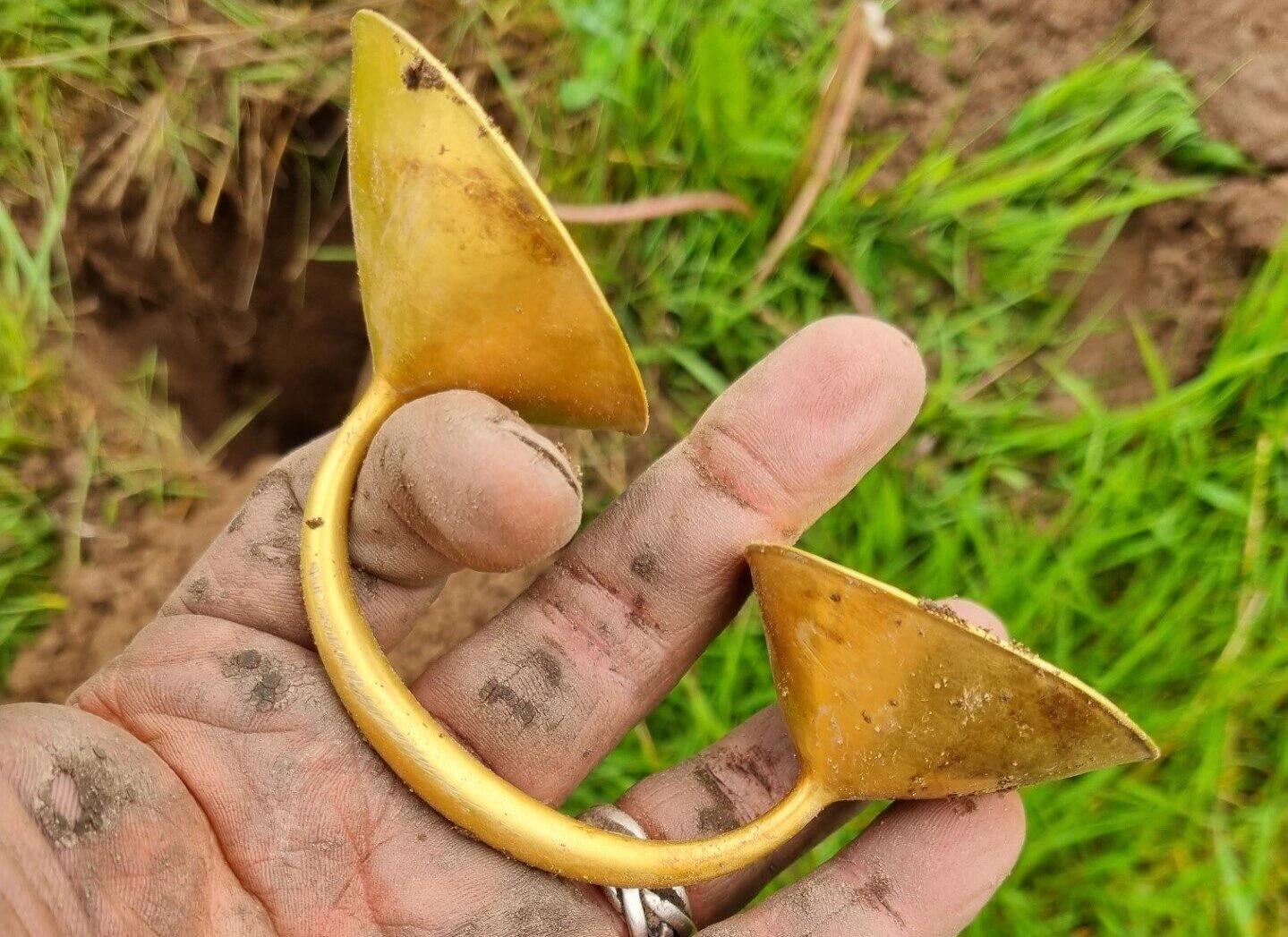
The Potteries Museum & Art Gallery has acquired a rare bronze-age gold artefact that will go on display next year when the venue fully reopens following a multimillion-pound redevelopment.
The Stoke-on-Trent museum launched a £150,000 appeal to secure the 3,000-year-old solid gold object – believed to be a dress fastener – after it was discovered by a metal detectorist near Ellastone in 2023.
The item, which was declared treasure, is the first object of its kind found in Britain in almost 30 years. Only seven others have been recorded across England and Wales.
Joe Perry, the curator of local history at the museum, said: “This is the most significant item of Treasure the museum has acquired for almost a decade and the first of its kind to be discovered anywhere in Staffordshire.
“To find such a rare artefact in the county changes our understanding of the region during the Bronze Age. We are incredibly pleased that this nationally important object will remain in a publicly accessible collection following a successful fundraising campaign.”
The money to buy the artefact was raises through a combination of public donations – through support from the Friends of the Potteries Museum & Art Gallery – and grants from Art Fund, the Arts Council England/V&A Purchase Grant Fund and the National Lottery Heritage Fund.
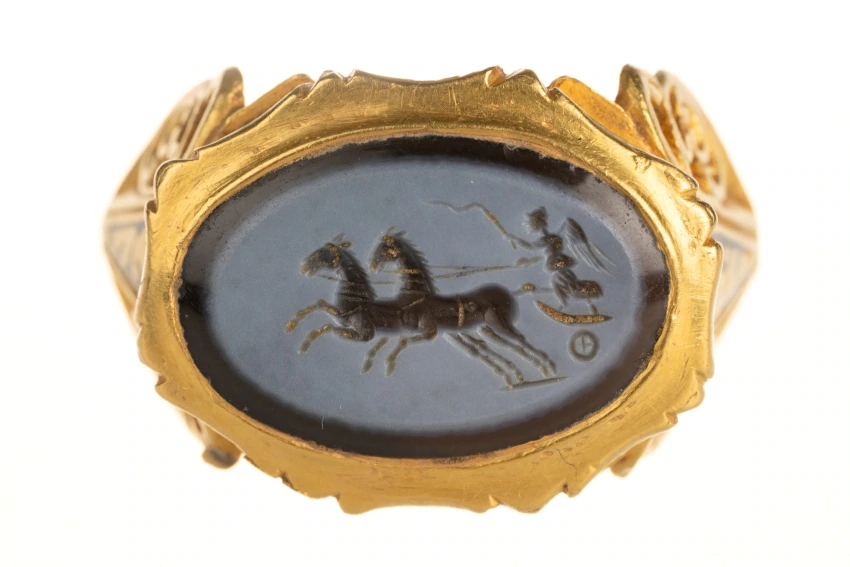
Elsewhere, the South West Heritage Trust has bought a Roman gold finger ring that was discovered near Ilminster, south Somerset.
Advertisement
The ring, which dates to about AD 297, cost £78,010 to acquire. Funding came from the Arts Council England/V&A Purchase Grant Fund, Art Fund, plus contributions from the Wolfson Foundation and the Headley Trust.
There was also local support from the Friends of The Museum of Somerset, Ilminster Town Council, Taunton U3A and Ilminster Education Foundation.
Amal Khreisheh, senior curator at the South West Heritage Trust, said: “The Ilminster Ring is both large and heavy, with elaborate goldwork and a beautifully executed intaglio. While other examples are known, these elements combine to create a spectacular ring that is only paralleled by continental discoveries.
“Its discovery sheds light on how South Somerset’s Roman inhabitants navigated a period of unrest from 286–296. It is likely the ring was buried shortly after, in 297, as part of a hoard including coins, lead and pottery objects.”
Aysha Afridi, director (museums) at the arts council, said: “We’re delighted to support the South West Heritage Trust in acquiring the remarkable Ilminster Ring through the Arts Council England/V&A Purchase Fund.
“This acquisition is testament to the continuing impact of the fund, our colleagues at the V&A’s expertise and support, and the value of Arts Council England investment across the nation. We’re excited to see how this extraordinary find will inspire deeper engagement with Somerset’s rich history.”
Keep an eye out for an article on the Treasure scheme in the July/August issue of Museums Journal