A long-running project to unify the National Railway Museum in York has received a £3m funding boost that will allow construction work on the project to begin next month.
Prime minister Keir Starmer announced the cash injection during a visit to the Science Museum Group’s most northerly site this week.
“I’m really pleased we’ve been able to put forward this money – and I look forward visiting myself but also thinking about all of the people who will be visiting in the future and the experiences they will have,” he said during the visit.
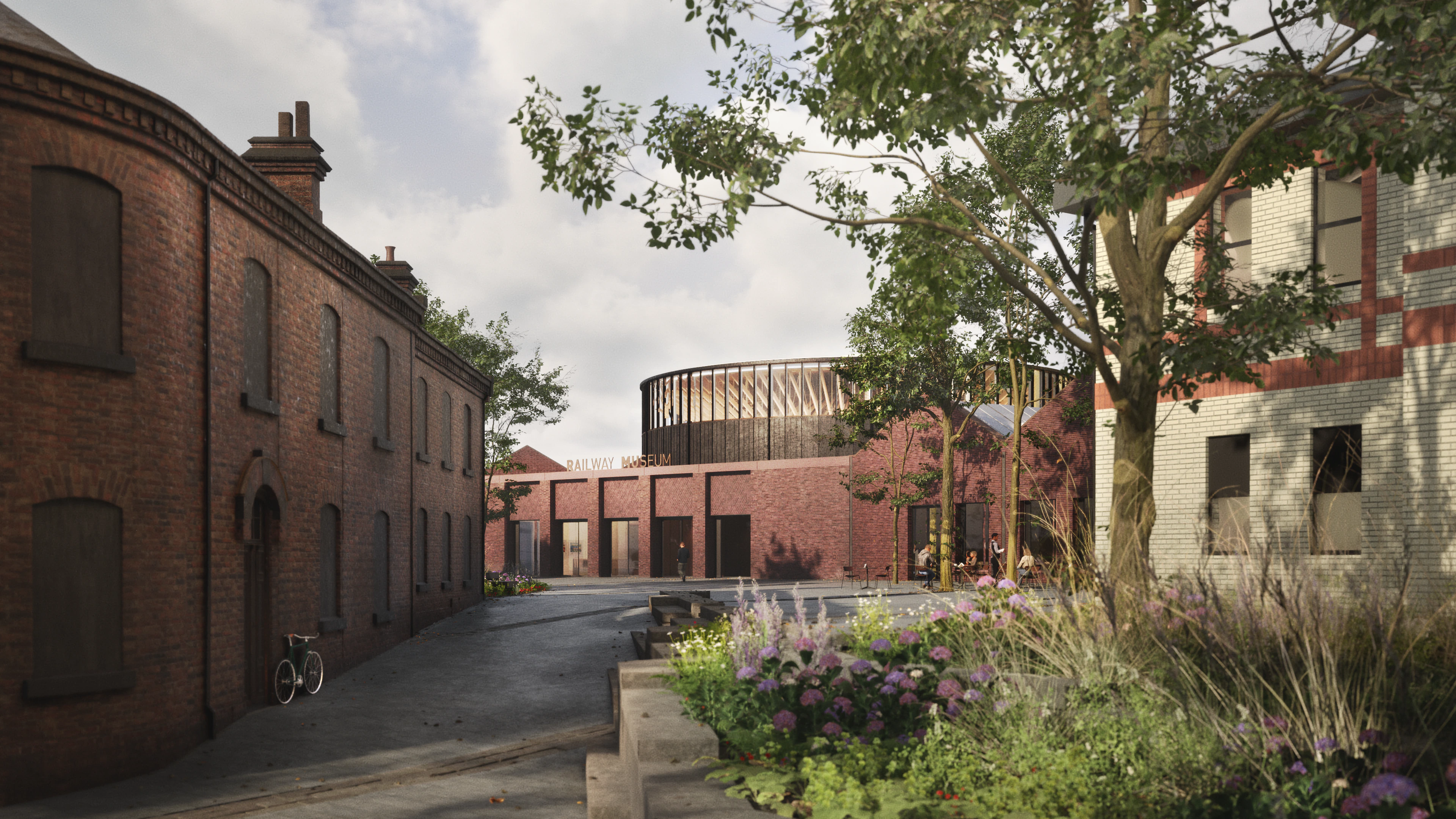
The Central Hall project will create a new building at the centre of the museum site, providing level access throughout as well as a new interactive gallery called Railway Futures: The Porterbrook Gallery.
The project initially received funding from the Department for Culture, Media and Sport (DCMS) in 2019. Architects Feilden Fowles were appointed in 2020 and the project received planning permission in 2022.
At the time, the museum said it hoped to begin construction in 2023 and open the space in autumn 2025. As it is, the new money will enable the organisation to sign the main construction contract on the project “within days”.
Advertisement
The original budget for Central Hall was £16.5m in 2020, but it is unclear whether those costs have increased in the years since.
The planned circular building – a reference to the historic locomotive roundhouses – will be clad in recycled copper and featuring high, glazed ceilings with timber radials.
The National Railway Museum is part of York Central, a 45-hectare brownfield regeneration scheme that aims to turn underused railway land into a distinctive new city quarter with residential neighbourhoods, civic spaces and commercial real estate.
Northern exposure
In other funding news, Liverpool’s International Slavery Museums and Maritime Museum received £19m of public investment last month from the DCMS’s Public Bodies Infrastructure Fund.
Advertisement
The redevelopment is part of the Waterfront Transformation Project, reimagining the area between Royal Albert Dock and Mann Island, combining storytelling, heritage, community and connectivity.
Led by Feilden Clegg Bradley Studios, the redevelopment includes a new entrance for the Slavery Museum and a link bridge connecting two buildings while providing panoramic views across the docks. The Maritime Museum's entrance will also be revistalised as part of the project, and its spaces reimagined.
Ralph Appelbaum Associates is leading on the exhibition design for both museums, and the project will see new galleries, as well as shared spaces for community uses, research, learning and events.
Laura Pye, the director of National Museums Liverpool, said: “The transformation of International Slavery Museum and Maritime Museum is a landmark project for Liverpool’s historic waterfront, promising to bring a significant boost to the region’s visitor economy.
“With the vision for both museums driven by community stakeholders and engagement it also represents a powerful moment for unheard or under-represented stories to have a platform like never before.
“We’re hugely grateful to the UK Government for this investment and the confidence it shows in the vision for the museums, and teams making it a reality. This support is ensuring we continue to serve the needs of our communities and audiences, now and for generations to come.”