Over the course of five days last week, the UK and several other European countries recorded the hottest temperatures they’d ever seen in June.
The extreme weather caused widespread disruption to daily life. In the museum and heritage sector, more venues closed fully or partially due to last week’s heatwave than ever before, according to the cultural sector operations firm, Mortice Consulting, which has been tracking heatwave responses in museums and galleries across Europe.
A number of UK museums, particularly those that attract younger visitors, closed early during the extreme heat according to the tracker, including Oxford’s Story Museum, London’s Young V&A, the Museum of Somerset, and Stonehenge.
Partial closures took place at many other venues, with galleries shut at the British Museum, Victoria & Albert Museum, Natural History Museum and Birmingham Museum and Art Gallery.
The increasing frequency of heat-related disruption has prompted reflection about how effective the sector’s response was on this occasion, and how venues should adapt in future.
“This heatwave has seen full and partial closures at a level unseen before,” Ben Melham, the director of Mortice Consulting, told Museums Journal.
Advertisement
“Due to the forecast increased likelihood of extreme weather events as a result of climate change, the sector will need to plan for these to be a regular occurrence during the summer period.”
Climate resilience must be built into broader resilience and operational planning, he said.
“Institutions are having to make real operational decisions in response to extreme heat and for the fortunate few there may even be some opportunities to support their communities by offering cool spaces,” said Melham.
“What stands out is that these are operational resilience decisions that require organisations to balance public access, commercial pressures, collection care, and staff and volunteer welfare, often at very short notice.
“Climate resilience is therefore about much more than adapting buildings – it is about ensuring organisations have the plans, governance and operational capability to respond effectively when conditions change.”
Melham, who chairs the Cultural Sector Facilities Management Hub, outlined some of the other challenges reported by the hub’s members, including the impact of heat on transport infrastructure, which in some cases limited the ability of staff and volunteers to attend sites.
Advertisement
Meanwhile venues in the hottest areas of the UK perceived a drop in footfall as visitors avoided travelling out in the conditions.
“These additional impacts are also a factor in informing changes to opening times,” said Melham.
“It should be noted that many sites are continuing to operate thanks to the efforts of facilities management and estates teams going to extraordinary efforts to maintain conditions in buildings, as well as all of the operational staff, front and back of house, implementing changes in how they operate to ensure these places remain safe and accessible.”
As well as considering their own operations, some museums and galleries are looking at how they can support the public and be part of the public health response during extreme heat.
The Museum of Homelessness in north London took direct action, activating its Heat Swep (severe weather emergency protocol) to provide support and relief to homeless people throughout the week.
During the hottest part of the day, from 1200 to 1700, the museum offered shade, cool indoor space, water, sunscreen, ice lollies and electrolytes to those who needed them. The museum, which also has a Cold Swep during winter, plans to publish its findings on the Heat Swep before the end of the summer as part of its ongoing monitoring and campaigning on climate emergency and homelessness.
Advertisement
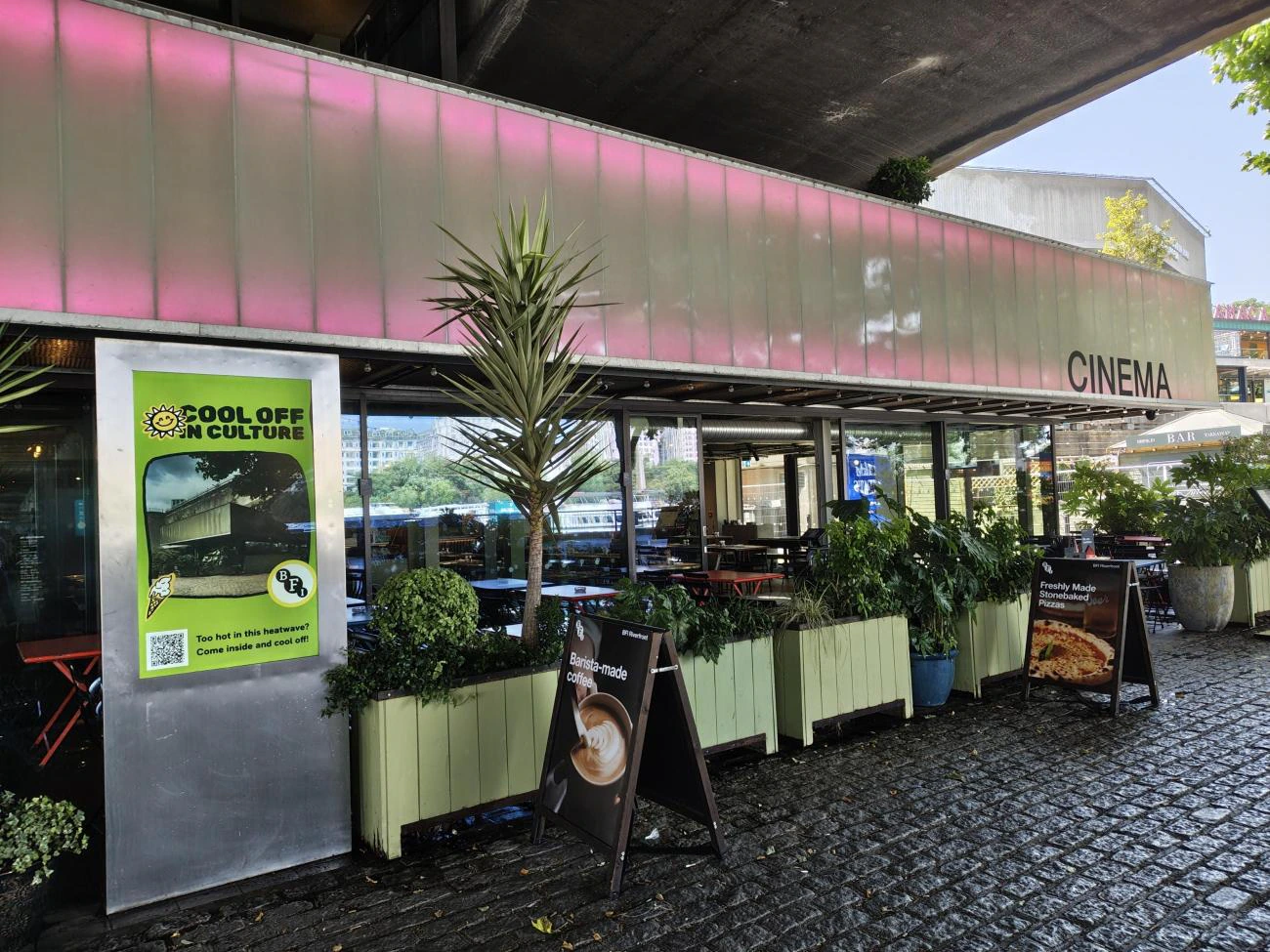
Last week also saw the – long-planned but well-timed – launch of a new UK-wide campaign, Cool Off in Culture, which signposts the public to cultural venues where they can go to keep cool in hot weather.
Campaign partners include the British Film Institute, Arts Council England, music industry body LIVE Green, and the culture sector climate support organisation, Julie’s Bicycle.
The campaign has created a new resource, the Heat Adaptation guide for Arts and Culture Venues for venues that are struggling to manage overheating. The guide, by Shade the UK, offers a practical range of measures that venues can use to become resilient to the increasingly frequent heatwaves.
The campaign has also introduced an online map of almost 80 venues, providing information on whether they are free to access and an overview of their cooled spaces and accessibility information.
Many museums are already represented on the map, including Bethlem Museum of the Mind and the Wellcome Collection in London, and the Ashmolean Museum in Oxford.
The campaign is encouraging other cultural venues to add themselves to the map, and use the campaign’s suite of free promotional Cool Off in Culture assets, including venue signage and social media templates, to actively attract visitors to their cooled spaces.
“Cultural venues are open at all times of day and night,” said Keir Oldfield-Lewis, Head of Environmental Sustainability at the BFI.
“They’re key institutions of our community and just round the corner: they should be an essential part of the public health response. Not only does this campaign meet a very real need for the general public – for them to find places to take refuge during heatwaves – it helps cultural venues increase visitor numbers by breaking down barriers felt by many who don’t naturally see these spaces as being for them.
Oldfield-Lewis added: “We’ve seen venues such as libraries become warm havens in winter, and the outcome is so much more powerful – they become active community hubs that bring local people together. Given the enthusiasm of the venues which have already signed up, I’m confident Cool Off in Culture can do the same.”
Although many cultural organisations are prone to taking a reactive rather than proactive response to extreme heat, these developments are a sign that it is beginning to feature more heavily in their operational planning.
With another heatwave forecast in the coming weeks, time will tell if the sector is able to step up and address the challenge – or go into meltdown.