
The exhibition of the Bayeux Tapestry will open on 10 September and cost up to £33 for over-16s, the British Museum has confirmed.
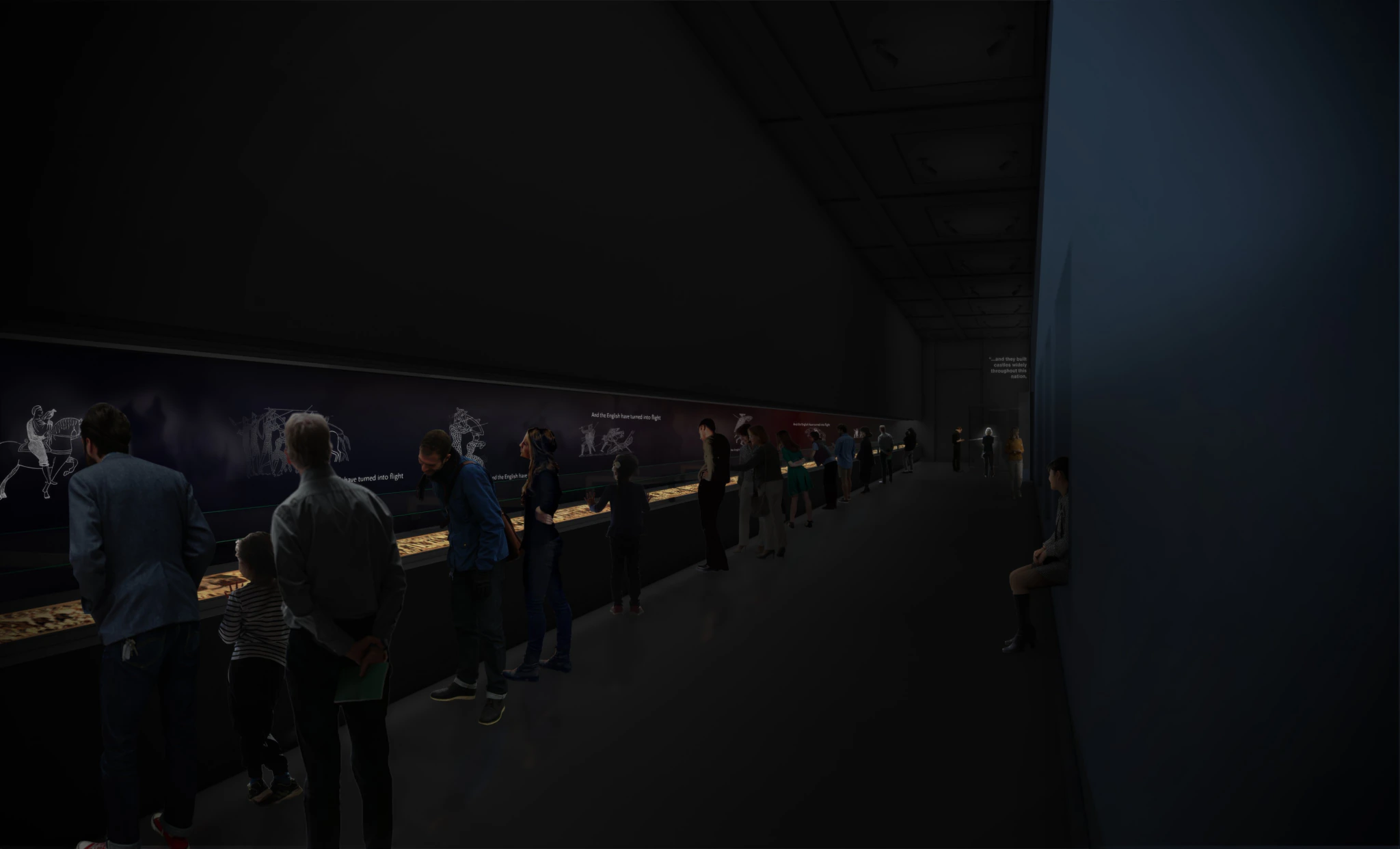
The Bloomsbury institution gave the public a first look at the show, which runs until 11 July 2027, in an early concept visualisation released this week.
According to the museum, visitors will experience the tapestry “as it has never been seen”, with the 70m-long artefact displayed flat in one continuous length for the first time in a specially designed showcase.
A statement from the museum said the display would allow audiences to “fully appreciate the scale” of the medieval embroidery.
“It also enables the museum to bring it to life in a new and imaginative way with digital elements helping enhance understanding,” added the statement.
The textile will be displayed with objects from the British Museum collection and a number of major loans (see box below) that have never been shown alongside the tapestry before, putting it into the broader context of medieval England and the events surrounding the Norman Conquest.
Advertisement
Lending institutions include the Bodleian Libraries, University of Oxford; Hertfordshire Archives and Local Studies; the Kunsthistorisches Museum Vienna Imperial Armoury; The London Archives, City of London Corporation; and the South West Heritage Trust and Somerset Council museum collection.
The tapestry is currently in storage awaiting transportation to London later this summer – a journey that must achieve a vibration limit of less than two millimetres per second in order to safeguard the fragile artefact.
Michael Lewis, the lead curator of the exhibition, recently confirmed to Museums Journal that two dry runs of the journey have now been carried out with a facsimile tapestry, and that the exhibition team is “confident” the safe limit will be met. The full findings from the dry runs have not yet been released.
“The Bayeux Tapestry is one of the most important surviving works from the medieval world and an extraordinary account of a defining moment in our history,” said Nicholas Cullinan, the director of the British Museum.
“Since we first announced this historic loan, we have been committed to ensuring as many people as possible can see it, and we’re excited about welcoming the first visitors through the doors on the 10th of September.”
Lewis added: “The display of the Bayeux Tapestry at the British Museum offers visitors a once in a lifetime opportunity to be part of history. This will be a new and exciting presentation of the tapestry’s story: the events leading to the Norman Conquest, an incredible moment that changed England forever.
Advertisement
“Important loans will help visitors fully appreciate the tapestry, explaining why and how the embroidery was made. Also, that its retelling of events, though ambiguous, likely deliberately so, offers a unique perspective on the past. The Norman Conquest not only impacted kings, dukes and the elite, but also everyday people, including those who made this artwork.”
Tickets for the 40-minute experience will go on sale from 1 July 2026 on the British Museum website. Prices will range from £25 to £33 through a tiered pricing structure based on the day and time of visit.
The museum has committed to ensuring access for children, with dedicated times set aside for school visits each week. Under-16s will be able to visit the exhibition free of charge when accompanied by an adult.
Tickets will be released in phases and the initial release in July will cover visits between September and December 2026, with further releases in October and January.
The British Museum will also produce a “full and varied publishing programme for every reader, at every budget” to mark the occasion.
Earlier this month, the museum unveiled a new outdoor installation, Tapestry of Trees, by the garden designer Andy Sturgeon, who has transformed its forecourt into a medieval woodland. The installation features 37 birch trees, inspired by the landscapes of East Sussex at the time of the Battle of Hastings.
The installation marks the beginning of the museum’s public programme around the Bayeux Tapestry and runs until 2 June.
Find out more about the Bayeux Tapestry loan in the July/August issue of Museums Journal
Loans on display in the Bayeux Tapestry exhibition
- A charter of Edward the Confessor of 1060 granting lands in Wheathampstead, Hertfordshire, to Westminster Abbey, from Hertfordshire Archives and Local Studies. The document, written in Latin and Old English, is witnessed by several individuals who appear in the tapestry, including King Edward ‘the Confessor’, Harold’s sister, Queen Edith, Archbishop Stigand, Earl Harold and his brother Gyrth; both shown in the tapestry being killed at the Battle of Hastings.
- An extensively illustrated manuscript known as Junius II will also feature, on loan from the Bodleian Libraries, University of Oxford. It records biblical events and was likely borrowed by the tapestry’s creators for their depictions of clothing, ships and items of everyday life. Importantly, the manuscript was likely created in Canterbury, possibly at Christ Church, around AD 1000, so it would have been available to the tapestry’s designer.
- A hoard of silver pennies of Harold II and William I known as the Chew Valley Hoard will be loaned from the South West Heritage Trust and Somerset Council museum collection, supported by The National Lottery Heritage Fund and Art Fund. Buried in the traditional county of Somerset soon after the Norman Conquest, it is believed the hoard was buried for safekeeping during the rebellion against Norman rule in the south-west, which, in 1068, saw Exeter “fight for its liberty”. The rebellion was suppressed.
- A charter issued by William I in 1067 soon after he became king, to the citizens of London. The document, provided by the London Archive, part of the City of London Corporation, is written in Old English, the language of the newly conquered English, and promises the English that the new king will uphold the laws and customs of King Edward. According to the British Museum, its message “stands in contrast to the political realities of 1066 inferred by the Chew Valley Hoard, where the English feared for the future”.


Excellent fucking early visualization thing!