Reports that the Victoria & Albert Museum (V&A) censored a catalogue in response to demands from a Chinese printing company are “deeply worrying”, according to the Index on Censorship.
The non-profit organisation, which defends freedom of speech and expression in the UK, has responded to a news story in the Guardian last week showing that the museum agreed to delete maps and images deemed sensitive by censors in Beijing from its exhibition catalogues.
In a social media post, the Index on Censorship said: “Reports that the V&A altered exhibition catalogues following pressure from a China-based printer are deeply concerning.”
The organisation said it was “exactly the kind of censorship” it has warned about in its Banned by Beijing campaign, which seeks to seeks to raise awareness of the Chinese Communist Party’s subversion of freedom of expression in Europe.
The campaign outlines how the “emboldened Chinese Communist Party is employing a range of tools aimed at pressuring or manipulating foreign entities to respect – or even align with – [its] political agenda”.
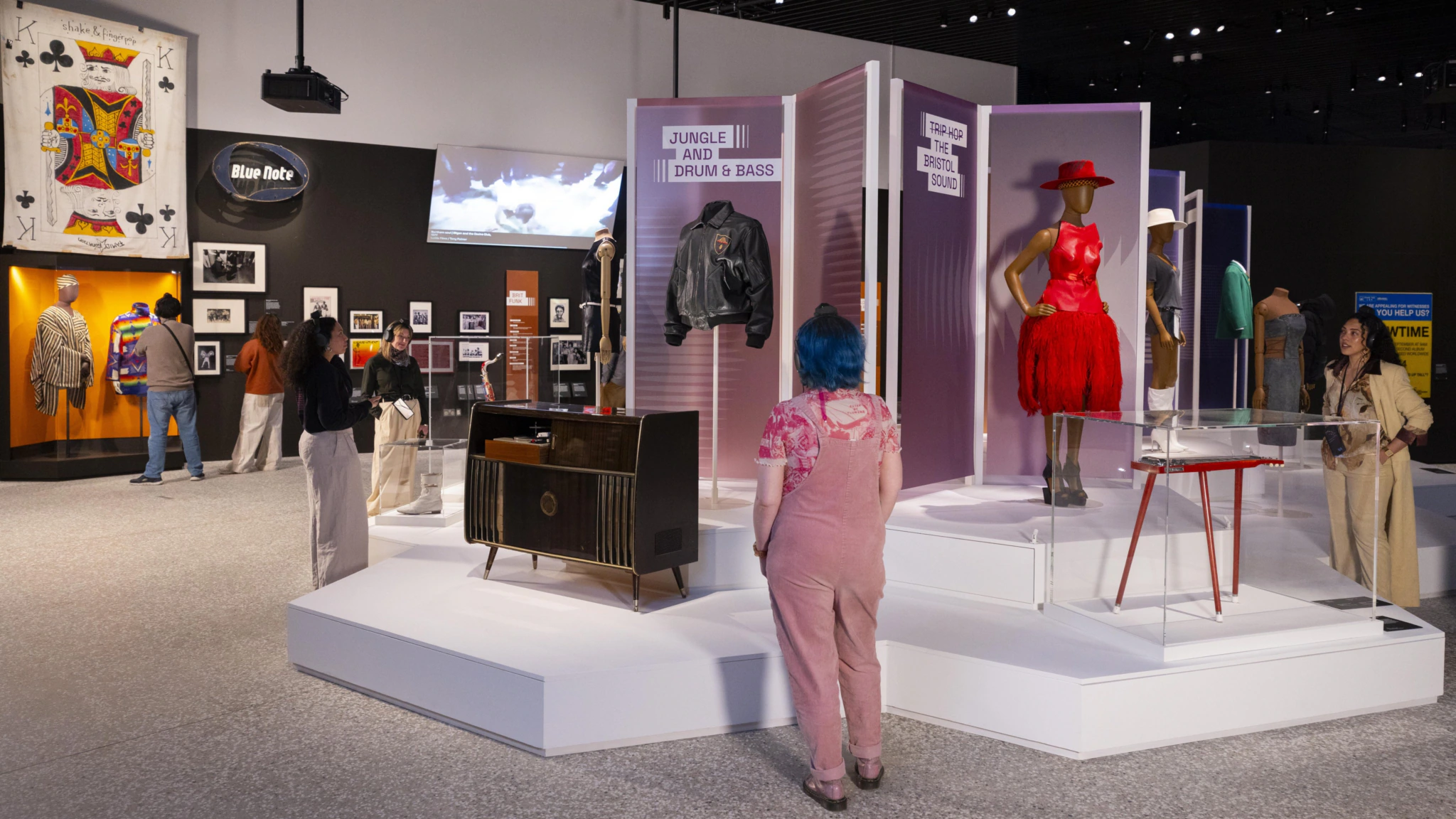
Last week’s Guardian report, which was based on emails obtained by the newspaper via Freedom of Information requests, show that material was removed from at least two recent V&A publications at the request of Chinese censors, including the catalogue for The Music is Black, the inaugural exhibition that opened last week at the new V&A East Museum in Stratford.
Advertisement
The emails show that an image of a 1930s illustration of trade routes of the British empire used in that catalogue was rejected by China’s General Administration of Press and Publication, causing printing to be paused. Internal discussions show V&A staff were baffled by the request but agreed to remove the image as it was “too late to move print to Europe”.
The V&A also agreed to pull another map from a catalogue for its 2021 exhibition Fabergé: Romance to Revolution, along with a photograph of Lenin deemed “sensitive” by the censorship body, according to the Guardian.
A spokesperson for the V&A defended the decision to acquiesce to the requests, saying they were minor edits that “did not affect the narrative”.
The V&A spokesperson said: “We carefully consider, on a case-by-case basis, where we print all of our books. We sometimes print in China, but maintain close editorial oversight. We were comfortable making these minor edits, as they did not affect the narrative, and would obviously pull production if we felt any requested change was problematic. Our processes and suppliers under constant review.”
Jemima Steinfeld, the CEO of Index on Censorship, said the “V&A landed in this compromised place because the Chinese printers were apparently more competitively priced than UK/Europeans counterparts”.
“Can people stop trading our rights to help their financial margins?” she added.
Advertisement
Other experts have also voiced their concerns about the V&A’s decision to accept the edits.
“The museum may see the changes as minor, but their significance lies less in the scale of the edits than in the mechanism through which they occurred,” said Ge Chen, an associate professor in global media and information Law at Durham Law School, writing in The Conversation.
“Nothing in British law required these changes. No UK official ordered them. Yet the content of a British museum publication was altered because parts of its production process took place within a system governed by Chinese state censorship rules.
"That is why this matters. It reveals a form of externalised censorship that does not need to arrive as a direct prohibition. It can operate instead through contracts, deadlines, cost pressures and infrastructural dependence.”
Chen said the controversy “tells a wider story about the heritage sector”.
“Museums, galleries, libraries and publishers are all under pressure to control costs. If Chinese printers can produce catalogues at roughly half the price of British or European firms, the economic logic is obvious.
“Once an institution becomes reliant on a supply chain situated within an authoritarian censorship system, the practical conditions of cultural expression begin to change, even if the legal environment at home remains formally free.”