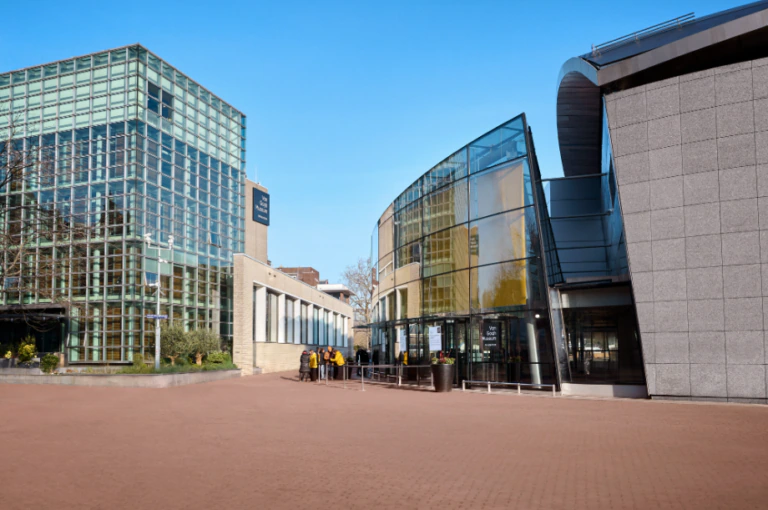
The Victoria & Albert Museum (V&A) has unveiled the latest landmark in its growing portfolio, the V&A East Museum in London’s Queen Elizabeth Olympic Park.
First announced as part of the “Olympicopolis” cultural complex, which aimed to capture and build on the legacy of the London 2012 games, the long-awaited museum opens its doors to visitors this weekend after an eight-year, £135m development.
Overlooking the canal on the East Bank of the Olympic park, the angular museum building, designed by the award-winning Irish architects O’Donnell & Tuomey, was inspired by fashion pieces from a Balenciaga exhibition held at the V&A South Kensington in 2017.
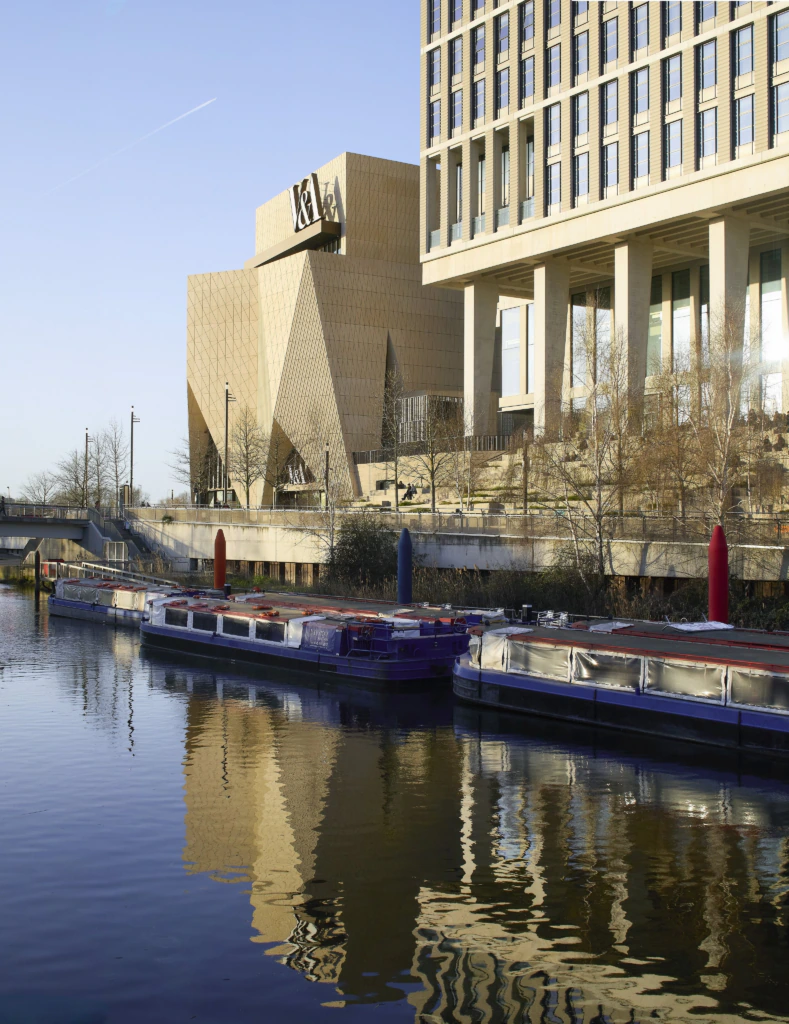
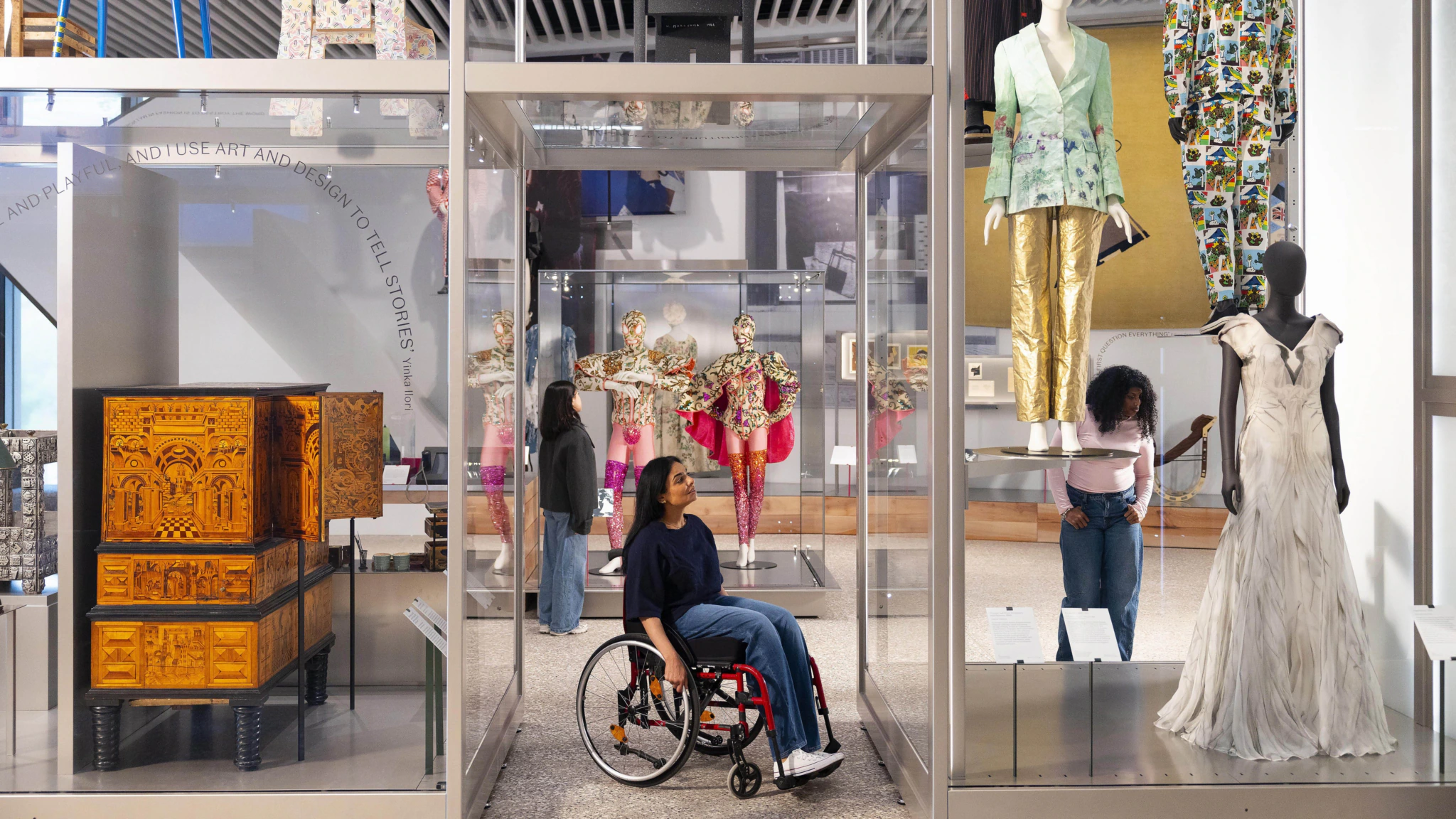
The new museum offers a free permanent exhibition, Why We Make, spanning two floors, as well a large temporary exhibition space, roof pavilion, and event and learning spaces.
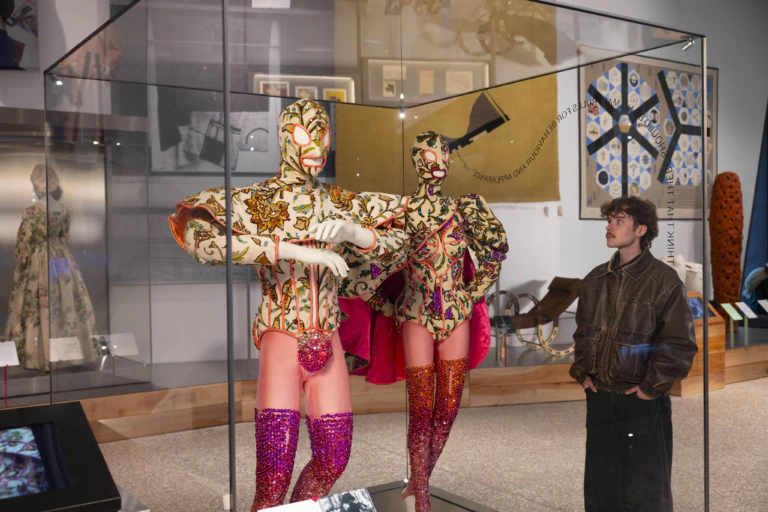
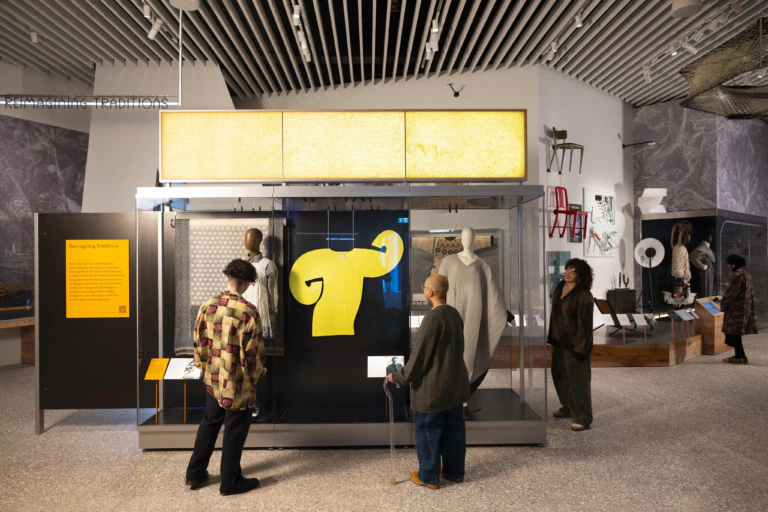
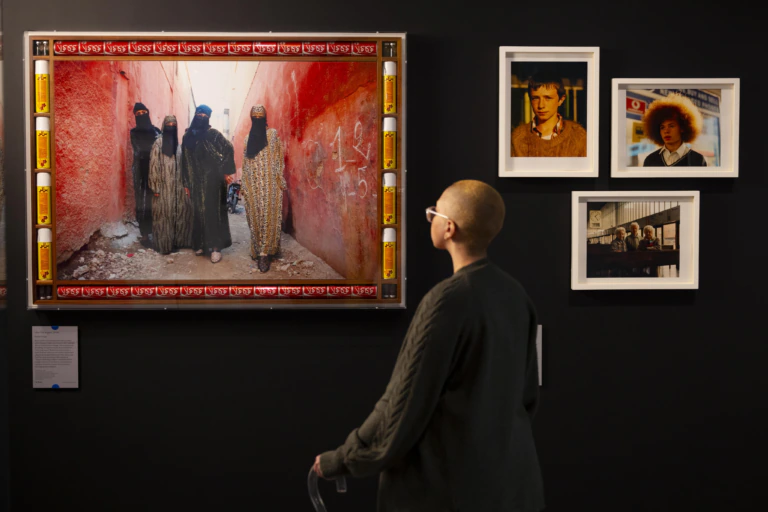
Displayed thematically, the Why We Make galleries feature 500 fashion and design objects from the V&A’s vast collections, and explore topics such as identity, wellbeing, environmental responsibility and social justice.
Advertisement
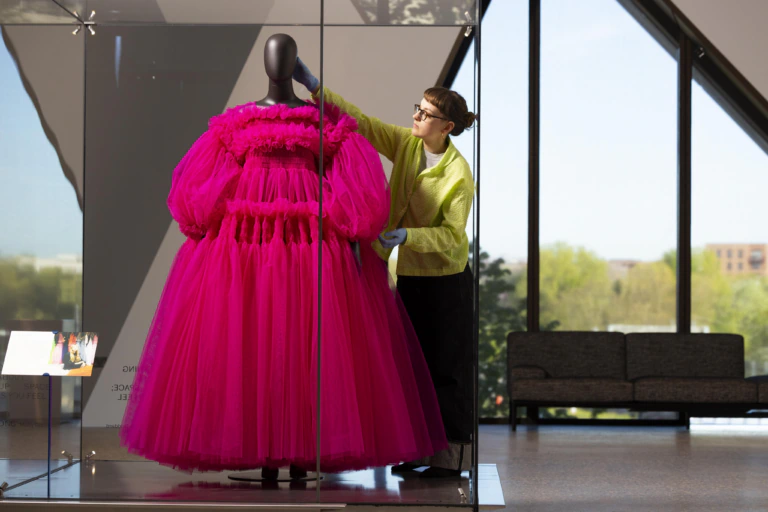
Highlights range from Molly Goddard’s dramatic “Daria” dress, which stands at the entrance to welcome visitors, to a haunting piece from Alexander McQueen’s final Angels and Demons collection, and a robe worn by a Daoist priest in the 1800s.
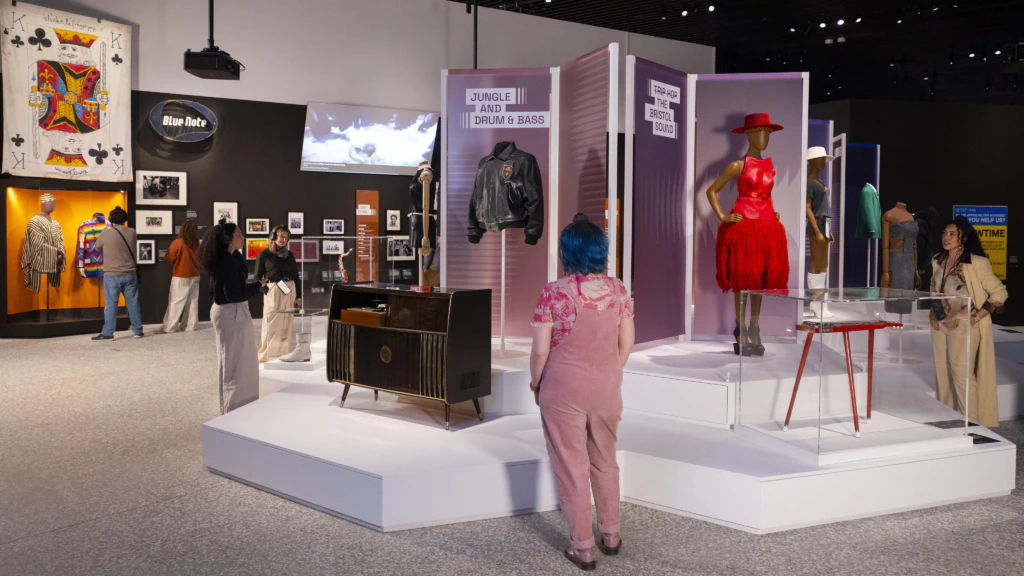
The museum will also feature a rolling programme of temporary exhibitions, the first of which is The Music is Black: A British Story, an exploration of Black music-making in Britain spanning the beginnings of transatlantic slavery to the post-war modern era.
A restaurant run by Jikoni, the “no borders kitchen” that celebrates immigrant cuisine, is on the lower ground floor.
Director Gus Casely-Hayford welcomed visitors to a preview of the space this week, describing how he started the process of developing the vision and content for the museum at the beginning of the pandemic, when he flew to the UK on one of the last flights before lockdown to a “completely changed London”.
“That period of lockdown in which we didn't just build the team, but we crafted the vision for everything, was really important because that period of strange isolation, but also connectivity – building teams, reacquainting myself with all the friends that I have in London – really involves the idea of how community, connection, society are so important, but also so fragile,” he said.
Advertisement
Casely-Hayford said the development team had focused on co-creation throughout the process, particularly with young people living locally in east London, engaging with around 30,000 people on every area of operational and curatorial delivery.
“One of the key things that we did was to get out into those communities, to speak to young people and to get an understanding of what they would want from us, and they were really keen,” he said.
“I personally visited more than 100 schools in east London... and those young people, they were really on it.
“Frankly, it's kind of scary, some of it, because they were happy to tell us that they were frustrated. These are not the spaces that most young people would come to in their spare time, of their own volition, to enjoy themselves. So how did we want to build a relationship with that sceptical generation?”
“We wanted to find a way of challenging that paradigm. And so what we did was to ask them what they wanted... They wanted respect, but they also wanted narratives that could tell their stories in ways that really reflected their priorities, and they wanted an institution that was useful for them, that would help them, as many of them were interested in creative opportunities and thinking about their own professional features.
Advertisement
“How can we craft those opportunities and give them the opportunity to think that their fledgling steps in the creative industries might be easier?”
Casely-Hayford described the museum as “a place of dreams and possibilities, and what it needs now is people to come in and to make them real”.
Brendan Cormier, the senior curator of exhibitions and special projects at the museum, said the team had looked to the foundations of the V&A for inspiration.
“Through the founder of the V&A, Henry Cole, putting together one of the craziest, most legendary exhibitions ever, the foundation for so much of what we've seen in the 20th century, the Great Exhibition of Crystal Palace, he laid the DNA for the V&A being a space where you can talk about creativity in so many multifaceted ways, but importantly about creativity in everyday life.”
The Why We Make exhibition seeks to “revive that spirit of the notion of applied art, the existence of art everywhere, on the street, in your homes, in your everyday life”, added Cormier.
“Especially as a message to young people to say that this is a space for you as well. This is not an elitist space where you need to spend a fortune on art school to get into, it's a place that you can participate in.”
‘A great depth of purpose’
Curator Jacqueline Springer talks about how The Music is Black exhibition was created
“The use of Black to prefix the word music is both an accepted and a resented form of reference. Black music is a short, sharp description of the emotive and of the enormous. It describes African cultural and musical practices through dissent, practices that survived as such. Black music is global proof of resilience.
United, these words reflect an honourable acknowledgement of larger histories and deeper truths. Youth of the violent cross-continental displacement of African men, women and children that created what now constitutes the African diaspora, of the enslavement of black Africans, forcibly trafficked to the Americas throughout the Caribbean and further, and of their retention, while enslaved, of modicums of language traditions and cultural practices that integrated with those of others and contributed to the sonic building blocks of the Black music that we listen to today.
What we’ve sought to do is corral all of these histories together. The long history of Britain in its imperial and colonial global past. The domestic infrastructure of the United Kingdom. The phenomenon of mass media as it rolls through the opening decades of the last century, and also the way in which music channels through into the United Kingdom. And then the youthquakes that emerged post-war from the disillusioned young people, black, white, multi-racial in so many different incarnations…
We don’t mind showing you that there’s been a great depth of purpose and interrogation politically and culturally into this exhibition. This is not about running into music videos and the ‘unce unce’… through the exhibition structure and artefacts, we explore how sound cultivated from African indigeneity adapted and rebelled against colonial-era traumas and post-colonial politics to triumph in its global dissemination and influence, to form the spine of contemporary popular music in the West.”
A full review of the V&A East Museum will appear in an upcoming issue of Museums Journal