Hull’s Spurn Lightship announces reopening date
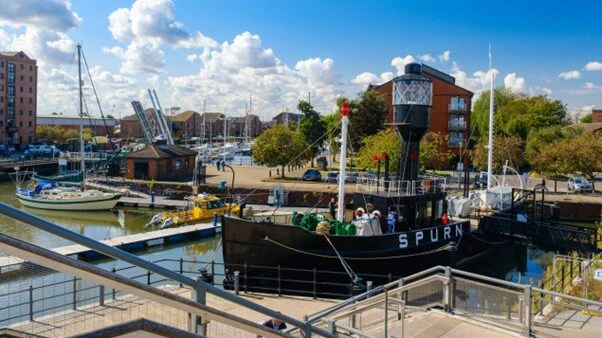
Hull’s Spurn Lightship is reopening to the public on Saturday 7 March 2026 after a 14-month restoration.
The ship is the first completed visitor attraction in the ambitious Hull Maritime regeneration project, funded by Hull City Council and the National Lottery Heritage Fund.
The Spurn Lightship, built in 1927 by Goole Shipbuilding, played a crucial role in Hull’s maritime industries and served for nearly 50 years at the Spurn station outside the Humber. It was decommissioned in 1975 and later restored as a floating museum in 1987.
After extensive restoration, the lightship has been relocated to its new home near the Murdoch’s Connection footbridge on Hull Marina. The surrounding area is also undergoing substantial improvements to enhance access and landscaping.
Mike Ross, leader of Hull City Council, said: “The opening of the Spurn Lightship is an exciting new chapter for the vessel and marks the start of an incredible year for Hull, celebrating the city’s rich maritime heritage.”
Advertisement
Partnership to share more underwater cultural heritage
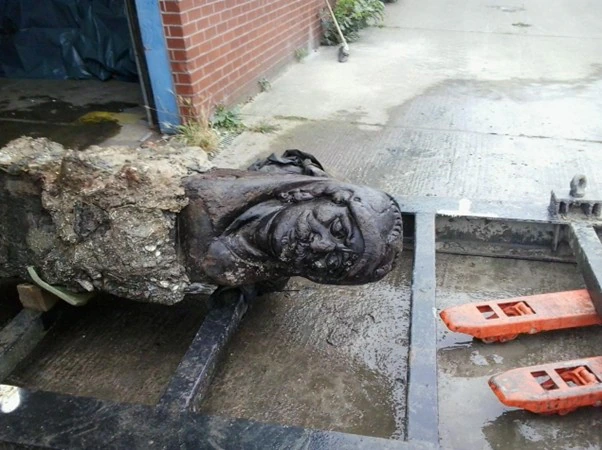
A new partnership will see two archaeology and conservation bodies work more closely together on public education, research and shared exhibitions to tell the stories of the UK’s underwater maritime heritage.
The Maritime Archaeology Sea Trust (Mast) and York Archaeology will collaborate on government and private projects in the field.
“York Archaeology has a long-standing global reputation for its work in the conservation of artefacts and structures from the marine environment, and this absolutely complements Mast’s work on underwater cultural heritage,” said Paul Filntoft, head of archaeology for York Archaeology’s York office.
“Each organisation has its own particular strengths, and together, we can offer a compelling service for many of the larger marine heritage projects – particularly government contracts – that require a full service, from archaeological exploration and conservation to public display and education.”
Advertisement
The two partners, in conjunction with Bournemouth University, have previously collaborated on objects from the HMS Invincible (1744) following a major rescue excavation, and the 17th-century armed Dutch merchantman known as the Swash Channel Wreck. The gunport carvings and rudder from the 17th-century ship are now on display at Poole Museum.
Icon awarded grant to promote engagement with conservation
The Institute of Conservation (Icon) has received a £178,220 grant from the National Lottery Heritage Fund for a project to “foster greater public engagement with conservation, connect communities with their shared cultural heritage, and build a sustainable future for the profession”.
The Heritage Conservation: A Resilient and Engaging Future project will create more opportunities for people across the UK to engage with conservation and better understand shared heritage.
The funding will enable Icon to expand its capacity through new roles, develop staff and volunteers, and build a long-term programme with lasting impact.
Icon will deliver a public programme throughout the project, offering opportunities for people across the UK to “connect with conservation and discover the stories behind the objects that shape our national identity”.
Advertisement
Herefordshire submits county-wide bid for City of Culture 2029
Herefordshire is to bid for UK City of Culture 2029 via a major county‑wide partnership of arts, culture and creative industry organisations, cultural practitioners, community groups and public‑sector collaborators.
The county has submitted an initial Expression of Interest (EOI) to the government. The bid is being co-ordinated by Herefordshire Council, with potentially up to £10m for a landmark year of cultural programming in 2029 for the eventual winning bidder.
The council’s cabinet member for culture, Elissa Swinglehurst, said: “Our partnership bid emphasises the importance of access to culture to enrich the lives of people across Herefordshire. It offers government a plan to create an innovative, diverse and dispersed model, showing how culture can reduce rural isolation, build communities, improve wellbeing and give young people more opportunities close to home.”
The deadline for the initial stage was 8 February 2026. Milton Keynes, Wrexham, Plymouth, Peterborough, Ipswich and Exeter are among the other places to have put forward bids.
Wolfson funding for International Slavery Museum
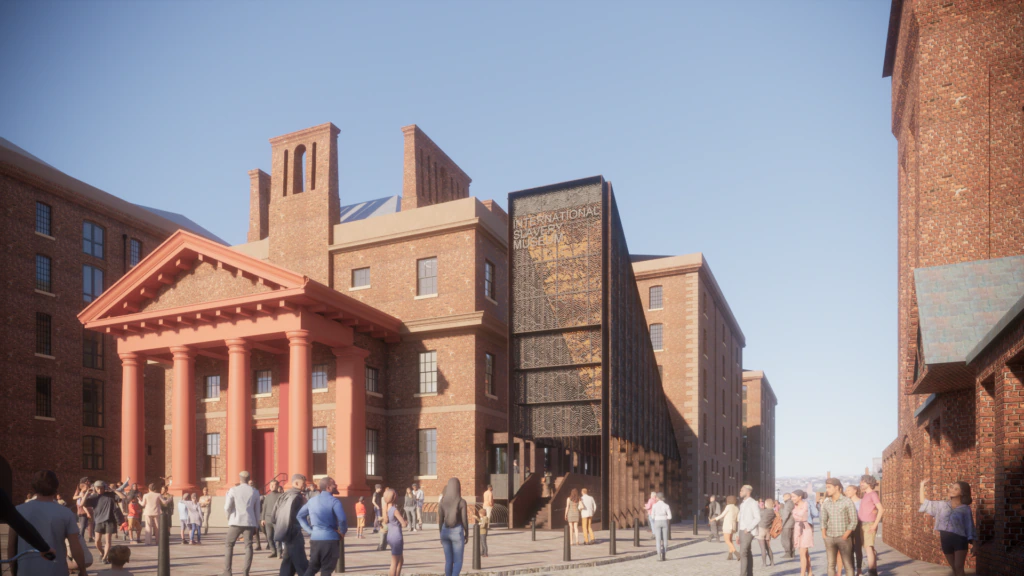
Liverpool’s International Slavery Museum has been awarded £200,000 from the Wolfson Foundation towards its major transformation plans. The funding will support the museum’s symbolic new entrance.
The museum, which opened in 2007 on the third floor of the Maritime Museum, has never had its own front door. Its new entrance pavilion designed by Feilden Clegg Bradley Studios, due to begin construction early next year, “represents a defining moment for the museum”, said a statement announcing the funding.
Laura Pye, director of National Museums Liverpool, said: “We’re thrilled to be putting this generous award from the Wolfson Foundation towards International Slavery Museum’s new Entrance Pavilion.
“As an emotive focal point of the new museum, it symbolises not only the struggles and resistance of the enslaved people whose stories we tell in the museum, but also decades of work from the local communities who have championed the development and raised the profile of the museum from a basement gallery to now, the only museum in the world dedicated to transatlantic slavery and its legacies.”
English Heritage appoints Tony Hales as chair

Tony Hales has been appointed the new chair of English Heritage.
The charity cares for more than 400 historic sites across the country alongside a collection of over one million artefacts and the London Blue Plaques scheme. Hales has spent more than two decades in leadership roles across heritage and culture. He was chair of British Waterways and the founding chair of its successor charity, the Canal and River Trust.
More recently, he served as chair of the Greenwich Foundation for the Old Royal Naval College. All three organisations delivered major regeneration and conservation projects during his tenure.
Hales said: “English Heritage is one of this country’s great national institutions, one that looks after and shares with us all a remarkable collection of historic sites. I grew up visiting the castles, abbeys, and houses in its care and I am both honoured and excited to be its chair.”
Neil Mendoza, chairman of Historic England, said: “Tony is a deeply experienced leader across the corporate, cultural and heritage sectors.
“He is well placed for such an exciting role and responsibility to care for the National Heritage Collection that has been carefully assembled over time and is loved by many. Tony and English Heritage’s great staff and amazing volunteers face an exciting year ahead.”
English Heritage is shortly due to open its new learning centre at Stonehenge, as well as the Kusuma Neolithic Hall, a classroom built by volunteers using traditional tools and materials. As the Bayeux Tapestry arrives in London, the charity is planning to refresh its presentation at the East Sussex battlefield where the Battle of Hastings took place in 1066.