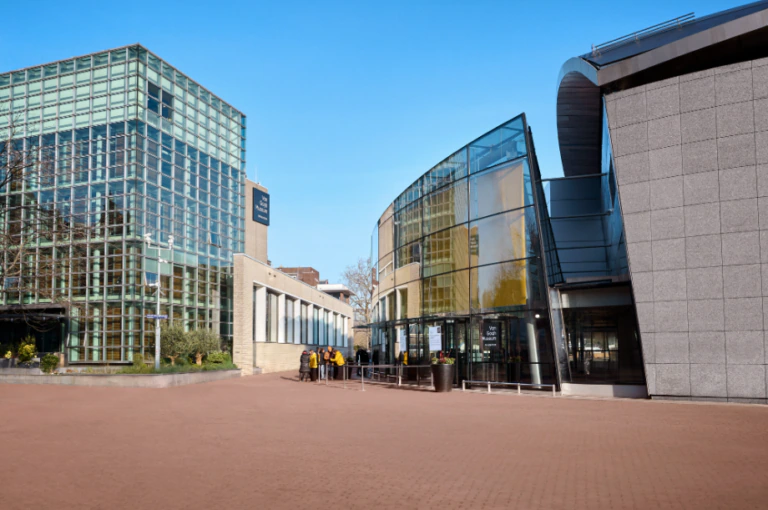
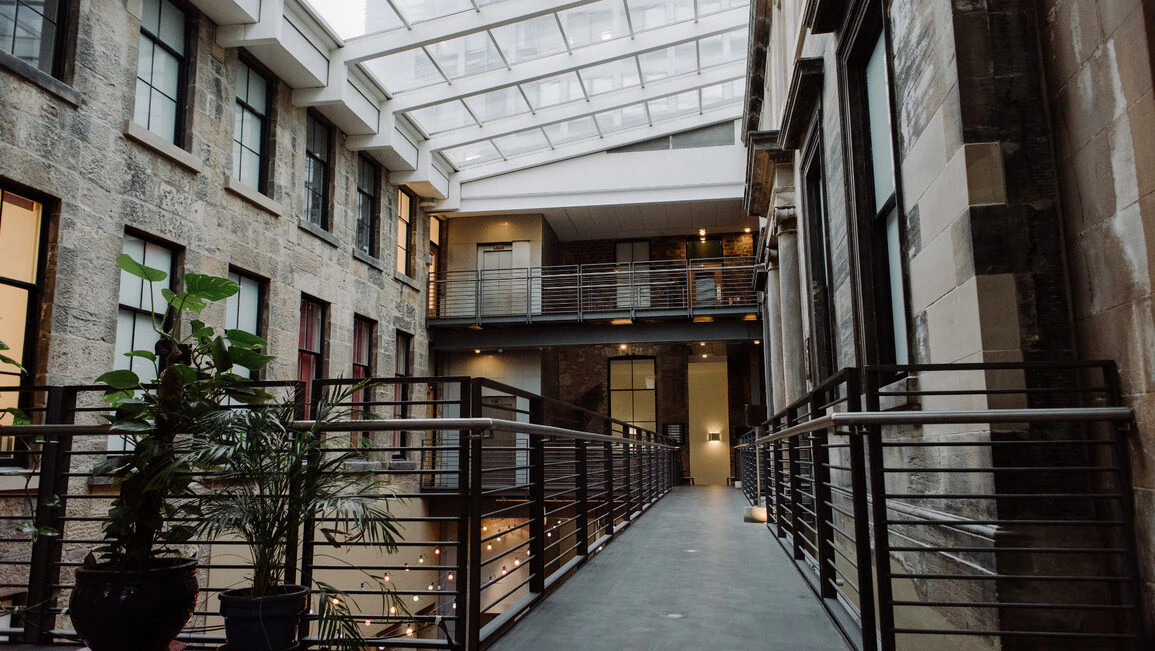
Scotland’s charity regulator has opened an inquiry into financial governance at Glasgow’s Centre for Contemporary Art (CCA), which closed permanently on 30 January.
The Office of the Scottish Charity Regulator (OSCR) said several concerns had been raised about financial management at the multi-purpose arts venue.
The CCA was awarded a £1.2m multi-year grant from Creative Scotland in 2025 and had received the first tranche of £832,000. The arm’s-length funding body has now cancelled the remainder of the grant.
The CCA also received a £300,000 emergency loan from Glasgow City Council in 2024.
A spokesperson for OSCR said: “OSCR has received several concerns relating to the Centre for Contemporary Arts following the recent announcement of its closure.
“From our initial assessment work we understand that this charity was unable to pay its debts at the point when it ceased to trade. As company law would prevent the organisation from continuing to operate in these circumstances, the only option available to the trustees at this point was to begin insolvency proceedings. We do not currently intend to take any further action on this matter.
Advertisement
“Notwithstanding this, OSCR’s assessment has raised concerns about the overall financial governance of the charity during 2024 and 2025. Because of this we have decided to open an inquiry into the charity, so that we can establish the facts surrounding the historical financial governance of the CCA. We will consider what, if any, further action is appropriate during our inquiries.”
A former worker at the centre, speaking to Museums Journal on behalf of a number of staff, has described governance instability and structural issues at the CCA amid a worsening relationship between staff and the board.
The worker told Museums Journal that, in the final weeks, a number of staff had raised a concern with the OSCR that the trustees of the CCA were “acting outwith the articles of association, not within the charity’s interest”.
The worker said the decision to close the centre at short notice was “presented to us as inevitable”, despite other options being available.
“Many staff, including senior management, remain concerned that not all viable alternatives were fully or transparently explored with staff involvement or through a fully constituted and stable board,” said the worker.
The board was “unwilling to explore all options such as reduced hours, restructuring, temporary closure or more constructive approaches like accepting additional funding offered, additional hires, private or public support”, the staff member added.
Advertisement
The closure happened abruptly on 30 January, when staff turned up to work that morning and found the building locked up. They were informed via an online meeting later that day that the CCA was permanently shutting down.
“There were recovery plans, funding discussions, and alternative operating models that staff, including senior management, believed merited further consideration,” added the staff member.
“Whether those options would ultimately have succeeded is open to debate, but the speed and manner of the decision meant staff had little opportunity to contribute to or understand how those options were evaluated before liquidation was announced.”
The troubled centre had been forced to temporarily close a number of times in recent years, most recently for two months last summer following a sit-in by the activist group Art Workers for Palestine. The group has been protesting against the CCA after it chose not to join in a cultural and artistic boycott of Israel.
However the worker believes that while the political controversy “undoubtedly added pressure to the organisation”, it risks distracting from the existing structural and governance failures at the CCA.
“It is very likely that a positive resolution would have been achieved in the coming days and weeks,” said the worker. “It would be misleading to present the closure as being driven by activism or boycott positions.
Advertisement
“From a staff perspective, the core issues leading to closure were governance instability, financial fragility, and decision-making processes not a single political stance. Reducing the situation to that alone risks obscuring the more substantive structural and organisational failures involved.”
'Increasingly distant'
The worker described how staff relations with the board had become “strained and increasingly distant, particularly over the past year”.
“Communication was often limited, inconsistent, or reactive, and staff frequently lacked clarity about decision-making, leadership accountability, and long-term direction,” said the staff member.
“Many staff felt that the emotional and operational burden of instability was disproportionately carried by employees rather than shared through strong, visible governance.”
Staff have been told there are insufficient funds in the organisation to meet their employment entitlements directly, and that claims will need to be made through the Insolvency Service.
“There has been limited clarity around notice pay, accrued wages, consultation rights, or access to HR support,” said the worker.
“This uncertainty has caused significant anxiety, particularly for staff with caring responsibilities, financial precarity or visa-related concerns.”
The board of the CCA could not be reached for comment.
The board said at the time of the closure that “despite the efforts of staff, partners, and the broader community, the organisation was unable to achieve a sustainable financial position”.
Meanwhile freelancers, artists and tenants at the CCA have told how they have been left out of pocket by the sudden closure of the venue.
A Statement from the Scottish Artist Union said: “Cultural workers and freelancers must not be treated as collateral damage, absorbing the economic and professional consequences of organisational and governance failure over which they had no control. Precarity in the arts is not inevitable; it is the result of political and structural choices.
“It is appalling that one of Creative Scotland’s leading Regularly Funded Organisations was so lacking in financial oversight.”
“As Scotland’s national arts funder and the owner of the CCA building, Creative Scotland has both the power and the responsibility to determine what happens next.”
Steven Wright, the business recovery partner at Dains Accountants has been appointed as the provisional liquidator of the charity.
A statement from Dains said the liquidator would “continue to progress asset realisations, liaise with creditors, and provide ongoing support to impacted employees”.