Plans for a Holocaust Memorial and Learning Centre in central London have moved a step closer after a bill clearing the way for the new institution received Royal Assent.
The Holocaust Memorial Act (2026), which passed with cross-party support, removes restrictions that had been blocking progress on the new memorial and learning centre, first announced by the Conservative government in 2015.
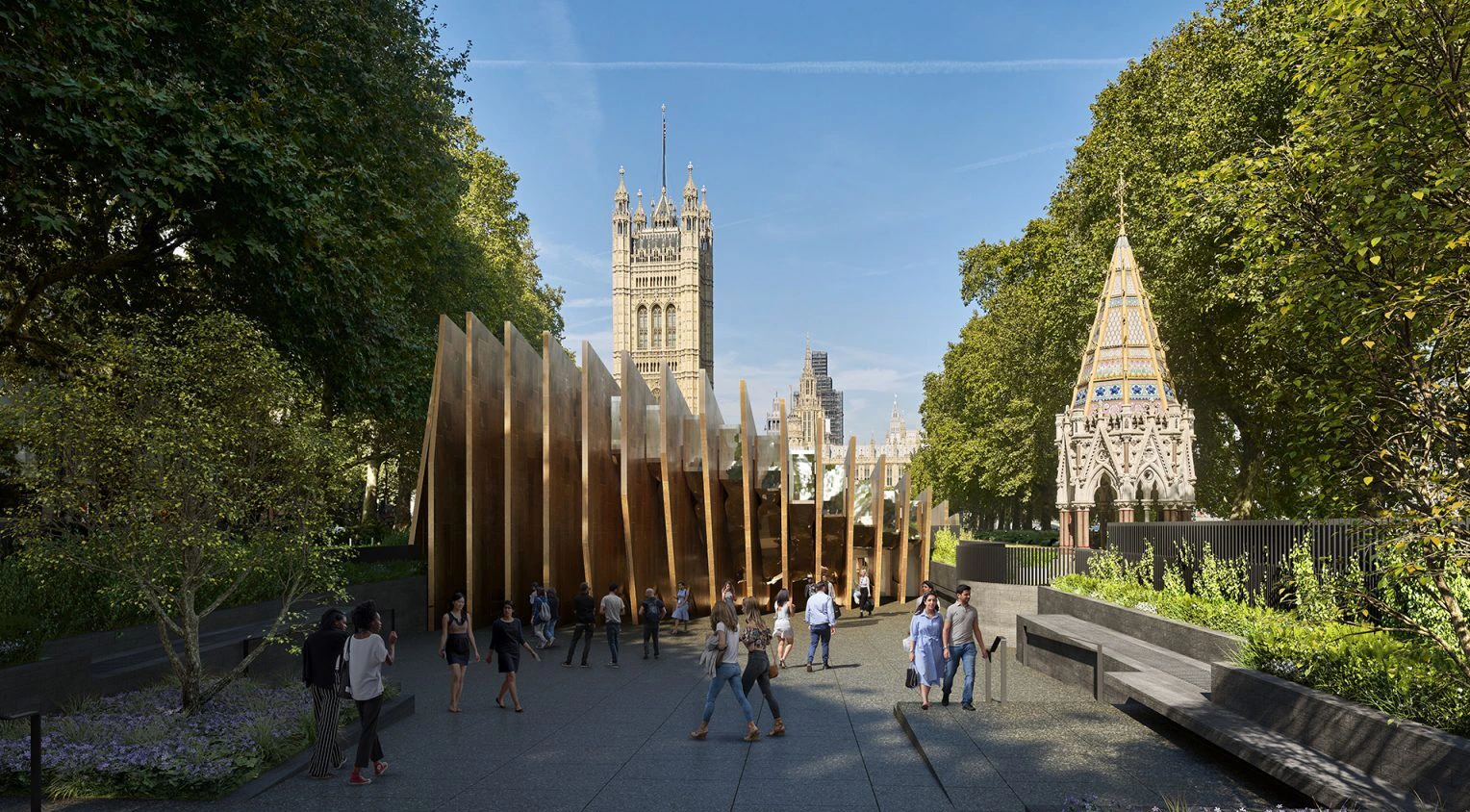
The centre, which will cost around £147m according to recent estimates, is planned to be built in Victoria Tower Gardens, a public park in sight of the Houses of Parliament.
The location has been subject to a longrunning planning battle; opponents argue that the new building will render around a fifth of Victoria Tower Gardens unusable as a public park, as well as leading to loss of views, and increased pollution, security and flood risks.
The project was granted planning permission in 2021, but this was quashed by the High Court after a case brought by the London Historic Parks and Gardens Trust. The previous government then announced plans to repeal historic legislation preventing construction in Victoria Tower Gardens.
The bill, which received Royal Assent on 22 January, will enable new planning permission to be sought.
Advertisement
The UK Government welcomed the bill’s passage as a “significant moment in the journey to create a national memorial to the six million Jewish men, women and children murdered during the Holocaust, ensuring its memory and lessons are preserved for generations to come”.
The statement added: “Once built, the memorial will stand at the heart of our democracy – a permanent tribute to lives lost and a reminder of where hatred and indifference can lead.”
Speaking at a Holocaust Memorial Day event in parliament today, foreign secretary Yvette Cooper said she was “pleased that parliament has now, finally, passed the Holocaust Memorial Act, which received its Royal Assent late last week and passed through Parliament”.
Cooper said the bill was a “vital step towards establishing the national Holocaust Memorial and Learning Centre that this government has so long championed, and that we want to see built just a few hundred metres from where we stand today, at Victoria Tower Gardens”.
“A location so close to Parliament is fitting because we must never forget that the road to the Holocaust began in a democracy,” she added.
Prime minister Keir Starmer said: “We must do everything possible to advance Holocaust education while we still have survivors able to guide us – and I am pleased we are able to move one step closer to delivering this memorial.”
Advertisement
The memorial would “help us remember where hatred and indifference can lead”, added Starmer. “It will strengthen our national commitment to challenge prejudice wherever it appears and to defend the values that bind us together.
“This is how we make ‘never again’ not just a principle of remembrance, but a promise we uphold – a collective responsibility to ensure the lessons of the Holocaust are neither forgotten nor ignored.”
The Learning Centre aims to help visitors understand the history and impact of the Holocaust, using digital and audio-visual media to bring the facts to life.
“For many survivors and their families, the project’s value lies not just in collective remembrance but in education,” said Starmer.
“Holocaust survivor Manfred Goldberg MBE spoke in support before his passing, describing the learning centre as having ‘inestimable value’ and being ‘as, if not more important, than the actual visible memorial.’
“With antisemitism, Holocaust denial and distortion on the rise, this project is essential to preserving the testimony of survivors, ensuring future generations can understand firsthand one of the darkest periods in human history.”
Advertisement
Holocaust Memorial Day commemorations
Heritage institutions across the UK are marking this year’s Holocaust Memorial Day, which takes “bridging generations” as its theme.
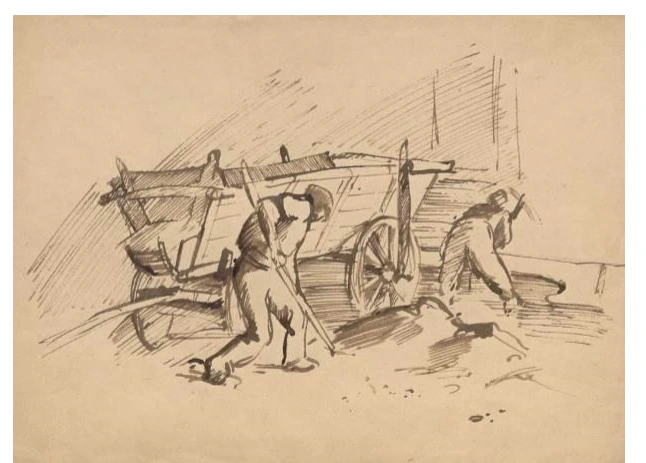
To coincide with the commemorations, the Wiener Holocaust Library in London has announced an acquisition of rare Nazi ghetto drawings.
The collection of 681 Theresienstadt ghetto drawings by the Jewish poet and artist Peter Kien was donated by a second-generation descendant of a survivor of the ghetto.
These will join a wider collection of original and copy materials documenting the Czech artist’s life and work already held by the archive.
The drawings offer a secretly documented glimpse of life inside Theresienstadt (or Terezín in Czech), including portraits of fellow residents and scenes of the cultural life of the ghetto. Kien and his immediate family were deported to Auschwitz and murdered in October 1944.
The works will be preserved, stored and made available to researchers worldwide.
Interim co-directors of the library, Christine Schmidt and Barbara Warnock, said: “We’re proud to receive this remarkable acquisition of artworks to our archive, and to integrate them into our existing collection on Peter Kien’s life.
“Our efforts to now conserve and digitise the drawings will ensure these fragile works can be interpreted as crucial historical evidence and inform our future public outreach, education and exhibition programmes.
“Kien’s drawings serve the dual purpose of depicting the strong cultural life of the ghetto in the face of Nazi oppression, and themselves representing the cultural output of a Jewish artist during his persecution, whose life was then cut tragically short by the Nazi regime.”
Meanwhile the Holocaust Centre North in Huddersfield is marking Holocaust Memorial Day 2026 with an evening of intergenerational storytelling and commemoration.
The memorial event will include pre-recorded video testimony from Holocaust survivor Iby Knill, one of the Holocaust Centre North’s 16 survivors whose testimonies are foundational to its permanent Through Our Eyes exhibition.
A statement from the centre said: “This event and this anniversary are a call to action – a reminder that the responsibility of remembrance does not end with the survivors. Instead, it lives on through the second and third generation of survivors – from the children, the grandchildren and through a new fourth generation who can share memories through the work they do in Holocaust education and research.”
Alessandro Bucci, director of Holocaust Centre North, said: “The Holocaust Memorial Day Trust theme Bridging Generations offers us as an organisation an opportunity to share some of these precious relationships with our collection donors and the insights they bring.
“We have the great privilege of connecting with whole families as we are gifted the honour of preserving these traces of their family’s lives, shaped by such cruelty and loss, within our collection.
“We have always seen how valuable intergenerational knowledge and memory is and our archive contains many multigenerational interviews. They are such an important historical resource as we understand the impacts of this history on future generations across the world.”