
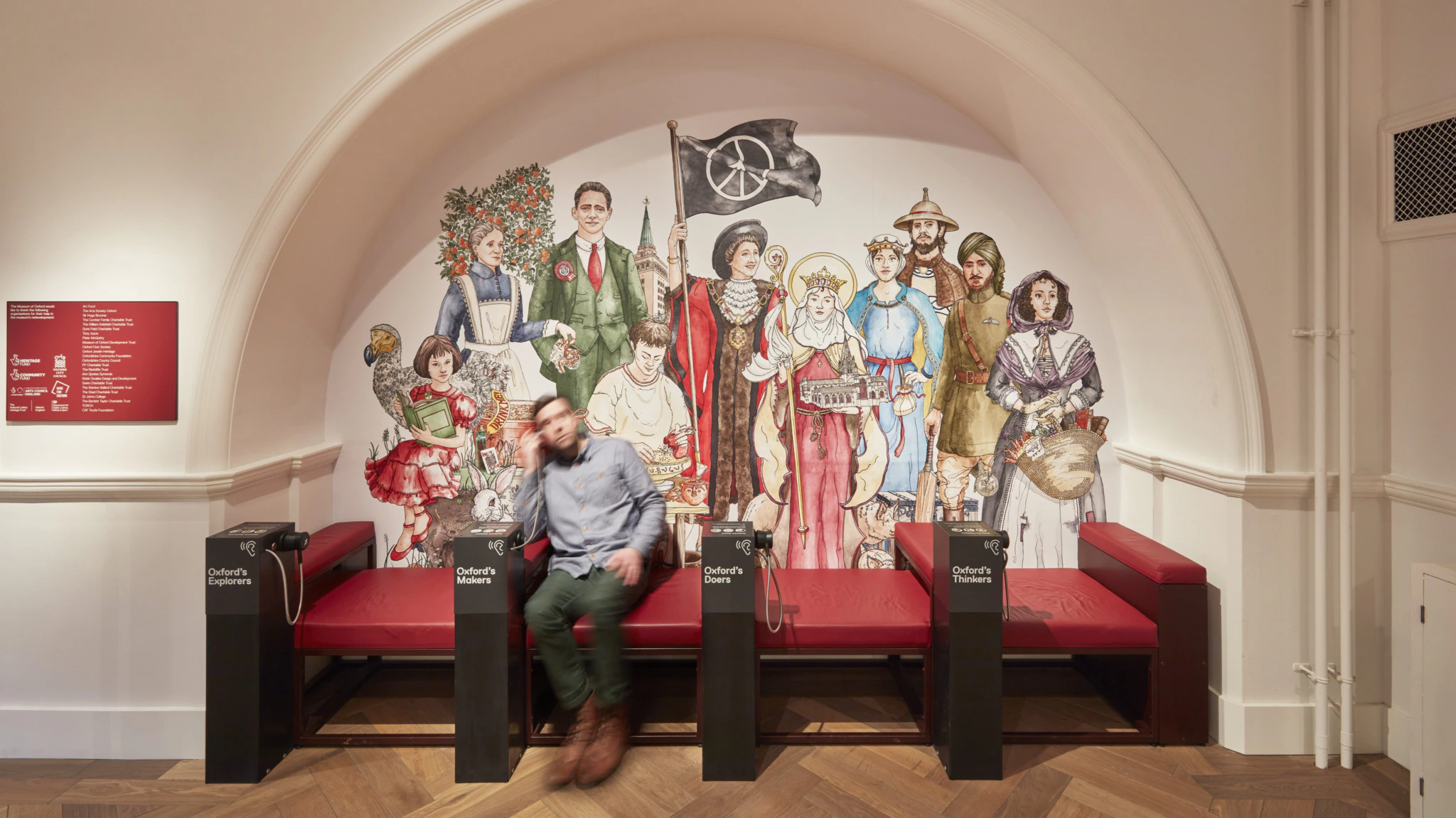
A campaign group is urging people to sign its petition and join a day of action on 24 January in protest against the introduction of entry fees at the Museum of Oxford later this month.
The local authority-run museum, which reopened in 2021 after a £2.8m redevelopment, was recently awarded £228,000 by Arts Council England (ACE) towards developing a financially sustainable strategy. Its application for this funding included a proposal to introduce a £4 entrance fee for adults (£2 for children).
The ticket price, which comes into force on 25 January, includes a museum audioguide, which currently costs £3. Free entry will continue to be offered to some visitors, including those in receipt of benefits, children under five and carers. Under the new arrangement, the museum would also run 12 free-to-enter days a year and a pay-it-forward scheme.
Speaking at a cabinet meeting last year, councillor Alex Hollingsworth, the cabinet member for planning and culture, said it was a choice between introducing entrance fees or closing the museum.
He said that the museum costs about £250,000 to run each year and the council would provide £152,000 of funding towards this.
“I am aware that change is challenging, not least when [...] there is no absolute certainty about what the outcomes of this new approach will be," Hollingsworth added. "But what we do know is that the current overspending of an already generous subsidy is not sustainable and cannot continue.”
Advertisement
The minutes from the meeting show that councillors looked at other local authority museums that have introduced entry charges, such as Abbey House Museum in Leeds, as well as research from the Association for Independent Museums, which found entry charges result in a rise in visitor numbers and dwell time as well as income.
But the decision has been met with criticism from some museum professionals as well as the resident-led Save Our Museum campaign group, who say there has been no community consultation on the change.
“The Museum of Oxford is a unique place in that it tells the story of the city, not the university, with a strong focus on working class history and people's history,” the Save Our Museum states on its website. “Residents of Oxford have the right to access their own history without having to pay for it.”
As well as launching a petition, which at the time of writing had 1,582 signatures, the group is asking people to visit the museum on 24 January and leave a note in gallery sharing their thoughts on why it should remain free.
Concerns voiced
Speaker at last year’s cabinet meeting, David Juler, chair of the Museum of Oxford Development Trust, said: “I understand the pressures on budgets and the aspiration for the museum to be self-sustaining.
Advertisement
“However, I, and fellow trustees, believe the approach proposed is inadequate, does not take into account the unique context of Oxford and, more seriously in our view, is counter intuitive to the values and mission of not only the museum but also Oxford city council.
“The museum was not developed as a charged for attraction. The museum was designed to engage and represent communities. To welcome and open up the city’s history to school children, families and all of the diversity this incredible city of ours has on offer.
“[…] Charging has the potential impact of creating a barrier to access and redirecting visitors to other, free to enter venues in the city who Museum of Oxford must compete with for attention and patronage.”
He added that some assessments show that charges at the museum could lead to a 50% fall in visitor figures – and the income raised would not “fix” the funding deficit as it would impact other means of fundraising.
“We believe that charging will not fulfil the stated ambitions and more negatively is setting the museum up to fail,” he said.

I would also add, that the term subsidy is a dangerous one for what is a department/function of the culture service for Oxford City Council. It is trying to separate what was once a well loved element of the Council’s strategy for engaging communities in the city to an additional burden it has been ‘lumped’ with.