The UK Government is to implement a change in law that will make it easier for museums in England and Wales to restitute objects from their collections on moral grounds.
The rule change was passed as part of the Charities Act 2022, but the relevant provisions were put on hold by the previous Conservative government amid concerns that they would override the statutes that prevent some museums, mostly nationals, from freely deaccessioning objects.
In a 2024 letter, the then-minister for arts and heritage wrote to the chair of the Charity Commission saying the provisions would be deferred to give legislators more time to “fully understand the implications”.
Stephanie Peacock, the parliamentary under-secretary of state at the Department for Culture, Media and Sport, has now announced that the long-delayed provisions will finally come into force on 27 November.
Peacock confirmed that 16 museums would be specifically excluded from the legislation, including the British Museum, Tate and the National Gallery, due to the existing statutory restrictions on those organisations.
The new rules will provide some museum trustees with a more straightforward route for returning cultural objects to communities of origin.
Advertisement
Under previous legislation, charity trustees were able to seek authorisation from the Charity Commission if they felt compelled by moral obligation – for example, to honour a donor’s wishes – to make a transfer of charity property even where there was no legal duty to do so, a voluntary gesture of goodwill known as an “ex gratia” payment.
The new provisions give charity trustees the power to make their own decisions on small ex gratia payments, meaning they will no longer need to seek permission from the Charity Commission, the courts or the attorney general as long as certain legal criteria are met.
The provisions allow trustees to delegate decisions on ex gratia payments to staff or committees without having to assess every case, reducing the administrative burden of the process, although trustees are still ultimately responsible for ensuring such payments follow charity law and the charity’s policies.
The legal test for ex gratia payments has also been changed from a subjective test to an objective test.
This means that trustees no longer have to show they personally feel a moral obligation in relation to an ex gratia payment, they only need to show that a reasonable person in the charity's position would feel such an obligation.
The maximum ex gratia payment a charity can make will be based on its previous year’s gross annual income, up to a maximum of £20,000 per payment. Charities must still seek authorisation from the Charity Commission for payments above this value.
Advertisement
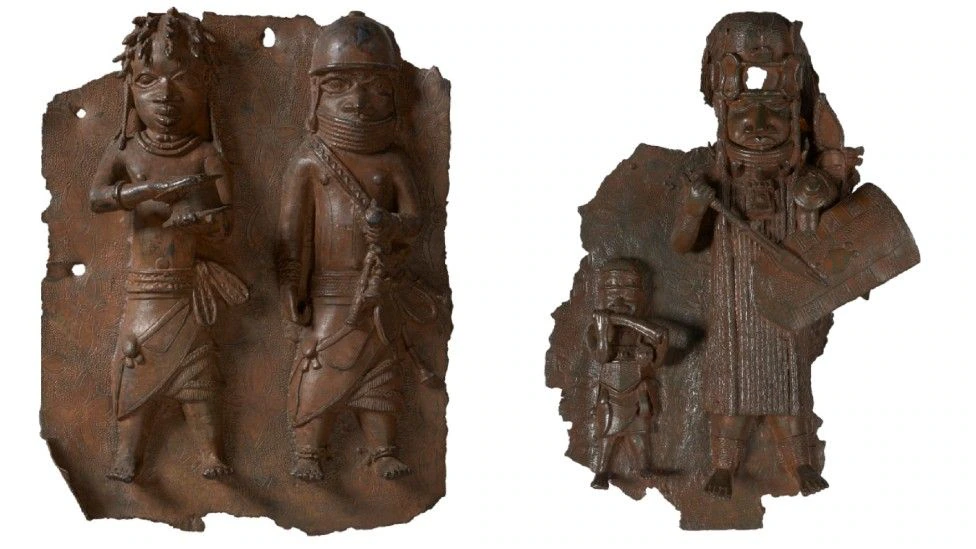
Under previous legislation, the ex gratia principle had already been used by a number of museums in restitution cases. The Horniman Museum & Gardens and Jesus College, University of Cambridge, used it in 2021 to successfully apply for approval to transfer their Benin bronzes to Nigeria.
The Conservative government previously made clear that it planned to alter the new rules to exclude recipients outside the UK from the provisions, in order to prevent the law from being used in museum restitution cases without Charity Commission oversight.
This change does not appear in the regulations laid out by Peacock, which do not prevent ex gratia payments from being made overseas.
In an update, the Department for Culture, Media and Sport (DCMS) said: “The consequences on restitution policy of the legislation developed by the Law Commission were not sufficiently clear to the government at the time when the act was debated and passed, and were not the subject of any specific debate in parliament.
“The government will commence the ex gratia payment provisions of the Charities Act 2022 (sections 15 and 16) as it is written but with an exclusion to those organisations with governing legislation that prevents the deaccessioning of items within their collection.
“This will enable charities to benefit from the reforms to the ex gratia process, whilst preserving important restrictions and oversight on cases relating to restitution.”
Advertisement
DCMS said it would notify all museums affected by the exclusion by letter. Arts Council England's Restitution Guidance will also be updated in light of the changes.
The Institute of Art and Law, a body that offers knowledge and training on aspects of the law relating to art and cultural heritage, has said concerns that the legislation will open the floodgates to restitution are misplaced.
“There may be concern in some quarters that this would precipitate the decimation of collections,” wrote Hugh Johnson-Gilbert and Alexander Herman in a recent post on the institute’s website.
“That concern is misplaced… the specific requirements of the provisions mean that they are unlikely to lead to the restitution of vast numbers of museum objects. Instead, we would argue, they simply represent a partial redistribution of power to the people who are best placed to make, and are legally accountable for, these difficult decisions.”
According to the institute, ex gratia payments remain at the discretion of trustees and cannot be forced by a third party, such as a claimant seeking restitution.
Charities affected by the exclusion
- The Board of Trustees of the Armouries
- The British Library Board
- The Trustees of the British Museum
- The Trustees of the Imperial War Museum
- The Board of Trustees of the National Gallery
- The Trustees of the Natural History Museum
- The Trustees of the National Maritime Museum
- The Board of Trustees of the National Museums and Galleries on Merseyside
- The Board of Trustees of the National Portrait Gallery
- The Board of Governors of the Museum of London
- The Board of Trustees of the Royal Botanic Gardens, Kew
- The Board of Trustees of the Science Museum
- Sir John Soane’s Museum
- The Board of Trustees of the Tate Gallery
- The Board of Trustees of the Victoria and Albert Museum
- The Board of Trustees of the Wallace Collection