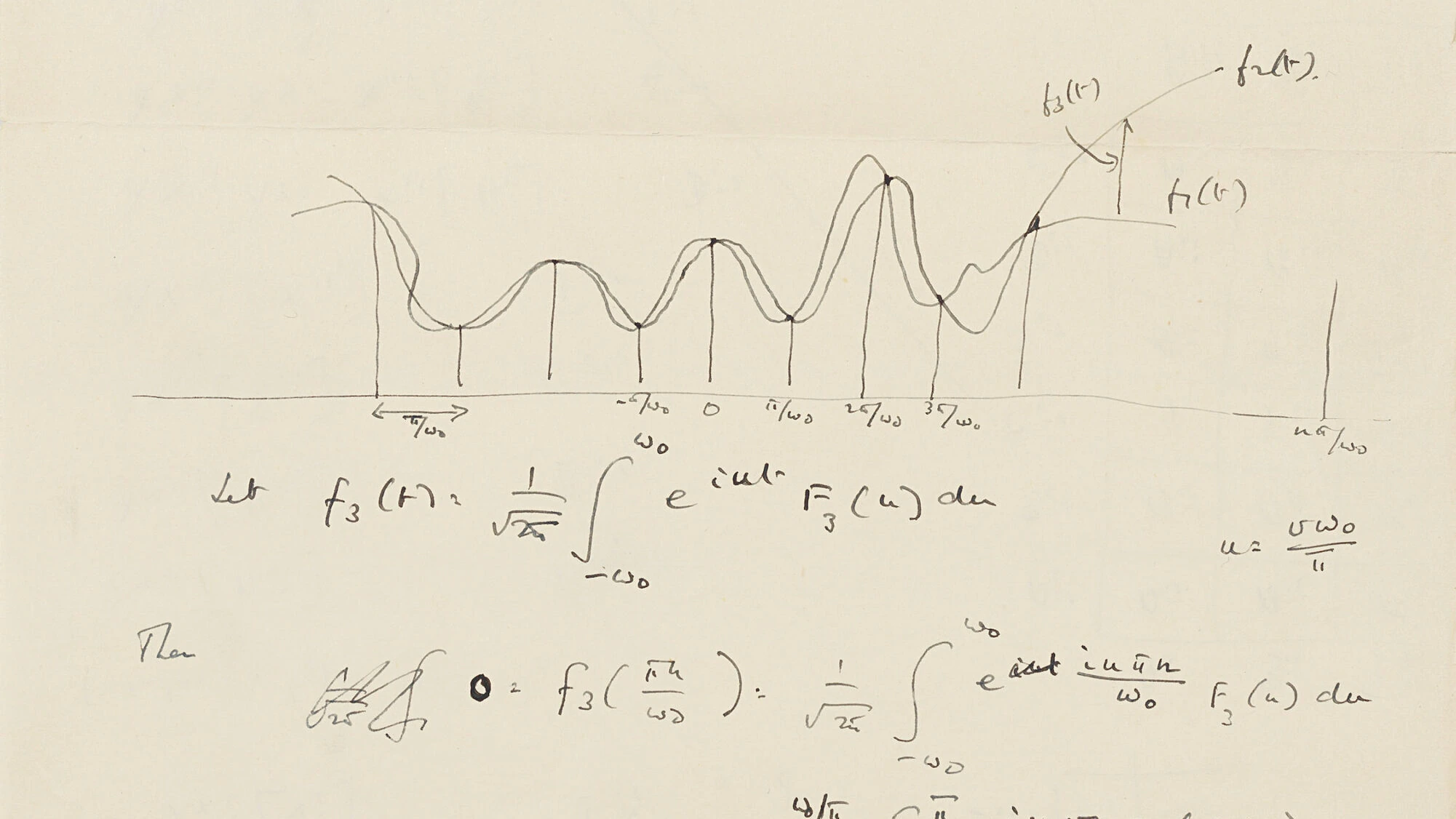
A collection of papers by scientist Alan Turing, an iron-age coin and a needlework item portraying the Menai Bridge were among the six objects saved for the nation last year after temporary export bars were placed on them.
Three other items, which were acquired and will also remain in the UK, were an iron age brooch; a collection of books about the history of European birds by HE Dresser; and an early Anglo-Saxon gold and garnet cloisonné panel.
The details of the objects are contained in a report, published by Arts Council England, on the work of the Reviewing Committee on the Export of Works of Art and Objects of Cultural Interest from 1 May 2024 to 30 April 2025.
Successful acquisitions
Alan Turing’s top secret Delilah Project working papers were acquired by the Turing Archive at King’s College, Cambridge, for £397,680.
An Iron Age coin found in Hampshire was acquired by British Museum for £20,040 (plus £680 VAT) with support from Tim Wright.
Needlework of Menai Bridge in Wales by 11-year-old Mary Anne Hughes dated 1829 was acquired by Storiel in Bangor for £14,564.
The Sutton Scotney Iron Age Brooch was acquired by Costas Paraskevaides and Jethro Sverdloff, on behalf of ArtAncient, for £18,500 and donated to Hampshire Cultural Trust.
A History of the Birds of Europe, including all the species inhabiting the Western Palaeartic Region, published 1871-96 by H.E. Dresser (1838-1915) was acquired by Manchester Museum and the John Rylands Library for £127,000.
An Anglo Saxon gold and garnet cloisonné panel was acquired by Pocklington District Heritage Trust for £3,968.
The independent committee is made up of eight experts who advise the Secretary of State for the Department for Culture, Media and Sport on whether an object intended for export is a “national treasure” under the Waverley Criteria.
The criteria are used to measure whether an object should be considered a national treasure and therefore should not be exported. Cultural objects of more than 50 years of age, and above a certain price, require a licence for export out of the UK.
Advertisement
The committee recommended that the Secretary of State should defer the export licences on 18 objects during 2024/25 period. The temporary bar on the export of an object is issued to allow offers to acquire the item from UK institutions or private sources.
Of the 18 objects that were given export bars, six items were acquired.
Arts minister Chris Bryant said: "These remarkable objects tell the story of our nation's rich heritage - from Alan Turing's ground-breaking wartime research to ancient iron age craftsmanship.
"Thanks to the vital work of the reviewing committee, these cultural treasures are now accessible to the public in museums and galleries across the country, giving future generations the opportunity to connect with our shared history."
Three further objects considered by the committee, valued at £22.5m, are still under deferral:
- Sculpture with Colour (Oval Form) Pale Blue and Red by Barbara Hepworth.
- The Virgin and Child enthroned by Alessandro di Mariano Filipepi, called
Sandro Botticelli. - Cimon Falling in love with Efigenia by Peter Paul Ruben
Advertisement
Nine cases with a collective value of £17m have not received any serious expressions of interest and therefore export licences can be (or have been) issued.
Nine national treasures that were not saved:
- A Louis XIV table top, attributed to Bernard Perrot d’Orléan.
- Marching banner commemorating the Slavery Abolition Act 1833.
- La Rêve de L’Artiste by Antoine Watteau.
- Celtic gold twisted torc, British.
- Roman mosaic with geometric pelta pattern.
- Roman geometric monochrome mosaics.
- The Fairhaven Panels: A Polyptych with Mars, Virtu Invincibile, Minerva and Magnificence, De Vély.
- Sir William Young Conducting a Treaty with the Black Caribs on
the Island of St Vincent, 1773 by Agostino Brunias.- A family of Charaibes in the Island of St Vincent by Agostino Brunias.
During this reporting year, the committee met 11 times and considered 20 objects. Two of the items did not meet any of the Waverley Criteria. This is 70th annual report on the work of the committee.